

📚 Acrostics Anatomy: Indonesia’s Albatross
Indonesia’s flag carrier Garuda Indonesia has weighed down successive administrations.

The oil jump as well as leasing and maintenance costs may accelerate the evaporation of Garuda’s cash.
Even if sovereign fund Danantara pours more capital, it’ll be like throwing good money after bad if the airline remains uncompetitive.
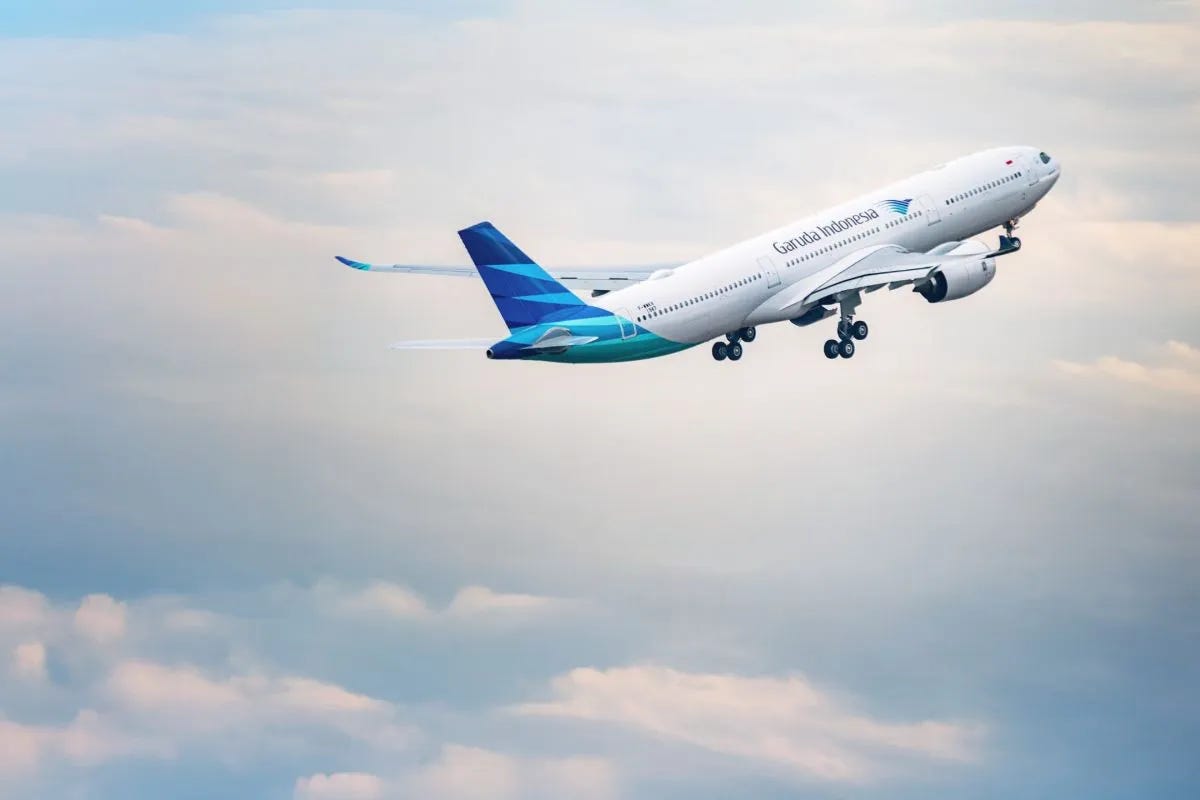
A garuda is an eagle-like creature that symbolizes power in ancient mythology, yet the Indonesian flag carrier that was named after the ‘king of birds’ has been an albatross weighing down successive administrations.
Garuda Indonesia has gone through three major debt restructurings since it was founded in 1949, four years after Indonesia’s independence from the Dutch. However, the airline is nowhere near a turnaround and continues being burdened by expensive leases.
On 24 April 2025, I reported that Indonesian officials were discussing a potential capital infusion for Garuda via sovereign fund Danantara. I also flagged that the carrier was struggling to meet its required aircraft maintenance expenses and had to ground some planes due to a shortage of components.
Two months later, Danantara announced a USD 405 million shareholder loan to meet Garuda’s maintenance, repair and overhaul needs. I wrote that the sovereign fund had to step in with the emergency loan as Garuda’s budget unit Citilink was on the brink of a default and this would have triggered a group-wide contagion.
Danantara’s Chief Operating Officer Dony Oskaria also said in July 2025 that Garuda would undergo a comprehensive restructuring that was set to include cash and non-cash corporate actions. Indonesian state-owned energy company Pertamina would convert the airline’s fuel debt into equity, according to Oskaria.
On 6 October 2025, Garuda disclosed that it would conduct a USD 1.8 billion private placement, consisting of a USD 1.44 billion cash injection from Danantara and a conversion of the fund’s USD 405 million shareholder loan into equity. The overall amount was quietly downsized a month later to USD 1.4 billion.
The use of proceeds also shifted from a fleet expansion towards paying the fuel debt owed by Citilink to Pertamina. As I noted, Indonesian state-owned enterprises (SOEs) typically have to perform their family duty and support each other, but they may also privately lobby their shareholders for a better end of the deal as they seek to preserve their own liquidity.
Evaporating Cash
On 21 November 2025, I wrote that “Garuda seems to be slicing and dicing its equity in return for the family support, but this may limit the room for the airline to obtain equity financing from third parties.”
“While returning to positive equity is the first step towards attracting potential investors, Garuda may bleed again if it continues being weighed down by costly leases without improving its cashflow.”
Danantara’s capital injection turned Garuda’s equity positive to USD 91.9 million in 2025, but this is a relatively thin buffer. Revenue fell 5.9% to USD 3.2 billion from a year earlier, while pre-tax losses ballooned to USD 354.3 million from USD 81.5 million partly due to maintenance costs and forex losses.
I also wrote on 26 March 2026 that the jump in oil prices, weaker rupiah and reduced earnings from grounded planes would accelerate the evaporation of Garuda’s cash. Compounding Garuda’s woes, the Indonesian airline was downgraded to a four-star rating by international air transport rating organization Skytrax.
I noted on 10 April 2026 that Garuda can’t simply get rid of its legacy leases because some of them are long-term agreements and premature terminations may trigger significant claims or penalties. Any attempt to renegotiate or restructure these leases may also be constrained by Garuda’s local in-court restructuring (PKPU) deal in 2022.
Opposite Goals
Danantara’s Managing Director for Stakeholder Management, Rohan Hafas, said in February 2026 that the sovereign fund did not rule out injecting more capital into Garuda to increase its fleet in future.
However, there are at least two factors that may complicate any further round of support:
Danantara already owns 91.11% of Garuda after its latest infusion and the publicly listed company has committed to fulfilling the minimum free float requirement. If new funding is structured as a shareholder loan, it will add to Garuda’s liabilities unless it’s eventually converted into equity.
Even if Danantara pours more capital into Garuda, it’ll be like throwing good money after bad if the airline remains uncompetitive.
Back in April 2025, I noted that like other Indonesian SOEs, Garuda faces the challenge of balancing its commercial duties and public service obligation of maintaining the affordability of domestic airfares.
“Rather than trying to reconcile these diametrically opposite goals, a restructuring friend said that Garuda might be better off focusing on one task. If Garuda’s mission is to increase connectivity across the sprawling archipelago, then the Indonesian government should subsidize the loss-making routes,” I wrote a year ago.
The fundamental question that has become even more pertinent now is whether Indonesia can afford to keep its flag carrier on perpetual life support.
Acrostics Asia Coverage
Acrostics Asia is an independent Asia credit intelligence provider that delivers forward-looking insights on Asian sovereigns and state-linked entities.