

🔎 Research Corner #5 (16 May – 2 July 2026)
Curated research across Asian credit and beyond


Research Corner is an Acrostics Asia feature that curates research and analyses for readers to make sense of the evolving trends.
In the fifth edition, S&P highlighted the looming debenture maturities for Thai companies in the second half of this year, while the Asia Pacific Loan Market Association (APLMA) shared some key takeaways from its Leveraged Finance & Private Credit Conference.
Pinsent Masons wrote that the race to build the infrastructure that supports the growth of AI demand has intensified dramatically. “Asia Pacific, and the Southeast Asian sub-region in particular, has found itself at the centre of that race,” the firm said.
And in the restructuring and insolvency space, there were several notable reports across Australia, Singapore and Indonesia.
What a Wave of Corporate Defaults Means for Thai Inc by S&P Global Ratings
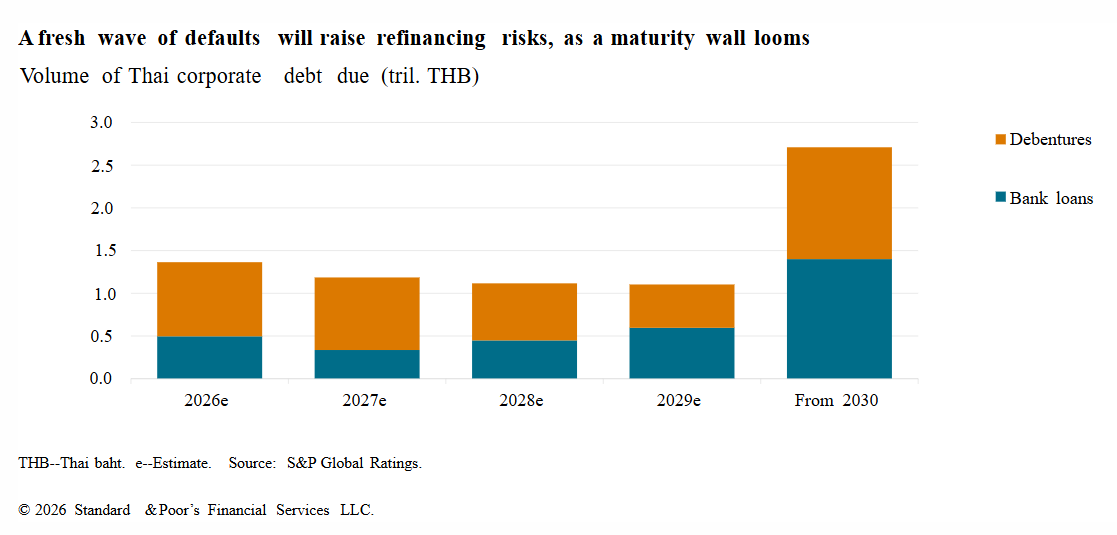
Five listed Thai companies have defaulted on a combined THB 546 million (about USD 15.2 million) of debt in the first quarter of 2026. The defaulted debts in the first quarter of 2026 were minimal compared with the THB 1.3 trillion of Thai baht-denominated debentures and bank loans maturing in 2026.
However, the defaults signalled continual fragility among small borrowers and industries such as media, property and construction. The fresh wave of defaults will weigh on the refinancing outlook for an upcoming THB 421 billion in debenture maturities due in the second half of 2026.
Leveraged Finance & Private Credit Conference 2026 – Key Takeaways from the Sponsors’ Perspectives and Insights Panel by the Asia Pacific Loan Market Association (APLMA)
The range of financing options today is far wider than even a few years ago, spanning bank debt, private credit and combinations of both. Both bank lending and private credit ecosystems in Asia are now well developed. The ideal capital structure should ultimately balance cost, risk and flexibility.
Private credit offers elevated leverage, more bespoke flexibility through tools like PIK or tailored covenants, and a more concentrated group of counterparties – but it comes at a higher price. There is no formulaic way to choose one over the other, and sponsors remain genuinely open-minded between bank and private credit solutions.
Factors Shaping Data Centre Development in Asia Pacific by Pinsent Masons
The data centre market in Asia Pacific is booming, amidst the rush to ensure there is sufficient computing and processing power to meet the demands of the AI age.
However, a recent report by global think tank the International Data Center Authority (IDCA) shines a light on some of the challenges developers face when looking to build new data centres in the region – challenges that must be navigated to realise the significant investment opportunities arising.
Creditors’ Schemes of Arrangement: Lessons from Twinza Oil by Clifford Chance
Creditors’ schemes of arrangement remain a relatively underused tool in the Australian restructuring landscape. In practice, the time, cost and procedural complexity of a scheme, combined with the absence of an automatic moratorium on creditor enforcement, often see parties default to cheaper, faster and more flexible options such as deeds of company arrangement (DOCA).
However, when deployed in the right circumstances, schemes remain a powerful restructuring mechanism – particularly where there is a need to cram down dissenting or unresponsive creditors within a secured creditor class, which is not possible under a DOCA without unanimous secured creditor consent.
The recent Twinza Oil restructuring underscores the strategic value of creditors’ schemes, but also the execution and litigation risks that accompany them, especially where valuation issues are contested.
MinLaw to Implement Recommendations to Enhance Singapore’s Corporate Restructuring and Insolvency Regime by Rajah & Tann
Singapore’s Ministry of Law has announced that it will implement key recommendations aimed at enhancing the country’s corporate restructuring and insolvency regime, following a comprehensive review and public consultation.
A strengthened judicial management regime, with greater emphasis on restructuring and turnaround outcomes.
Refinements to cross-class cramdown mechanisms in schemes of arrangement.
Improvements to restructuring tools for greater efficiency.
Adoption of international standards, including the UNCITRAL Model Laws.
Assessing the Effectiveness of Asset Execution and Insolvency in Recovery Strategies by ADCO Law
Economic pressure and evolving business dynamics have increased the risk of non-performing loans (NPLs) in Indonesia. In this context, creditors, particularly banks, are required to adopt more strategic and measured approaches to recovery.
Creditors generally rely on two primary avenues: asset execution and insolvency mechanisms, including PKPU and bankruptcy. In certain cases, civil litigation is also used to support recovery efforts, particularly where recovery extends beyond collateral or when banks seek to pursue guarantors.
However, with evolving market practices, ongoing regulatory developments, and changes in debtors’ mindset and knowledge, a more pressing question arises: do these approaches still deliver effective and optimal outcomes?
Acrostics Asia is an independent credit intelligence provider that built a collaborative model, drawing signal from local experts for readers including investors, bankers and advisors.