

🔎 Research Corner #3 (22 March – 21 April 2026)
Curated research across Asian credit and beyond


Research Corner is an Acrostics Asia feature that curates research and analyses for readers to make sense of the evolving trends.
The latest edition includes insights on:
The impact of the energy shock on Asia’s economic resilience by IMF
China’s asset management companies by Fitch Ratings
The partial recovery in Hong Kong commercial property by S&P Global Ratings
Insolvency and restructuring law reform in South and Southeast Asia by Clifford Chance
India’s new FDI and external commercial borrowing rules by Baker McKenzie
Group action litigation in Australia by Clifford Chance
Mongolian ministers who matter to investors by Capital Markets Mongolia
Asia’s Economic Resilience Is Being Tested by the Energy Shock by IMF
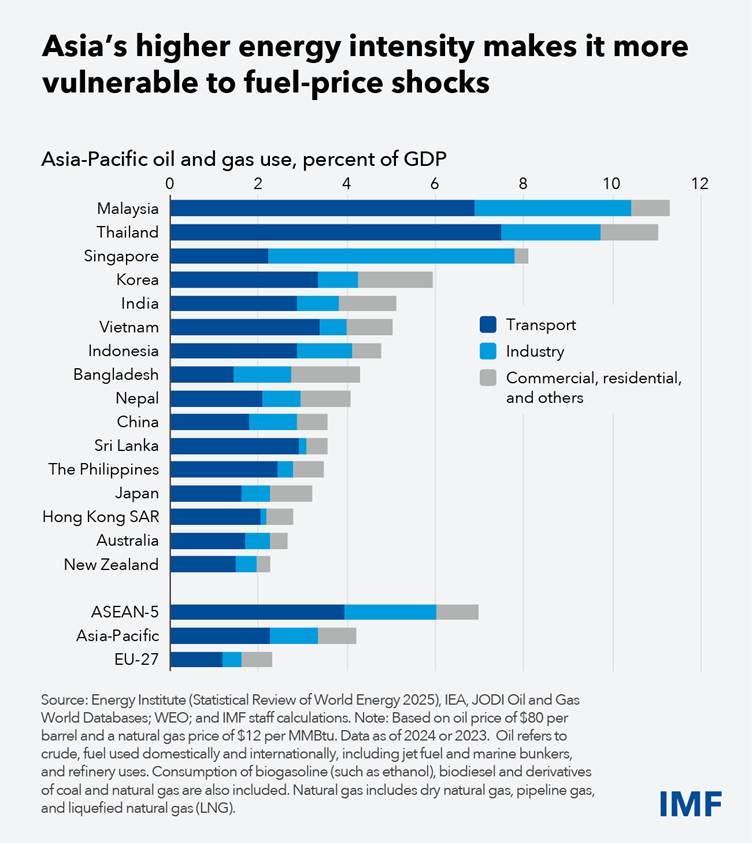
Asia began this year on solid footing. Now, war in the Middle East and the energy supply shock are raising inflation, weakening external balances, and narrowing policy options. In addition, Asia’s higher energy intensity makes it more vulnerable to fuel-price shocks.
China’s Listed AMCs Expand Business Activity Despite Earnings Pressure by Fitch Ratings
Earnings at China’s listed asset management companies (AMCs) are likely to face continued volatility in 2026, after reporting pressure on 2025 operating earnings. Persistent asset-quality challenges, slower economic growth and weakness in the property sector are likely to weigh on listed AMCs. Even so, Fitch Ratings expects China’s national AMCs to remain central to policy execution over the medium term.
Hong Kong Commercial Property: Partial Recovery To Drive Credit Divergence by S&P Global Ratings
Hong Kong commercial property is in the midst of a highly varied recovery. A resurgent financial industry has stabilized rents for premium offices, while an influx of shoppers from mainland China is boosting discretionary retail. However, Hong Kong’s commercial rents will likely generally fall again in 2026.
Insolvency and restructuring law reform in South and Southeast Asia by Clifford Chance
South and Southeast Asia are undergoing a wave of insolvency and restructuring law reforms, reshaping the region’s financial and corporate landscape.
Vietnam, Thailand and India are introducing or expanding debtor in possession restructuring processes, aimed at intervening earlier to preserve enterprise value and avoid formal liquidation. This builds on the debtor-in-possession model already introduced in Singapore and Malaysia and the global trend which typically prioritises corporate rescue and preserving enterprise value over immediate creditor enforcement in the event of default or payment issues.
Why do India’s new FDI and external commercial borrowing rules matter for cross-border investment? by Baker McKenzie
Both the new External Commercial Borrowing (ECB) and amended Land Bordering Countries (LBC) FDI rules offer Indian businesses expanded access to foreign capital and strategic partnerships. The easing of restrictions on cross-border investments will enable companies to fund restructurings, diversify supply chains, and pursue growth opportunities more efficiently.
Group action litigation in Australia: What lies ahead in 2026 by Clifford Chance
Australia remains one of the most active and sophisticated class action markets globally, and its influence continues to shape group action risk across Asia Pacific. This report examines how Australia’s well‑established class action regime, together with the continued availability of litigation funding and an evolving regulatory environment, is driving sustained levels of group action activity.
Mongolian Ministers Who Matter To Investors by Capital Markets Mongolia
Minister of Industry and Mineral Resources — Damdinnyam G. (holdover): Damdinnyam G. is a mining man in the fullest sense and has spent his tenure pushing one of the most sweeping reform agendas the sector has seen. Since taking office, he has been driving amendments to the Minerals Law as the centrepiece of his reform agenda — one of five key pieces of legislation he has targeted for overhaul.
He remains the government’s point man on the Oyu Tolgoi renegotiation with Rio Tinto, which carries a first-half 2026 deadline. His position on Mongolia’s benefit share: 53%, non-negotiable.
Minister of Finance — Mendsaikhan Z. (new): A first-time minister with a domestic economics background and prior roles spanning public investment, energy sector administration, and presidential advisory work. He pledged continuity with outgoing Finance Minister Javkhlan B.’s policy framework — a signal of fiscal stability rather than reform ambition.
Acrostics Asia built the collaborative model for Asia credit intelligence, drawing signal from a network of local experts for readers including investors, bankers and advisors.