

📒 Quick Take: Jakarta’s Third Rail
The cost of servicing Indonesia’s growing debt is a key factor to watch for investors.

Interest payments could become a bigger burden for Indonesia, especially if state revenue is not keeping pace with the increase in borrowings.
Visibly crossing Indonesia’s fiscal deficit ceiling of 3% of GDP may cause some investors to rush for the exit.
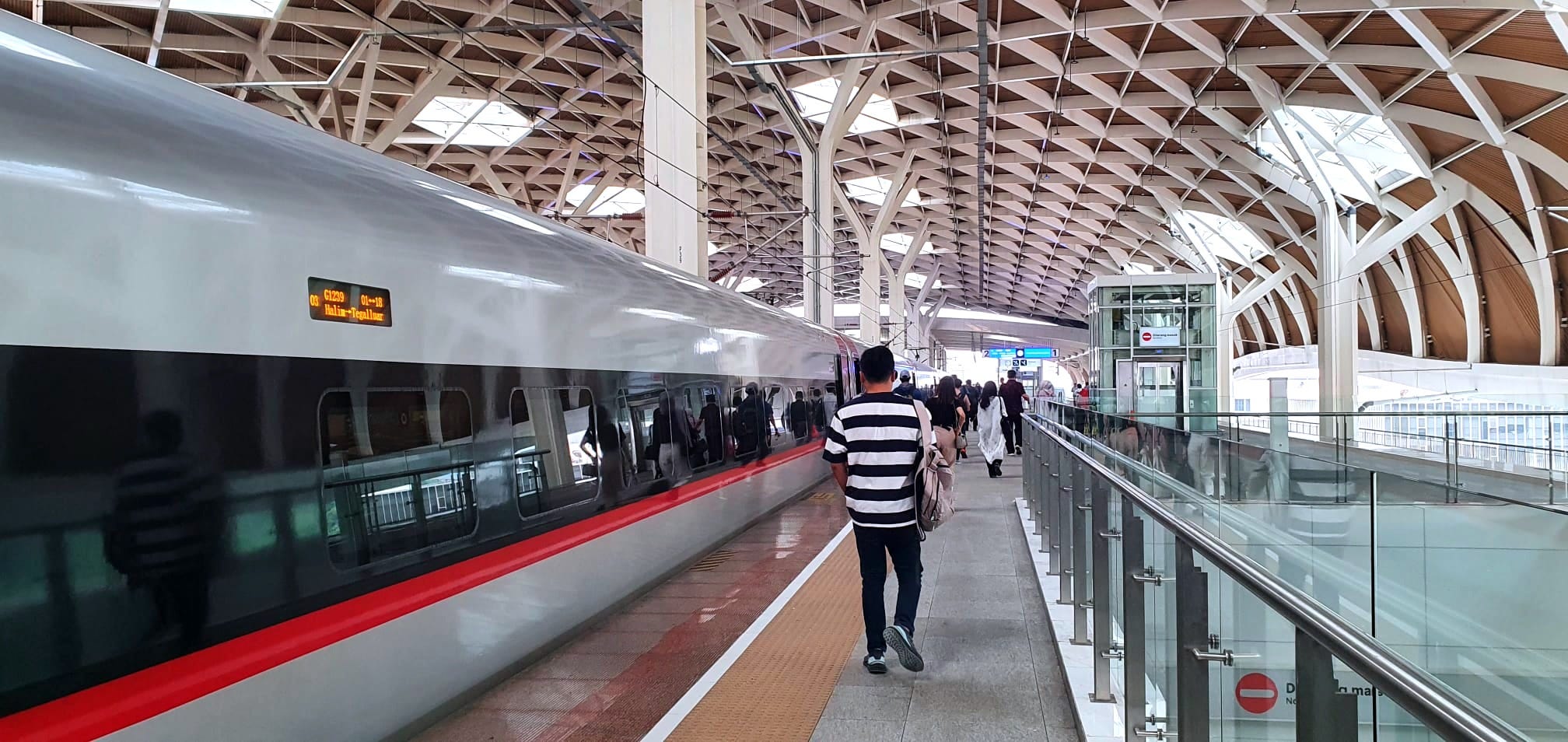
Indonesia has been borrowing more to fund President Prabowo Subianto’s spending plans and the cost of servicing this growing debt is a key factor to watch for investors.
S&P Global Ratings warned that rising fiscal pressures, particularly higher debt servicing costs, are increasing downside risks for Indonesia’s sovereign credit profile, Bloomberg reported on 26 February 2026.
Interest payments “very likely” exceeded the key threshold of 15% of government revenue last year, according to S&P’s sovereign analyst Rain Yin. If they stay above the threshold on a sustained basis, that could prompt a more negative view on Indonesia’s rating, she said.
Indonesian officials often emphasize that the nation’s debt-to-GDP ratio – which reached 40.46% at the end of 2025 – is still low compared with regional peers.
While the debt load seems manageable relative to GDP, the interest payments could become a bigger burden for Indonesia, especially if state revenue is not keeping pace with the increase in borrowings.
On 25 February 2026, Indonesia issued its second round of offshore bonds in months, raising USD 4.5 billion from a sale of Yuan and Euro notes, Bloomberg reported. That came two days after Finance Minister Purbaya Yudhi Sadewa announced a fiscal deficit of IDR 54.6 trillion (USD 3.25 billion) for January, equivalent to 0.21% of GDP.
Despite the warning signs, Indonesia has been able to raise new debt because some investors are keen for fresh sovereign paper and they are betting that the government will have ways to work around its fiscal limits.
I wrote on 11 November 2024 – three months before Danantara was officially launched – that the sovereign fund essentially functions as Indonesia’s off-balance-sheet financing vehicle. Danantara has reportedly raised a USD 1 billion-equivalent loan from foreign banks and USD 3.6 billion from a sale of “patriot bonds” to local tycoons.
I flagged on 15 July 2025 that Danantara would likely need to build a bridge to offshore bonds as a key plank in its refinancing cycle. If a spike in yields were to raise the barrier for Danantara to issue global bonds, a way around it is to get the key state-owned enterprises (SOEs) to incur more debt and then upstream dividends to the sovereign fund.

Parallel Track
Indonesia is not the only country running a parallel track to sustain the heavier baggage on the train, as China’s local governments have long used their financing vehicles (LGFVs) to raise off-balance-sheet debt.
Both nations have another thing in common: the circularity of their state-linked entities. Indonesian SOEs are interconnected via a web of criss-crossing relationships, including bank and trade debt, while a big chunk of the loans and bonds issued by China’s LGFVs are taken up by state-owned banks and other domestic investors.
However, Indonesia’s fiscal deficit ceiling of 3% of GDP is like the “third rail” because visibly crossing it may cause some investors to jump off the train. Indonesia has built its reserves over the years to withstand capital outflows, but a stampede for the exit can erode these buffers faster than they can be replenished.
Indonesia’s rare budget shortfall in January was noteworthy because after the pandemic, the government has typically posted a surplus in the first month of the year, when tax revenues are strong and projects are just getting started, according to Bloomberg.
I flagged a year ago that the wave of layoffs in the labour-intensive manufacturing sector could dampen household spending. I also connected the indicators on the ground to infer that the economy was likely weaker than what the official data suggested.
The finance minister injected IDR 200 trillion (USD 11.8 billion) into the state-owned banks in September 2025, but I wrote that the liquidity boost did not translate to more meaningful loan growth because there wasn’t enough demand from cautious businesses while state-owned banks hesitated to lend to the weaker borrowers.
In short, it’s a demand – not supply – problem. Still, the finance minister announced last week that he would extend the IDR 200 trillion state funds – which were originally set to mature on 13 March 2026 – by six months.
Reduced Income
One of the risks for Indonesia is the reduced state income from a population that’s grappling with rising unemployment.
The Manpower Ministry is monitoring possible layoffs at the manufacturer of Mie Sedaap, Indonesia’s no. 2 instant noodle brand, after complaints emerged that hundreds of workers at its factory in Gresik saw their working hours sharply reduced ahead of Ramadan, Jakarta Globe reported.
A labour union also criticized Indonesia’s plan to import 105,000 Indian-made pickup trucks – reportedly worth USD 1.5 billion – to back the national cooperatives program, as the move is seen to undermine the domestic auto industry. The controversy has forced Jakarta to halt the orders, pending a meeting between the government and lawmakers.
I noted last month that the president appeared to recognize the threat posed by growing unemployment, as the former general reportedly met five of the nation’s leading businessmen on 10 February and asked them to help the government to create jobs.
Some domestic investments are still ongoing, partly because the conglomerates have to step up their contributions, according to friends familiar with the matter.
However, I flagged that the local tycoons are unlikely to be able to support the entire economy, while international investors are becoming more cautious about negative headlines coming out of Indonesia.
Jakarta may have to navigate the train along a bumpier track and make sure it doesn’t go off the rails.