

📒 Quick Take: Indonesia’s Strongman Part Two
President Prabowo Subianto’s stronger grip on power has created ripples in the international markets.

The markets reacted strongly to the president’s nomination of his nephew to the central bank because it’s seen as part of a larger pattern towards centralisation.
Danantara has become a state behemoth as it consolidates the country’s sprawling SOEs and moves rapidly to build its capital structure.
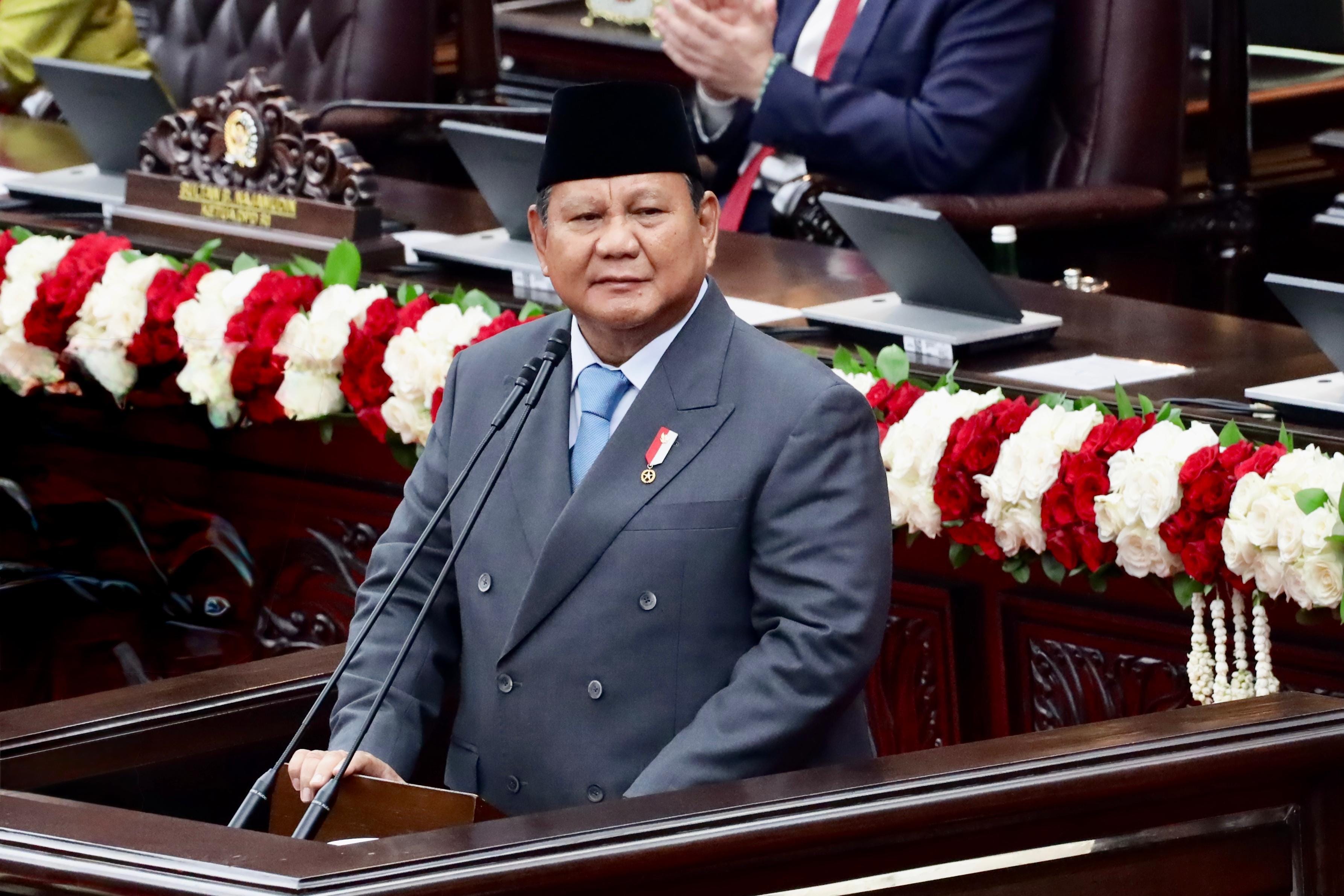
In Part One, I wrote that President Prabowo Subianto is tightening his grip over Indonesia’s financial guardians, state-owned enterprises (SOEs), and resources sector. Now I’ll unpack the implications in the international markets.
Institutional Credibility
Today, Indonesia’s parliament reportedly confirmed former deputy finance minister Thomas Djiwandono as a deputy governor at Bank Indonesia.
The rupiah fell to a record low while demand for Indonesian bonds sank to the weakest in 10 months after news broke last week that the president had nominated his nephew for the position. Nevertheless, the Indonesian currency recovered after the central bank kept rates unchanged.
Why did the markets react so strongly?
It wasn’t just a one-off event, as investors also paid attention to proposals to reconsider the system of direct regional elections, a more visible role for the military in civilian programs and state agencies, as well as questions around the independence of technocratic institutions, a Singapore-based portfolio manager wrote in his LinkedIn post.
“Each of these on its own may be manageable. Together, they point to a gradual re-centralisation and a potential softening of the guardrails that have anchored confidence for two decades,” he wrote.
“Indonesia remains a compelling long-term story, but confidence ultimately rests on the credibility of its institutions. That credibility is now part of the investment equation in a way it hasn’t been for many years.”
State Behemoth
Since Danantara was established in February 2025, the sovereign fund has become a behemoth as it consolidates the country’s sprawling SOEs and moves rapidly to build its capital structure.
I’ve reconstructed how Danantara’s fundraising evolved overtime and the likely rationale.
June 2025: Danantara sought to make a USD 10 billion loan debut, but I flagged that potential lenders may consider narrowing the use of proceeds or backing specific projects to get around the lack of collateral.
July 2025: Reuters reported that Danantara was set to draw down USD 3 billion from a USD 10 billion “credit line” for investments including a petrochemical project as well as co-financings with the wealth funds of Qatar and China. I wrote that to reach the full USD 10 billion target, Danantara would likely have to syndicate its loan to a wider group of banks and build a bridge to bonds.
August 2025: Bloomberg reported that Danantara had sounded out investors on a plan to raise IDR 50 trillion (USD 3.1 billion) by selling bonds with below-market yields to local tycoons. I noted that the “patriot bonds” were pitched as a form of burden-sharing, which can be traced back to former President Suharto’s era.
November 2025: IFR reported that Danantara had launched the syndication of a USD 1 billion-equivalent unsecured loan. I wrote that the fund had to pave a refinancing path to offshore bonds as the loan is set to mature in three years, but the question is whether noteholders would be willing to get repaid after the banks.
19 January 2026: Bloomberg reported that Danantara was preparing to issue a second batch of patriot bonds worth an additional IDR 20 trillion (USD 1.2 billion) after ultimately raising USD 3.6 billion last year.
21 January 2026: IFR reported that Danantara had closed its USD 1 billion-equivalent three-year loan with 25 banks in general syndication. The financing was in euros, US and Singapore dollars, pounds and yen.
22 January 2026: Danantara’s Chief Investment Officer Pandu Sjahrir told Bloomberg that the fund had approval for a USD 1 billion loan from overseas banks and is working towards a global bond sale.

Refinancing Cycle
Stripped to its essence, building a capital structure often means setting in motion a refinancing cycle where new lenders stand ready to take out existing lenders. For this to work, the key is for the players to believe that they can get taken out at the right time.
Apart from SOE dividends, Danantara demonstrated that it has access to low-cost onshore financing through the patriot bonds. Sjahrir’s comment that Danantara was considering further sales of these notes signalled that tapping local tycoons could be a regular funding option.
While banks may have different reasons to participate in the syndicated loan, these are likely a combination of the following factors:
Lenders are betting that the president wouldn’t let his flagship fund go down while he’s in power.
The unsecured loan that eventually closed was reportedly for general corporate purposes, but the risk is spread across 25 banks and multiple currencies. In addition to the interest margins, banks were also offered a top-level participation fee of 35bp. In short, the diversification and fees were seen as sufficient compensation for the lack of collateral or state guarantee.
The banks wanted to build a relationship with Danantara, as the fund is likely to be a repeat borrower that could generate other business streams. For example, the lead banks for the syndicated loan are well-positioned to market the global bonds down the road.