

📒 Quick Take: Indonesia’s Strongman Part Three
The pressure on state-owned banks and local tycoons to step up their national service may create a chilling effect.

Indonesian bankers were jolted by Defence Minister Sjafrie Sjamsoeddin’s comment that President Prabowo Subianto would revamp the boards of state-owned lenders.
Sovereign fund Danantara also announced that an SOE will take over the Martabe gold mine run by a unit of Astra International.
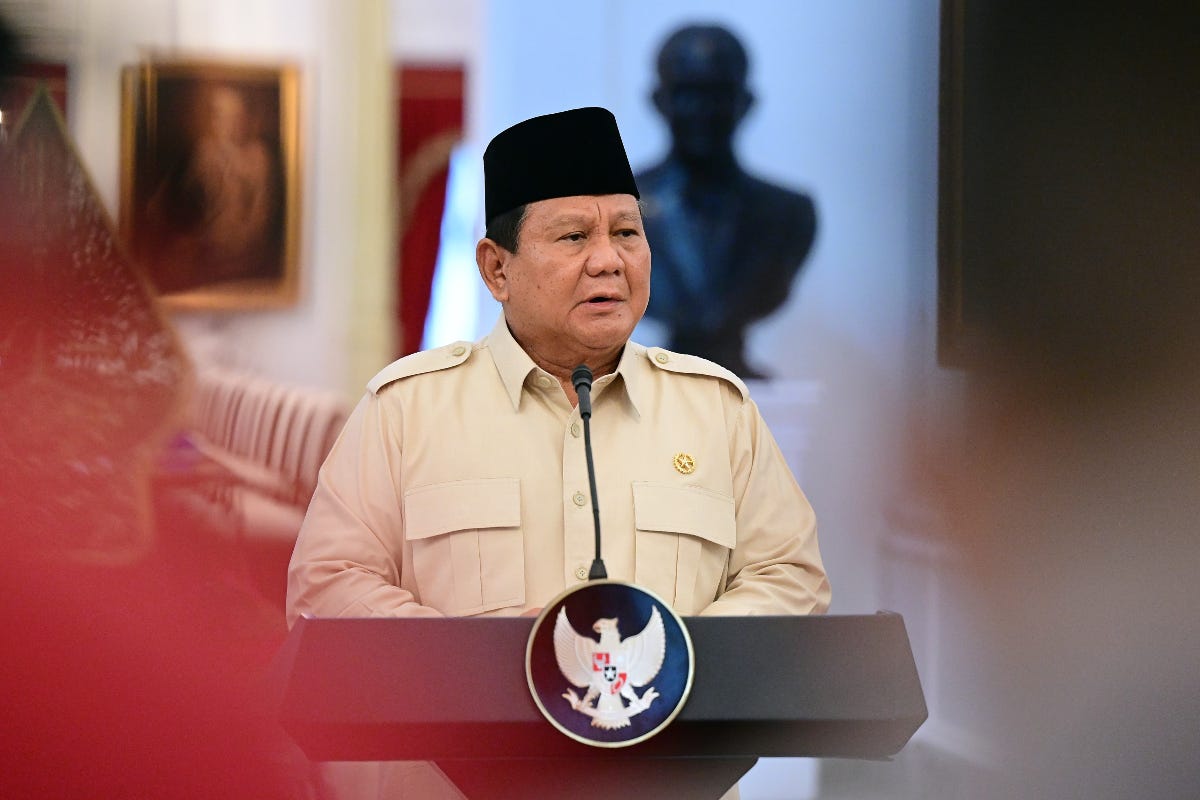
Over the weekend, Indonesian bankers were jolted by Defence Minister Sjafrie Sjamsoeddin’s comment that President Prabowo Subianto would revamp the boards of state-owned lenders.
The state-owned banks “favour the big businessmen over the small businessmen,” Sjamsoeddin – a long-time ally of the Indonesian president – told local reporters.
“We will replace (the directors) with those who have the intellectual ability and practical ability, but who also love the nation.”
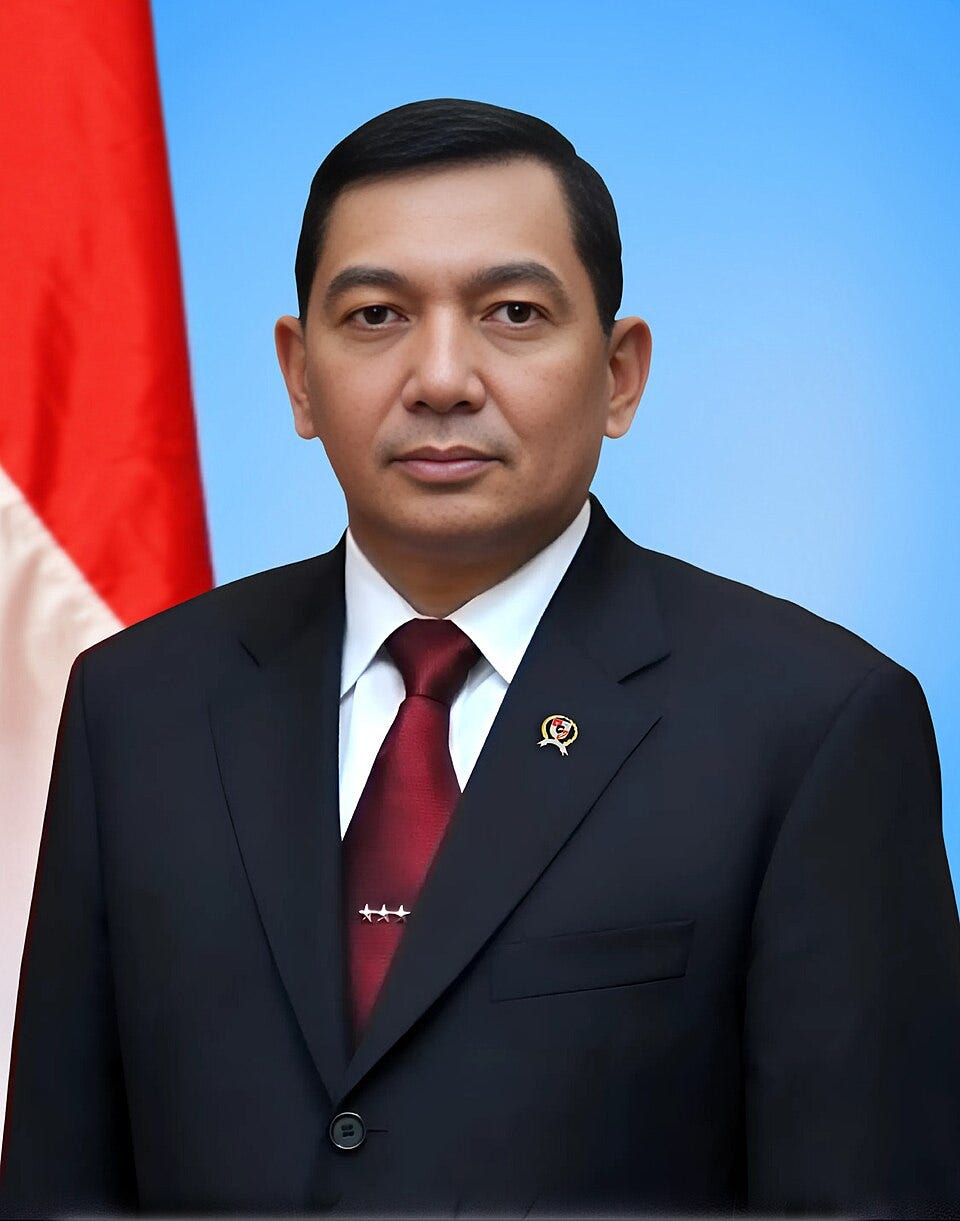
In response to the media reports, Danantara Chief Executive Officer Rosan Roeslani said there have not been any discussions for a leadership change at the state-owned banks. But he added that the sovereign fund – which oversees all the state-owned enterprises (SOEs) – will “seek consultations if improvements are necessary.”
Despite the Danantara CEO’s denial, Sjamsoeddin’s comment carries weight because of his military pedigree and close relationship with the president that was built over decades. He was described in a local report as “Prabowo’s bestie” who graduated together with the president from a military academy in 1974.
I flagged in April 2025 that capital started flowing out of the country partly due to fears of being caught on the wrong side of the power consolidation.
After the president took office in October 2024, Sjamsoeddin’s task force started confiscating large swathes of allegedly illegal palm plantations and handing these areas to a new SOE called Agrinas Palma Nusantara.
On 21 January 2026, I wrote that the president has been tightening his grip over the country’s financial guardians, SOEs and resources sector. I also noted that some investors saw the president’s nomination of his nephew to Bank Indonesia as part of a growing trend towards centralization.
A week later, Indonesian stocks suffered their worst two-day rout in nearly three decades as a potential MSCI downgrade added to investor concerns. Indonesia’s top financial regulator and the head of its stock exchange both resigned over the market turmoil.

No Sacred Cow
Nationalist currents are a consistent force in Indonesia, but they have steadily picked up pace and flowed out to the open over the past year.
In August 2025, a group of local economists and a political party alleged that Indonesian conglomerate Djarum Group had purchased a 51% stake in Bank Central Asia (BCA) below market value – more than two decades after the acquisition.
They also accused Indonesia’s biggest private bank of owing IDR 60 trillion (USD 3.6 billion) to the state.
Three months later, Indonesian authorities reportedly imposed a travel ban on Victor Hartono – a top Djarum executive and the eldest son of billionaire Robert Budi Hartono – amid a tax evasion probe.
Even though prosecutors lifted the travel ban afterwards, the treatment of such a bigwig showed to Indonesia’s business community that there’s no sacred cow.
This sentiment was affirmed when Danantara Chief Operating Officer Dony Oskaria announced on 28 January that state-run Perminas will take over the Martabe gold mine, a key asset of local conglomerate Astra International’s subsidiary United Tractors.
Chilling Effect
Indonesian tycoons have also been asked to buy Danantara’s low-yield “patriot bonds” and should be called upon to participate in further issuances.
I wrote on 27 January that apart from securing low-cost onshore financing, Danantara had closed a USD 1 billion-equivalent syndicated loan and will likely tap the global bond market next.
Bloomberg reported on 29 January that the cost of the loan translated to around 4.61% at current levels – more than double the 2% coupon for the patriot bonds.
The pricing gap between the patriot bonds and the loan from foreign banks was not lost on the Indonesian tycoons, according to a friend who’s close to one of the conglomerates.
Two other friends said that some conglomerates have refrained from committing to major domestic investments partly because of worries about asset seizures and other forms of state crackdown.
I flagged last month that the SOE brigade led by Danantara risks crowding out the private sector and diverting capital away from business objectives.
The Business Times also reported on 14 January that despite ample bank liquidity and deep rate cuts, loan growth in Indonesia may continue being weighed down by cautious borrowers and policy uncertainty.
The pressure on state-owned banks and business tycoons to step up their national service may create a chilling effect that restricts flows to the broader economy.