

📒 Quick Take: Indonesia’s Strongman Part One
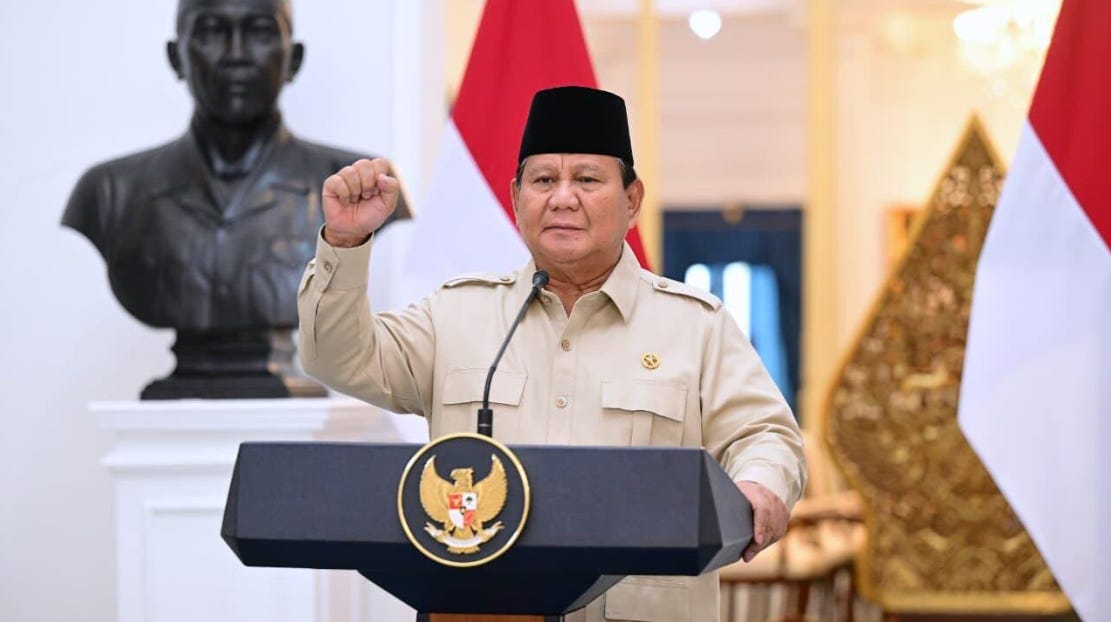
President Prabowo Subianto is asserting control over the critical nodes in Indonesia’s economy.

President Prabowo Subianto is tightening his grip over the critical nodes in Indonesia’s economy: the country’s financial guardians, state-owned enterprises (SOEs), and resources sector.
Financial Guardians
The rupiah fell to a record low this week after reports that the president has nominated his nephew, Thomas Djiwandono, for a deputy governor role at Bank Indonesia.
Demand for Indonesian bonds also sank to the lowest in 10 months on investor concerns over the potential erosion of the Central Bank’s independence.
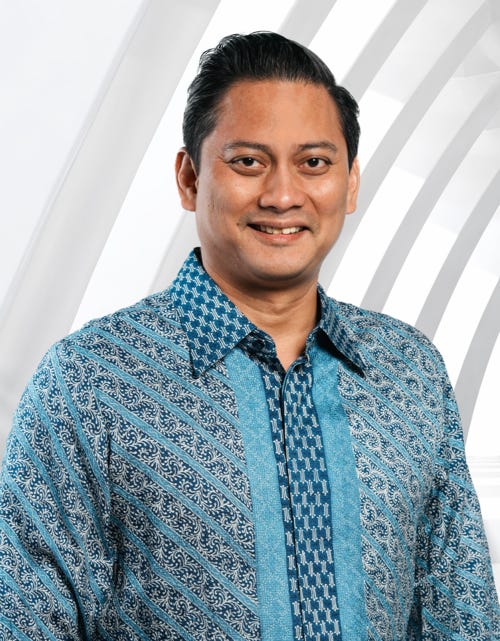
This is a continuing trend of the former military general placing loyal figures in strategic positions.
In March 2025, I wrote that the room for then-Finance Minister Sri Mulyani Indrawati to move was more limited after the president ordered her ministry to report directly to him, instead of to the Coordinating Ministry for Economic Affairs.
Djiwandono was appointed as Deputy Finance Minister in July 2024, followed by Anggito Abimanyu, a former research assistant at a think-tank led by the president’s late father, Professor Soemitro Djojohadikusumo. Anggito has since moved from the Finance Ministry to chair the Indonesia Deposit Insurance Corporation (LPS).
Before Sri Mulyani officially exited as Finance Minister, Purbaya Yudhi Sadewa’s name was floated by Burhanuddin Abdullah – a former Central Bank governor who is in the president’s team of experts – as a candidate to replace her, investigative news agency Tempo reported.
Purbaya had also worked under Luhut Binsar Pandjaitan, the current chairman of the National Economic Council, in various capacities. On 8 September 2025, Purbaya was appointed as Indonesia’s new Finance Minister.
State-Owned Enterprises
Three months before Indonesian sovereign fund Danantara was launched, I wrote that it was likely designed to pool the country’s sprawling SOEs and leverage up to finance the president’s projects.
A revision of Indonesia’s SOE law to establish Danantara was accelerated through the Parliament, with the Finance Ministry losing considerable authority over the SOEs in the process, Tempo reported in February 2025.
Dividends from these SOEs are now managed by the sovereign fund, instead of flowing to the state budget run by the Finance Ministry.
Danantara moved quickly throughout the year to build its capital structure. However, I wrote that some banks may not want the unsecured loan proceeds to go towards bailing out cash-strapped SOEs, while the key question for offshore bonds is whether noteholders are willing to get repaid after the banks.

Concerns about Indonesia’s widening deficit risked pushing up the international borrowing costs for Danantara, but I noted on 14 January 2026 that the fund can pull a few domestic levers – including a fresh issuance of low-yield “patriot bonds” to local tycoons – as a buffer against the offshore currents.
Danantara plans to raise IDR 20 trillion (USD 1.2 billion) by selling a second batch of patriot bonds in the first half of this year, Bloomberg reported on 19 January 2026. Although the first round initially targeted USD 3.1 billion, ultimately USD 3.6 billion was raised after some additional notes were sold, according to the news agency.
I wrote in September 2025 that Danantara reigns supreme over the restructurings and consolidations in the SOE sector. A slate of loyalists had also been appointed to helm the strategic SOEs, according to friends on the ground.
These include Glenny Kairupan, flag airline Garuda Indonesia’s new CEO who was the president’s former classmate at the Indonesian Military Academy, and Simon Aloysius Mantiri, state-owned energy giant Pertamina’s CEO who doubles up as a senior official at the president’s political party Gerindra.
Resources Sector
Capital started flowing out of the country after the president took office in October 2024, partly due to fears of being caught on the wrong side of the power consolidation.
I wrote in April last year that the nationalist sentiment runs deep in parts of the government, with Defence Minister Sjafrie Sjamsoeddin – a trusted ally of the president – leading a task force that confiscated large swathes of allegedly illegal palm plantations. Some of these areas were handed to a new SOE called Agrinas Palma Nusantara.
Indonesia also stepped up enforcement against a number of foreign companies with plantation or mining operations in the country.
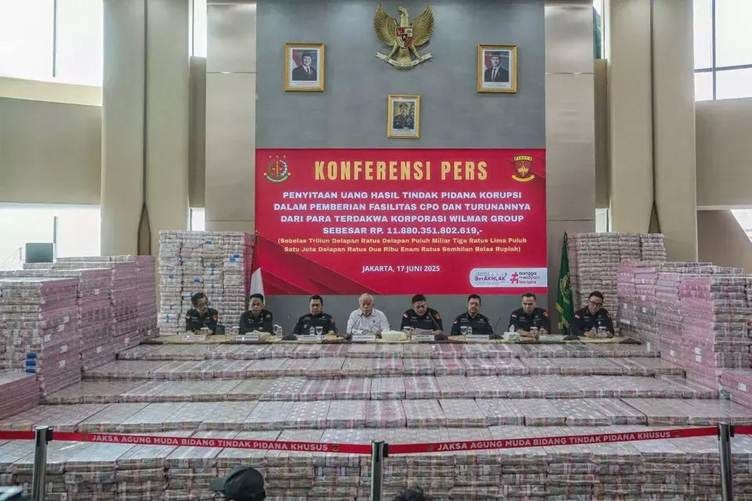
In May 2025, Asian palm oil giant Wilmar Group’s subsidiaries handed a “security deposit” of IDR 11.88 trillion (USD 729 million) to the Indonesian authorities amid a probe into alleged corruption in the issuance of export permits.
Last week, Malaysia’s Genting Plantations said its indirect unit in Indonesia had received an interim administrative fine of nearly IDR 396 billion (USD 23.3 million) from the Indonesian authorities, the Business Times reported.
The company has already made the payment, Genting Plantations said, without disclosing the specific violation cited in the notice.