

📒 Quick Take: Indonesia’s “New Order” Resurgence
Indonesia’s military stalwarts are expanding into the civilian and commercial space.

The growing reach of the military has sparked worries about the resurgence of the late strongman Suharto’s “New Order”.
Instead of reassuring international investors, Finance Minister Purbaya Yudhi Sadewa turned a TV interview into a battle of credentials.
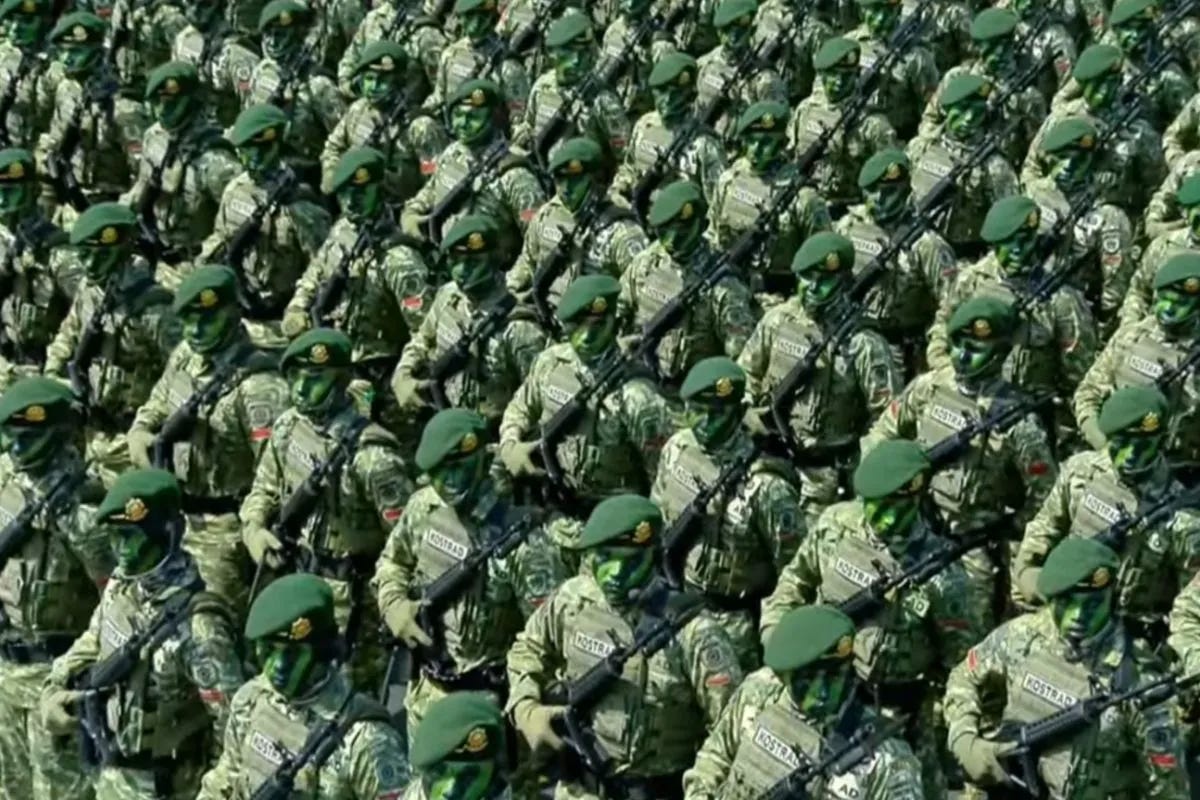
Indonesia’s military stalwarts are expanding their reach into the civilian and commercial space, sparking worries about the resurgence of the late strongman Suharto’s “New Order”.
I wrote on 1 February 2026 that local bankers were unsettled by Defence Minister Sjafrie Sjamsoeddin’s comment that the current president who was once Suharto’s son in law, Prabowo Subianto, would replace the directors of state-owned lenders with those who “love the nation”.
A member of a parliamentary commission overseeing state-owned enterprises (SOEs) questioned Sjamsoeddin’s authority to make such a public statement, as the state-owned banks come under Indonesian sovereign fund Danantara.
“That’s clearly not the territory of the Defence Ministry,” Mufti Anam of Indonesia’s biggest political party, Indonesian Democratic Party of Struggle (PDI-P), told reporters. He added that the state-owned banks are “the backbone” of the state income from the SOE sector, contributing most of the dividends over the years.
The PDI-P politician’s criticism is unlikely to deter Sjamsoeddin.
The powerful defence minister – Prabowo’s former schoolmate who served as Suharto’s bodyguard – is spearheading a military training for around 4,000 Indonesian civil servants. The program aims to foster nationalism among the civil servants and make them part of the military reserve, Sjamsoeddin reportedly said.
On 30 January 2026, Sjamsoeddin reportedly accompanied the president throughout a nearly five-hour meeting with Indonesian figures including the former chair of the Corruption Eradication Commission (KPK), Abraham Samad, to discuss a range of topics.
The meeting was also attended by retired Major General Zacky Anwar Makarim, the former intelligence head at the Indonesian National Armed Forces, Tempo reported, citing Samad. Makarim is one of the key figures in Suharto’s New Order regime, according to research publications.
During the discussion, the president vowed to hunt down “oligarchs who destroyed natural resources” and who “robbed the nation”, even if they are the “Nine Dragons”, Samad reportedly said. These refer to a group of influential businessmen of Chinese descent in Indonesia.

Fund Outflows
Half a year before the mainstream media headlines, I had pointed out the emerging fault lines in Indonesia’s economy.
I flagged in February 2025 that the wave of layoffs in Indonesia’s labour-intensive manufacturing sector risked dampening consumption. Three months later, I connected the jobless numbers, savings rate, mortgage defaults and banking ratios to infer that the economy was likely weaker than what the official numbers suggested.
Fast forward to the present and Indonesia is fighting fund outflows as a potential MSCI downgrade added to investor concerns over the growing centralization and widening fiscal deficit under the current president.
Indonesia’s Finance Minister normally functions like the country’s ambassador to the international community, reassuring investors that the fiscal policy is in safe hands despite the market volatility.
Yet the current Finance Minister, Purbaya Yudhi Sadewa, turned an interview with Bloomberg TV’s Haslinda Amin into a battle of credentials against respected Citigroup economist Helmi Arman.
Instead of addressing the substance of Arman’s forecast that Indonesia’s budget deficit could breach the legal limit this year, Sadewa criticized the Citi economist for lacking a doctoral degree. “I’m the minister, not him. I understand fiscal policy very, very, very well,” Sadewa reportedly said.
Sadewa’s predecessor, Sri Mulyani Indrawati, didn’t have to brandish her credentials because international investors had baseline respect for her. The former World Bank managing director also earned their trust by steering Indonesia through three major financial crises and exercising fiscal discipline.
The risk for Indonesia is that bombast is not a recognized currency in the global arena and investors can simply vote with their feet.