

📒 Quick Take: Asian Flag Airlines’ Cash Plight
From Jakarta to Colombo, Asian flag carriers are fighting a common battle for cash.

Garuda Indonesia’s private placement to sovereign fund Danantara was downsized to USD 1.4 billion.
Sri Lanka aims to restructure its national airline’s defaulted offshore bond by year-end.
Pakistan plans to complete the privatization of its flag carrier before the end of this year.
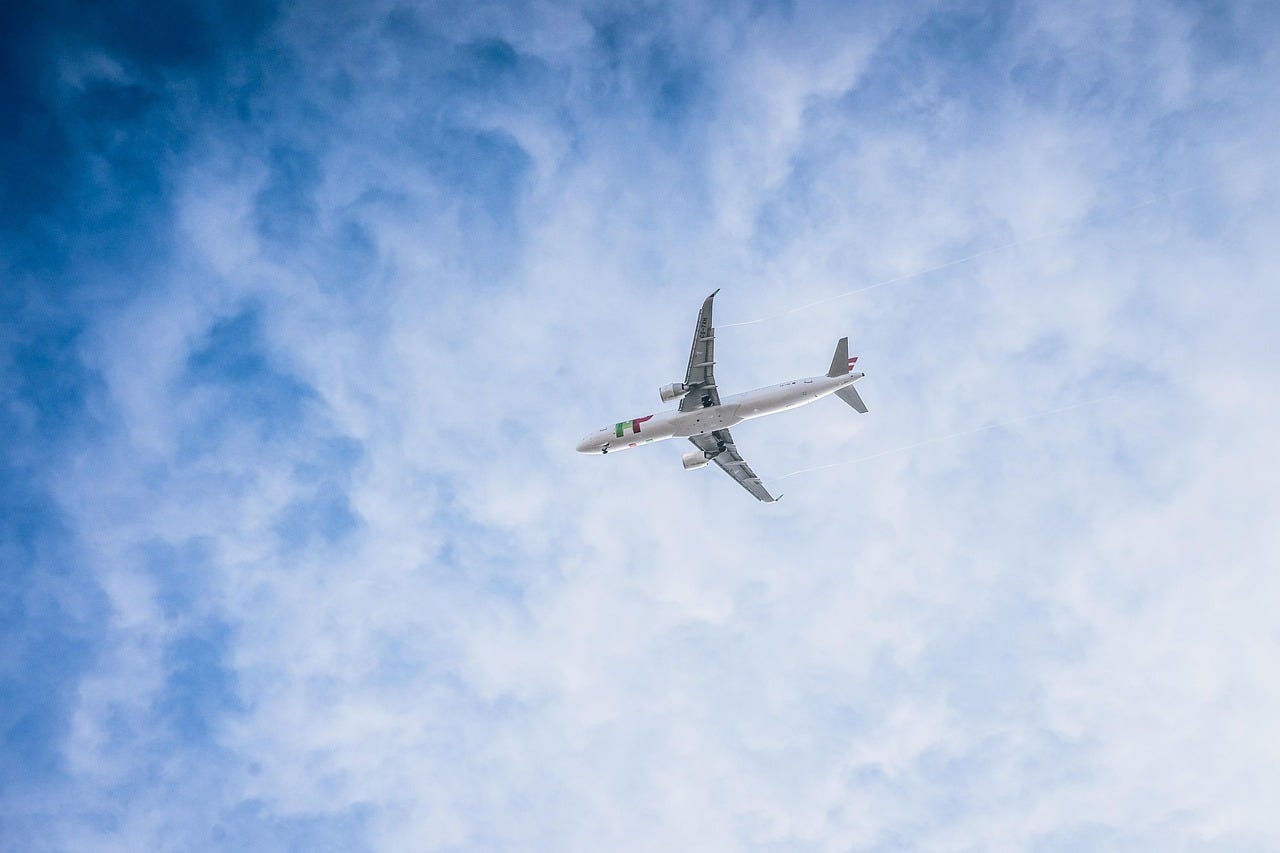
From Jakarta to Colombo, Asian flag carriers are fighting a common battle for cash.
Barely a month since Garuda Indonesia announced a USD 1.85 billion private placement to sovereign fund Danantara, the Indonesian airline updated the local bourse that the amount has been reduced to USD 1.4 billion. Garuda also said that the use of proceeds will no longer include a planned fleet expansion.
In the latest breakdown, Garuda allocated IDR 3.73 trillion (USD 223.4 million at today’s exchange rate) to pay the fuel debt owed by its budget unit Citilink. Garuda didn’t detail the reason for these changes, but state-owned energy giant Pertamina likely pushed to get a bigger share of the cash as Citilink’s fuel debt had piled up over the years.
At a group level, Garuda owed USD 324.5 million of trade payables to Pertamina and its downstream subsidiary Pertamina Patra Niaga as of end-September. (Click here for my analysis of Garuda’s latest results and here for a compilation of my takes on the Indonesian airline).
As I noted last month, Indonesian state-owned enterprises (SOEs) have been performing their family duty and supporting each other, such as by rolling over trade debt. Most SOE bosses typically tell the public that they will follow instructions from the top, but they may also privately lobby their shareholder as they seek to preserve their own liquidity.
In Garuda’s case, the smaller capital injection won’t fully cover the airline’s negative equity, which widened to USD 1.54 billion as of end-September. The change of plan in favor of paying more debt to Pertamina also means that Garuda may not be able to ramp up its fleet as fast as previously expected.
SriLankan Airlines (SLA) is in a worse shape than Garuda as it reported a negative cash position of LKR 17.6 billion (USD 57.8 million) as of end-March.
SriLankan President Anura Kumara Dissanayake said that SLA’s government-guaranteed offshore notes – which had ballooned to around USD 210 million due to outstanding coupons – are expected to be restructured by year-end, according to local media.
As I noted two months ago, SLA’s bondholders have limited bargaining power because the most favored creditor (MFC) clause in Sri Lanka’s restructuring gave the nation a justification not to give special treatment to any group of creditors. Nevertheless, the bondholders were not taking it lying down as they hoped to extract some concessions from the government.
The bigger picture is that Sri Lanka is assessing what it should do with its flag carrier. In his budget speech, President Dissanayake noted that Sri Lanka’s earlier attempt to sell SLA did not generate enough interest from buyers.
The government has given SLA’s management “some time” to implement their turnaround plan, but if this fails, “we will not hesitate to look at the airline in a different way,” Dissanayake reportedly said.
Elsewhere in South Asia, Pakistan plans to privatize 24 SOEs and merge 39 ministries as part of a major restructuring, local media reported last week. Finance Minister Muhammad Aurangzeb said his government aims to complete the privatization of Pakistan International Airlines (PIA) before the end of this year.
The sale of PIA is a key condition under Pakistan’s USD 7 billion bailout from the International Monetary Fund (IMF), CNA reported. Over the past decade, the state-run carrier racked up USD 2.5 billion of losses, with nearly a third of its 30 aircraft grounded due to age, according to CNA.
Some flag airlines have been kept airborne despite consistently losing money, but more countries are recalculating the costs of flying their national symbols.