

📝 Off Grid #1: Old School Journalists
What should remain steadfast in the shifting news industry.


When I’m not connecting the dots or building the grid on Acrostics Asia, I also think of other things like journalism, AI and everything in between.
So I created Off Grid to house my writings beyond credit. It’s also a play on the term “Off Stone”, which refers to a traditional publishing deadline when a newspaper edition is finalized for printing and no further changes can be made.
News Trends
Earlier this month, Reuters Institute for the Study of Journalism released a survey of 280 news media leaders around the world on how they view the challenges and opportunities ahead.
Reading the report felt like a statistical confirmation of the industry trends that I’ve been personally navigating.
I’ve extracted two key charts from the report.
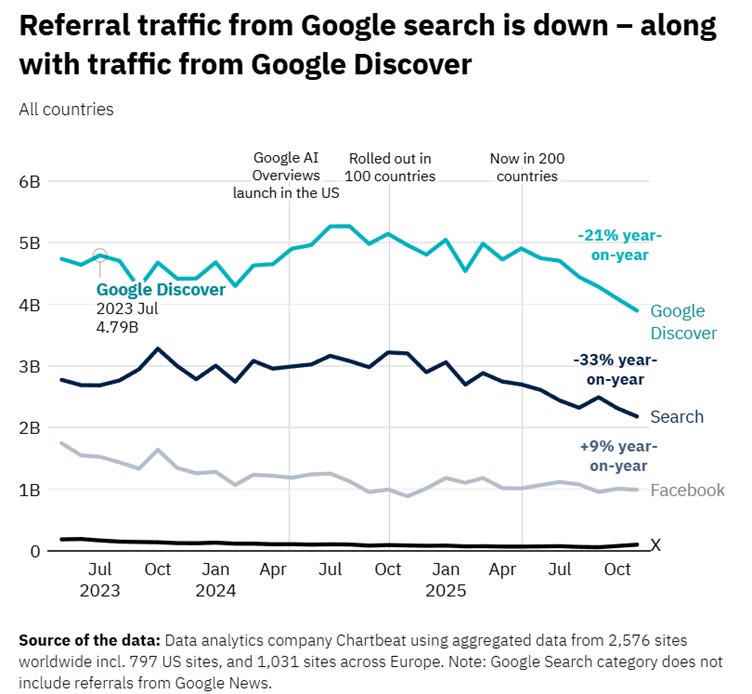
“Publishers expect traffic from search engines to almost halve (-43%) over the next three years, following recent dramatic declines in referrals from social media. The latest concerns are focused on Google’s AI Overviews, which now appear at the top of about 10% of search results in the United States and have been rapidly rolling out elsewhere.”
In a nutshell, publishers that relied on search engines for drive-by readers will have to evolve to survive because AI is killing news traffic.
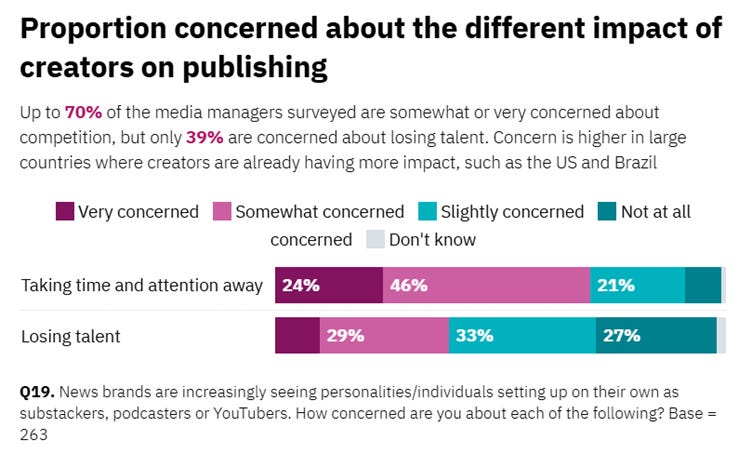
On the flip side, technology has empowered individual “creators” to build a direct relationship with the audience.
Based on my own experience, I had been building a file on LinkedIn and the next step was to find a platform that can widen Acrostics Asia’s reach as well as facilitate more collaborations.
I checked out Substack during the year-end and realized the tools were quite intuitive, so I started layering the bricks that ended up as a website and email alert system.
Substack is basically like a landlord running a building’s infrastructure such as the utilities or plumbing.
It also hands individual writers like me the tools to plug into the central grid and operate my own unit, but what I decide to produce and how to showcase it are up to me.

“Old School Reporter”
Despite these modern tools, some journalistic traditions should remain steadfast.
When respected aviation analyst Shukor Yusof called me an “old school reporter” in his year-end note, that was actually a badge of honour for me.
I was fortunate to have mentors including Kevin Lim who trained me on newsroom rigour and reporting practices that ought not to be eroded by the shifting currents.
I believe these can be boiled down to two things:
Verify, verify, verify: Don’t get stunned by big numbers waved in your face by newsmakers or sources, and check whether this makes sense or not. It’s important to have a trusted bouncing board who can tell you if something is off track.
Credibility is the top currency: Journalists shouldn’t undermine their own credibility by trumpeting fake exclusives or running hidden advertorials that make advertising indistinguishable from reporting. Once trust is lost, it’s very hard to win readers back.
The news business is hard – anyone saying otherwise would be lying.
But in an age when AI permeates various industries and PR professionals outnumber journalists by six to one, facts and authenticity are more precious than ever.