

💼 Brief Takes: Hong Kong’s Office Upturn | Indonesia’s Textile SOE | Singapore’s Rental Car Wreck
Concise insights on multiple news items

Office leasing activities in Hong Kong seem to be picking up in certain pockets.
Indonesia plans to set up a new textile SOE but it’s unclear if this state venture will be more competitive than private enterprises.
Autobahn drivers may not get their deposits back in the Singapore rental group’s liquidation.
Hong Kong’s Office Upturn
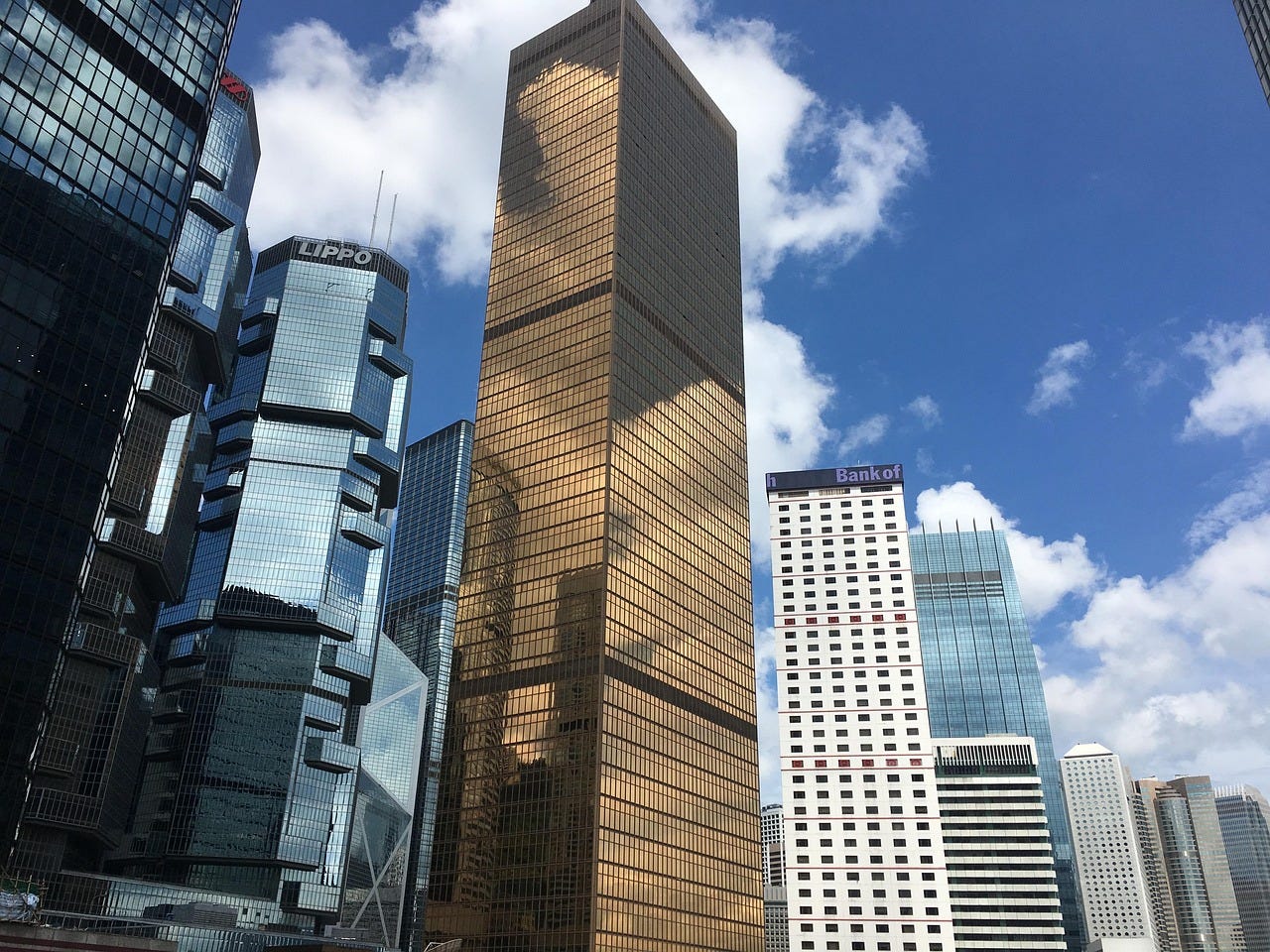
Ares Management is doubling its real estate footprint in Hong Kong, The South China Morning Post (SCMP) reported.
The asset manager would add about 12,500 square feet of space in Gloucester Tower – where it has been a tenant since 2017 – and the new lease will be effective in March, according to a statement from the landlord Hongkong Land.
Eveline’s Take
Office leasing activities in Hong Kong seem to be picking up in certain pockets as the city’s financial sector shows signs of recovery.
Banks and financial service firms accounted for 42% of Hongkong Land’s office tenants as of June, making them the biggest category in the developer’s Central portfolio, SCMP reported.
Last year, overall office rents in Hong Kong fell 2.9% from a year earlier, the least since 2019, according to CBRE. Rents in Central were broadly flat while Tsim Sha Tsui recorded a 2.9% growth, SCMP reported. This year, JLL estimated a rent increase of up to 5% for Grade A offices in Central.
I wrote in May last year that some private credit funds preferred scooping up distressed commercial assets in Hong Kong partly due to the enforcement challenges on the mainland. While Hong Kong’s office market performance has been uneven, the funds that picked the right assets in prime locations may have made a good bet.
Indonesia’s Textile SOE

Indonesia plans to establish a new state-owned enterprise (SOE) focused on the textile and garment sector, a move aimed at strengthening the industry against external shocks including US tariffs and the flood of Chinese imports, The Business Times reported.
Coordinating Minister for Economic Affairs Airlangga Hartarto said the company will be directly managed by sovereign fund Danantara, with an initial funding of up to USD 6 billion.
Eveline’s Take
This is a head-scratcher because it’s unclear whether a new textile SOE would be more competitive than private enterprises.
Indonesia already had a state-owned textile company called Primissima that laid off around 400 workers under the supervision of distressed asset manager Perusahaan Pengelola Aset (PPA) in 2024.
The achilles’ heel in Indonesia’s textile sector is the lack of working capital, as suppliers requested to be paid faster while customers took longer to pay up. Sritex (which shut down in March 2025) and Pan Brothers (which went through two debt restructurings) fell into distress after banks pulled this lifeline.
The new textile SOE might work if it gets working capital from Danantara or the state-owned banks, but I wrote that money is being moved around in the SOE whirlpool and these companies will eventually have to add genuine value or attract third-party capital to be sustainable.

Singapore’s Rental Car Wreck
Private-hire car drivers whose vehicles were repossessed by creditors of Autobahn Rent A Car “will face difficulties getting their deposits back” because they are unsecured creditors, The Business Times reported, citing Singapore’s Senior Minister of State for Transport Sun Xueling.
Eveline’s Take
Some businesses folded in Singapore because they committed to high fixed costs before the market demand was proven – and Autobahn doesn’t seem to be an exception.
The vehicle rental group reportedly ramped up its fleet to around 1,700 cars even though the city-state is known for its relatively efficient and affordable public transport.
A group of 18 related companies – including Autobahn and car-sharing service Shariot – collectively owed SGD 305.9 million (USD 237.5 million) to various financial institutions, businesses and government agencies, The Straits Times reported last month. These creditors include DBS which was owed SGD 94.8 million, UOB SGD 13.4 million, and OCBC SGD 8.6 million.
Secured creditors will take the first dibs on the pool of assets in a liquidation, potentially leaving crumbs for unsecured creditors including the drivers.
When asked in Parliament if the drivers’ deposits should be ringfenced, Sun reportedly said this could “result in increased compliance burden and ownership costs for private-hire vehicles”, which would likely be passed on to drivers and passengers.
She has a point because the state shouldn’t have to interfere if a company with a bad business model succumbs to private market forces. However, the drivers do need support from the government, which could be provided without tightening regulations across the board.