

💼 Brief Take: The Media Machine
In the breathless pursuit of an exclusive, the media machine risks presenting one-sided fragments as the entire picture.

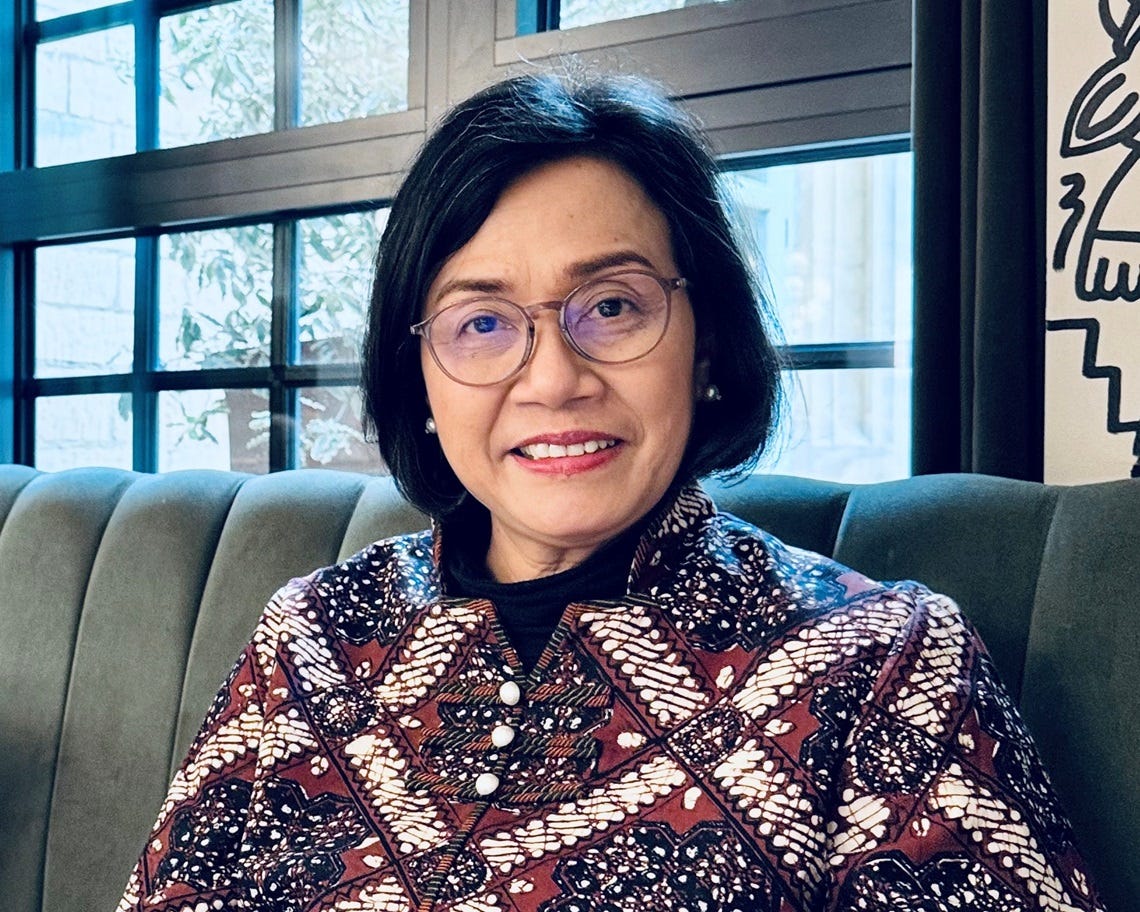
I’ve long been uncomfortable with the media coverage of former Finance Minister Sri Mulyani Indrawati’s exit from the Indonesian Cabinet.
In March 2025, a regional news agency cited an unnamed analyst who criticized Sri Mulyani’s “overly cautious” fiscal policy. “She is not pro-growth, and this is obviously not in line with President Prabowo’s ambitious economic growth target,” the anonymous analyst said.
After the article’s publication, I wrote that the former World Bank managing director’s prudence was precisely one of the pillars that held Indonesia up amid the global volatility.
“Being cautious doesn’t mean resisting growth – it means recognizing that Indonesia has always been vulnerable to capital outflows and taking the wrong step could be irreversible,” I noted on 31 March 2025.
“While Sri Mulyani is an important crew member, the direction of the ship ultimately depends on the captain.”

When Sri Mulyani’s home was ransacked in late August 2025, pictures of her and her family’s strewn belongings were splashed all over local media. A week later, an international news agency ran an exclusive report – citing anonymous sources – that she only got an hour’s notice before she was sacked.
I know full well how the media machine works. When big news like this breaks, local bureaus are placed under immense pressure to pull ahead of the pack. Global editors sitting in New York or London likely asked relentlessly: “Did she or did she not resign?”
I wrote on 10 September 2025 that the answer was likely somewhere in between.
In a podcast released on 13 September 2025, investigative news agency Tempo reported that after the looting, Sri Mulyani travelled to President Prabowo Subianto’s country estate in Hambalang to submit her resignation. However, the president reportedly refused to accept her resignation and told her that he would only do so on his own terms.
In short, the president’s camp had likely sought to seize the public narrative once it became clear that she was serious about leaving.
Indonesia is never black and white – some sensitive situations cannot be reduced to binary questions as there’s a spectrum of nuances in between. In the breathless pursuit of an exclusive, the media machine risks presenting one-sided fragments as the entire picture.
At the minimum, the media shouldn’t become a tool for anonymous sources to attack someone who’s served the country for decades. Public officials also have the right to dignity and privacy.