

💼 Brief Take: Go First’s Missing Tyres
Japanese tyre maker Bridgestone is chasing bankrupt Indian airline Go First to recover 1,400 tyres.

3 September 2025
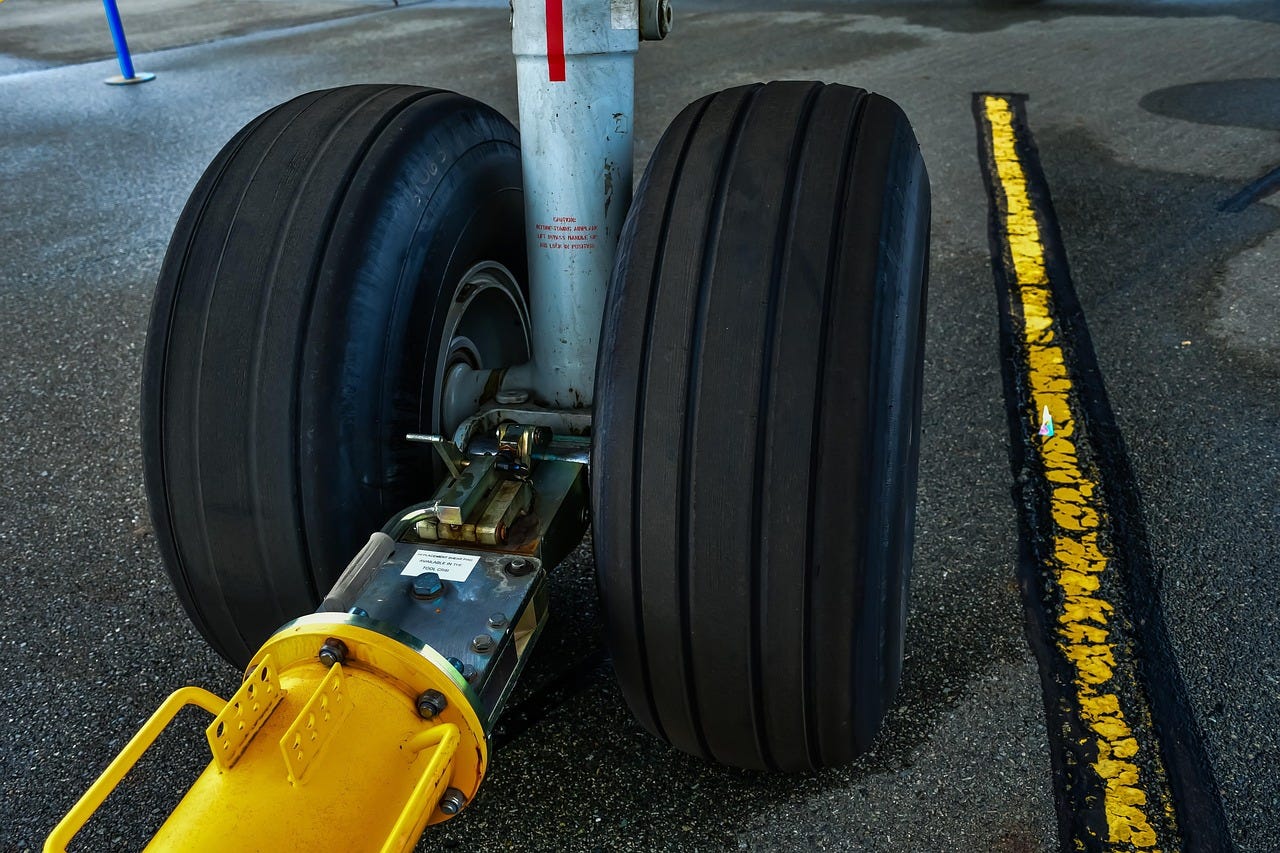
Bankrupt Indian airline Go First faces a lawsuit over 1,400 missing tyres leased to it by Bridgestone, Mint reported on 3 September 2025. The Japanese tyre maker’s Thailand subsidiary has petitioned the National Company Law Tribunal (NCLT) in New Delhi, arguing that the tyres should not be included in Go First’s assets to be liquidated.
Eveline’s Take:
🛞 The global airline industry has no shortage of disputes. Vietnam’s VietJet is locked in a long-drawn duel with UK buyout group FitzWalter Capital over unpaid rents. SriLankan Airlines’ bondholders were blocked by a local court after threatening to wind up the flag carrier. Greylag Goose Leasing waged a multi-jurisdiction war against Garuda Indonesia, with the national airline clinching key victories in Singapore and Australia.
🛞 In this case, Bridgestone is reportedly chasing Go First (formerly known as GoAir) to recover 1,400 tyres that were each leased at USD 200 – 700 a month. In January 2025, an Indian tribunal ordered the liquidation of the budget carrier, which owed INR 65.21 billion (USD 741 million) to creditors including the Central Bank of India, Bank of Baroda, IDBI Bank and Deutsche Bank, according to Financial Express.
🛞 The key point of contention would likely be whether the tyres are owned by Go First or remain the property of Bridgestone. This is because under Section 36 of India’s Insolvency and Bankruptcy Code (IBC), “assets owned by a third party which are in possession of the corporate debtor” shall not be included in the liquidation estate and used for recovery.
🛞 Bridgestone is arguing that the tyres were leased and not sold to Go First, meaning that the ownership was not transferred to the airline. If the Indian tribunal accepts this argument, then the tyres cannot be liquidated to pay Go First’s creditors and will likely have to be returned to Bridgestone or compensated.
🛞 The outcome of the case should be closely watched by other suppliers to Indian airlines because it could help to clarify how the NCLT views asset ownership in a lease structure. In short, these suppliers would likely want to know whether they could repossess the assets or must line up with other creditors in a liquidation.

👣 Asia’s Restructuring Milestones: India’s Reversal
30 November 2025
The Supreme Court restored trust in India’s bankruptcy framework by upholding JSW Steel’s acquisition of Bhushan Power & Steel.
India’s airline sector is also in the spotlight with the implementation of the Cape Town Convention and Go First’s dispute with tyre lessor Bridgestone.
India’s restructuring and insolvency community was jolted by the Supreme Court’s 2 May 2025 decision to scrap JSW Steel’s acquisition of Bhushan Power & Steel around four years after the deal was finalized.
The order to unwind JSW Steel’s court-approved acquisition of Bhushan Power had raised questions over the sanctity of the legal process under India’s Insolvency and Bankruptcy Code (IBC). In 2016, the IBC was created as a consolidated framework to oversee insolvency and bankruptcy proceedings in a “time bound manner”.
I wrote in May that the ruling was a collective head-scratcher because nobody really knew how to reverse an acquisition four years after the fact. Bhushan Power’s lenders already offloaded chunks of their exposure on various parties, meaning that the debt had changed hands multiple times and any attempt to claw it back would have been daunting.
After completing the INR 197 billion (USD 2.2 billion) acquisition of Bhushan Power in 2021, Indian tycoon Sajjan Jindal’s JSW Steel had also boosted the annual crude steel capacity of the subsidiary by nearly 65%. In short, the top court’s 2 May ruling was both impractical and potentially damaging to investors’ confidence in the IBC.
On 26 September, a three-judge bench led by India’s Chief Justice decided to uphold the validity of the acquisition, bringing relief to many of the country’s restructuring and insolvency practitioners. “Permitting any claims to be reopened will amount to committing violence on the provisions of the law,” according to the latest verdict.
The Supreme Court “saves IBC” by restoring the trust of market players, including creditors and prospective applicants, in the resolution framework and ensuring that “a significant economic reform is not inadvertently undone by the judiciary,” Indian law firm AZB & Partners wrote in a note.
Aviation Leasing
In another notable development this year, the Indian Parliament passed a bill to fully implement the Cape Town Convention, which was a long-standing demand of the international aircraft leasing community, according to Chandhiok & Mahajan.
“One of its key features is that it overrides conflicting provisions of existing domestic laws, including the Insolvency and Bankruptcy Code 2016, thereby ensuring better protection of the rights and interests of aircraft lessors and creditors in India,” the Indian law firm said.
India’s airline sector has also been in the spotlight as bankrupt carrier Go First reportedly faced a lawsuit over 1,400 missing tyres leased to it by Japan’s Bridgestone. I wrote in September that the key point of contention would likely be whether the tyres are owned by Go First or remain the property of Bridgestone.
This is because under Section 36 of the IBC, “assets owned by a third party which are in possession of the corporate debtor” shall not be included in the liquidation estate and used for recovery.
The outcome of the case should be closely watched by other suppliers to Indian airlines because it could help to clarify how the National Company Law Tribunal (NCLT) views asset ownership in a lease structure. In short, these suppliers would likely want to know whether they could repossess the assets or must line up with other creditors in a liquidation.