

📚 Acrostics Anatomy: Vedanta’s Lucky Streak
Indian billionaire Anil Agarwal‘s mining group walked a refinancing tight rope.

💼 Brief Take: Vedanta, the Cat with Nine Lives (23 April 2025)
📒 Quick Take: Asia’s Mushrooming Private Credit Part 1 (9 May 2025)
📒 Quick Take: Asia’s Bond Tide (2 October 2025)
📒 Quick Take: Asia Private Credit’s Reality Check (29 November 2025)
💼 Brief Take: Vedanta, the Cat with Nine Lives
23 April 2025
India’s Vedanta Group secured a key private credit facility to avoid a bond default and has now obtained approval for a corporate split.
To pull off this tightwire act, Vedanta played two cards – assets and timing – to its advantage.
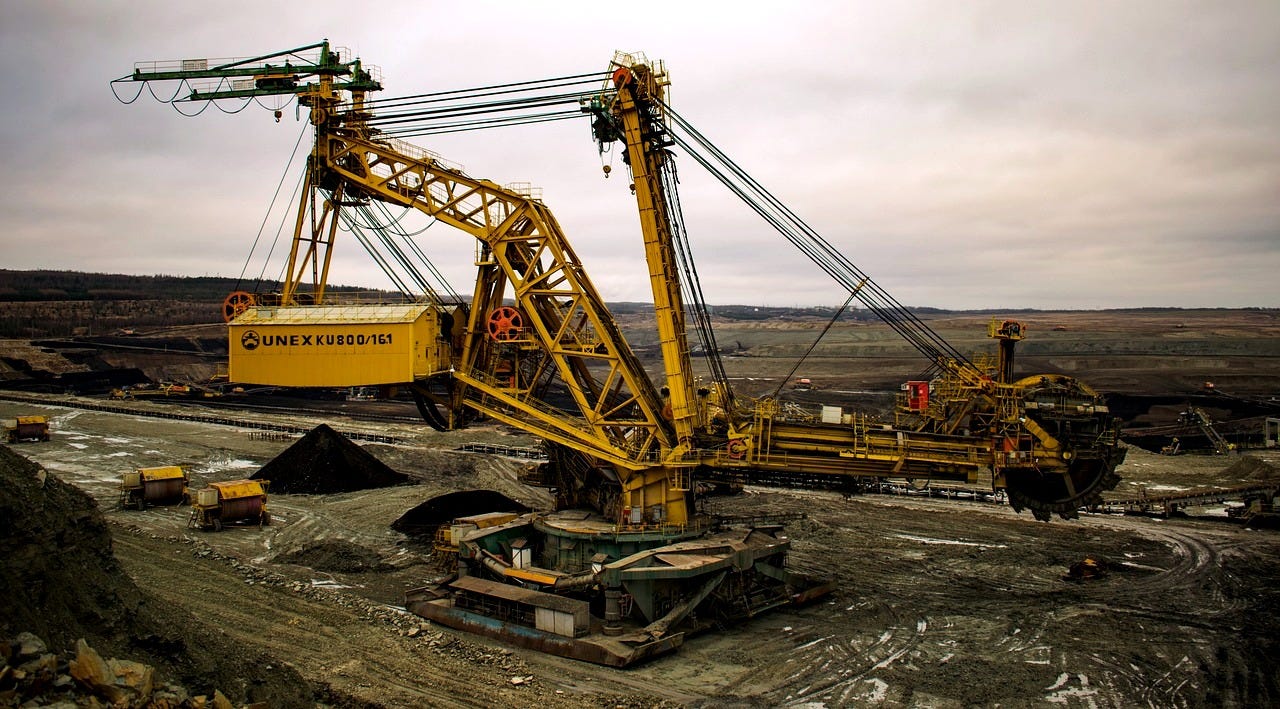
Indian billionaire Anil Agarwal is inching closer to finishing a long-planned breakup of his metals-to-energy conglomerate Vedanta Limited, a move aimed at trimming the group’s USD 11 billion debt pile and giving more attention to different businesses, Bloomberg reported on 22 April 2025.
Eveline’s Take:
🐈⬛ Agarwal’s Vedanta Group is like a cat with nine lives, clearing one hurdle after another while walking on a tightrope. Vedanta Resources, the London-based holding company, secured a crucial USD 1.25 billion private credit facility in December 2023, which allowed it to push out some of its bond maturities. Then in February 2025, shareholders and lenders of key operating company Vedanta Limited approved its proposed split into five entities, which should be viewed favourably by rating agencies.
🐈⬛ The credit game has long hinged on a borrower’s ability to obtain bank loans to take out its bonds and vice versa, but now there’s a new player in the block: private credit funds. While these funds typically have a higher risk appetite and flexibility to structure their facilities, they also tend to demand their pound of flesh in return for pulling the borrower out of a credit crunch. Hence, a borrower usually turns to private credit as a “bridge” to a more sustainable source of funding.
🐈⬛ Vedanta played two cards – assets and timing – to its advantage. On top of an overall return of around 20%, Vedanta’s private credit lenders also got access to cashflows, mainly in the form of dividends and “brand fees” from its subsidiaries, IFR reported. The loan didn’t come cheap at all, but it gave Vedanta enough runway to reopen the international bond market.
🐈⬛ When Vedanta moved to tackle its bonds, China’s property meltdown had created a big vacuum in Asia’s high-yield market that couldn’t be plugged by alternative issuers. Investors were more suspicious of Indonesian credit after the defaults of textile trio Sritex, Duniatex and Pan Brothers, while a string of companies tapped the onshore banking liquidity for refinancing. In short, bondholders may have accepted Vedanta’s liability management proposal partly due to the lack of supply in the region.
🐈⬛ Vedanta’s tightwire act shows that timing is as important as fundamentals – or even more so. A credit analyst can dig out all the risks and still get caught on the wrong side of the tide if the borrower manages to defuse its refinancing bomb in time.
📒 Quick Take: Asia’s Mushrooming Private Credit Part One
9 May 2025
Private credit funds are lured by opportunities ranging from scooping up distressed assets in Hong Kong to getting juicy returns from Indian borrowers.
The Australian market is developing rapidly, but Southeast Asia is growing at a slower pace partly because investors have to navigate the diverse legal systems.

Private credit funds have been mushrooming in Asia, lured by opportunities ranging from scooping up distressed assets in Hong Kong to getting juicy returns from Indian borrowers.
Four years since China Evergrande Group’s implosion, China is still dealing with the fallout and many developers that had restructured their debt will likely have to go for Round 2. The property sector has USD 32 billion of bonds due this year, nearly a third of offshore maturities totalling USD 104 billion, according to a report by S&P Global Ratings.
China is considering a new model for its housing market, where developers must offer only completed property instead of relying on pre-sales, Bloomberg reported yesterday.
This is likely aimed at getting rid of excess supply that has suppressed prices, but it risks choking the remaining lifeline of cash-strapped developers. In short, lancing the boil is a way to prevent the rot from spreading, but it could get messy first.
The consolidation in China’s property sector is likely to accelerate in favour of state-owned developers and a handful of private companies.
The weaker developers may step up asset sales in a bid to survive, offering bargains for investors including private credit firms. However, some investors prefer acquiring assets such as commercial property in Hong Kong because of the enforcement challenges in mainland China.
In India, private credit is becoming a more common option to raise funds for capex, acquisitions and refinancings. In 2024, private credit deals grew 7% to USD 9.2 billion – spread across 163 transactions – from a year earlier, according to an EY report. In the second half of 2024, property remained as the dominant sector with 43% of total investments, followed by consumer durables and financial services.
While private credit is less liquid than high-yield bonds, Indian miner Vedanta Resources’ turnaround story showed how a private credit deal can move publicly traded bonds big time.
The company controlled by Indian billionaire Anil Agarwal secured a crucial USD 1.25 billion private credit facility in late 2023, which helped it to push out its bond maturities and rebuild its access to the debt markets. As a result, one of Vedanta’s bonds was among the best performers in India’s high-yield space with an 80% return last year.
India will likely continue to attract interest from private credit funds, but the Supreme Court’s decision last week to scrap JSW Steel’s acquisition of Bhushan Power & Steel (BPSL) under the Insolvency and Bankruptcy Code underscores the legal risk in the country.
Foreign investors including Ares SSG Capital, Deutsche Bank and Silver Lake had bought security receipts backed by BPSL debt and are now left in limbo, the Economic Times reported.
In short, BPSL’s lenders already chopped up the debt and offloaded chunks of it on various parties to reduce their exposure, so the Supreme Court’s order to liquidate the company must have been a collective head-scratcher. How do you unwind an acquisition and claw back the money around four years after the deal was supposedly finalized?
Down under, Australia’s private debt market is experiencing “remarkable growth”, with an estimated size of AUD 205 billion in assets under management as of end-2024, according to a report by Alvarez & Marsal.
Southeast Asia is growing at a slower pace, partly because investors have to navigate the diverse legal systems in the region. Indonesian borrowers also benefitted from the onshore banking liquidity over the last few years, though this wave has been receding.
Private credit is increasingly accepted as one of the options to raise money in Asia, so it’s likely here to stay.
🍄Quick Take: Asia’s Mushrooming Private Credit Part 2

📒 Quick Take: Asia’s Bond Tide
India’s Vedanta Resources and Australia’s Nickel Industries drew strong demand, while Southeast Asian issuers such as Giti Tire and Muangthai Capital tested investor interest.
Asia’s high-yield market is essentially a game of musical chairs where lenders pass a credit to each other and hope that the music doesn’t stop prematurely.

After nearly four years of drought, Asia’s bond tide has returned as issuers are wading back to a more receptive offshore market.
China’s wave of property defaults unleashed by China Evergrande’s collapse in late 2021 – combined with US interest rate hikes from 2022 to 2023 – had sucked the oxygen out of Asia’s high-yield bonds as investors fled to safety. However, the sector started bouncing back in 2024, delivering a “robust” return of 15.2% in USD terms, according to a UBS report.
China’s real estate sector represented 38% of Asia’s high-yield market five years ago, but this figure has fallen to 7% because many Chinese developers had defaulted and were dropped from the index, UBS said in its February 2025 report. “As a result, the Asian high-yield market has become much more diversified in terms of both countries and sectors.”
This was partly a function of demand and supply, as China’s property meltdown blew a hole in Asia’s high-yield universe and investors had to find a way to put their money to work. In short, investors have been reducing their reliance on Chinese developers and diversifying to other countries such as India, Australia and Indonesia.
Hot Bonds
Indian conglomerate Vedanta Resources announced on 1 October 2025 that its subsidiary’s USD 500 million bond sale was more than three times oversubscribed, drawing bids exceeding USD 1.6 billion. This came after Australian miner Nickel Industries upsized its USD 500 million bond issuance to USD 800 million last week.
Southeast Asian issuers such as tire manufacturer Giti Tire and consumer lender Muangthai Capital have also been gauging investor interest, according to a market friend. Even Chinese developer Seazen Group managed to sell a USD 160 million bond last week, though the two-year notes were priced at a hefty 13% yield, Bloomberg reported.
Underscoring the appetite for fresh bond supply, Vedanta and Nickel Industries managed to attract strong demand despite some headline risks. For example, the deadline for the planned “demerger” of Indian operating company Vedanta Limited was reportedly delayed until March 2026, pending approvals from the National Company Law Tribunal (NCLT) and other authorities.
Vedanta has also been the target of US short-seller Viceroy Research, while some analysts are reportedly concerned that the company is over-extending itself by proposing to acquire insolvent infrastructure developer Jaiprakash Associates.
Meanwhile, Nickel Industries pulled off its bond sale even after its Australian-listed shares plunged in March amid concerns that the Indonesian government would raise royalty rates, AFR reported. Nickel Industries operates mines and processing facilities in Indonesia.
Musical Chairs
Asia’s high-yield market is essentially a game of musical chairs where lenders pass a credit to each other and hope that the music doesn’t stop prematurely. Even if the fundamentals may not be stellar, everything’s fine if the borrower can find new lenders to take out the existing creditors.
In the case of Vedanta, I previously wrote that the group played two cards – assets and timing – to its advantage. The London-based holding company secured a crucial USD 1.25 billion private credit facility in late 2023 by offering the lenders access to dividends and “brand fees” from its subsidiaries.
That private credit lifeline was expensive but it served as a bridge to a more sustainable source of funding for Vedanta. Now, the company has successfully issued seven-year bonds for refinancing, which means that it was able to replace some of its high-cost debt with cheaper and longer-dated notes.
The high-yield musical chairs usually involved banks and bondholders swapping seats with each other, but borrowers like Vedanta have another option now. Private credit funds typically come with a higher risk appetite and flexibility to structure their facilities, though they also tend to extract their terms.
While the game has benefitted from a third player, it might be worth remembering how rapidly Indonesian textile company Sri Rejeki Isman (Sritex) spiralled into distress when confidence evaporated in 2021.
It’s game over if the players run out. But for now, the music seems to be back on.
📒 Quick Take: Asia Private Credit’s Reality Check
The emergence of private credit as an asset class in Asia doesn’t remove its structural shortcomings.
While Asia’s private credit market has shown some fissures, it’s unlikely to run out of players who bet that they can exit in time and make money.

Asia’s private credit boom has turned into a reality check for some of the funds operating in the region.
Six months ago, I wrote that private credit funds were mushrooming in Asia, lured by opportunities ranging from scooping up distressed commercial property in Hong Kong to getting juicy returns from Indian borrowers. However, I noted that the ability to recover a loan when it goes bad is the key differentiator in this increasingly crowded landscape.
Bloomberg reported several cracks that have started to appear:
BlackRock Stumbles in Asia Private Credit Push, Forcing Rethink (26 November 2025)
Private Equity Firm Gaw Secures Last-Minute Loan Extension (25 November 2025)
Deutsche Bank’s DWS Cuts Asia Private Credit Team in Shift (21 November 2025)
Global Investment Firm Arena Investors to Shut Singapore Office (3 October 2025)
Private credit funds – which typically have a higher risk appetite and flexibility to structure their facilities – can provide an additional financing option for borrowers. However, the emergence of private credit as an asset class in Asia doesn’t remove its structural shortcomings.
First, some borrowers who turn to private credit are those that cannot get cheaper financing elsewhere, for reasons such as weak cashflow, high capital requirements, or a challenging business environment. In short, the demand for private credit usually comes from companies mired in a cash crunch.
Second, the effectiveness of the protections negotiated by the private credit lenders would hinge on their ability to enforce these loans, especially in jurisdictions that are seen to favour the borrowers.
The private credit lenders of Visi Media Asia – the media arm of Indonesian conglomerate Bakrie Group – slogged to get their voting rights affirmed in a local in-court restructuring (PKPU) last year after the administrators allegedly sought to disenfranchise them. Visi’s restructuring scheme that was eventually passed might have been slightly better than the initial proposal, but it was hardly a happy ending for the lenders.
Ares Management and Tor Investment Management also had to fight to enforce a USD 200 million loan to Indonesian shopping mall operator Supermal Karawaci and another company controlled by local businessman David Salim. Acrostics Asia broke the news last month that these lenders secured a rare court victory that should pave the way for them to replace Supermal Karawaci’s directors and commissioners.
I cautioned back then that “anything can happen in Indonesia, so it ain’t over until it’s over.” True enough, the incumbents have put up a resistance to the court ruling, potentially prolonging the tussle, according to two friends familiar with the matter.
Party Time
Despite the apparent risks, the private credit party is still raging in India.
The value of private credit investments jumped 53% to USD 9 billion in the first half of 2025 from a year earlier, according to an EY report. This was led by the USD 3.1 billion raised by Shapoorji Pallonji Group’s Porteast Investments for refinancing, which was the largest-ever onshore private credit transaction in India.
Underscoring the exuberance, Shapoorji Pallonji is reportedly back for another borrowing of up to INR 230 billion (USD 2.6 billion). The three-year borrowing for the Indian group’s property arm, Goswami Infratech, comes amid increased speculation over how the conglomerate will monetize its 18.37% stake in Tata Sons, IFR reported.
Potential lenders are probably hoping to strike a lucrative deal like the USD 1.25 billion facility bagged by Vedanta Resources in late 2023. Not only did it offer an overall return of around 20%, the 2.5-year loan also gave the lenders access to Vedanta’s cashflows, mainly in the form of dividends and “brand fees” from its subsidiaries.
I previously wrote that Vedanta got the timing right as it was able to ride the tide and rebuild the confidence of bond investors. “Asia’s high-yield market is essentially a game of musical chairs where lenders pass a credit to each other and hope that the music doesn’t stop prematurely,” I noted.
Banks and bondholders usually swapped seats with each other, but the game has benefitted from the entry of private credit firms as a third player. Apart from participating in this capital recycling exercise, private credit funds can also bridge the gap in areas where banks retreated, such as for environmental, social and governance (ESG) considerations.
Last week, Indonesia’s Chandra Asri Group announced that it had secured a USD 750 million facility from KKR to finance its planned acquisition of ExxonMobil’s Esso-branded petrol stations in Singapore.
Asia’s private credit market has shown some fissures in recent months, but it’s unlikely to run out of players who bet that they can exit in time and make money.