

📚 Acrostics Anatomy: Sritex’s Broken String
The beginning of the end for the 59-year-old Indonesian textile company.

📒 Quick Take: Shrinking Sritex Support (24 February 2025)
💼 Brief Take: End of the Road for Sritex (27 February 2025)
📒 Quick Take: Sritex Shutdown (1 March 2025)
💼 Brief Take: Sritex Ringfence (6 March 2025)
📒 Quick Take: Indonesia’s Restructuring Fault Lines (13 May 2025)
📒 Quick Take: Shrinking Sritex Support
24 February 2025
The Indonesian government’s efforts to save bankrupt textile company Sritex seem to have lost momentum.
There were initial plans to arrange a takeover of Sritex, but the controlling shareholders resisted any potential dilution.
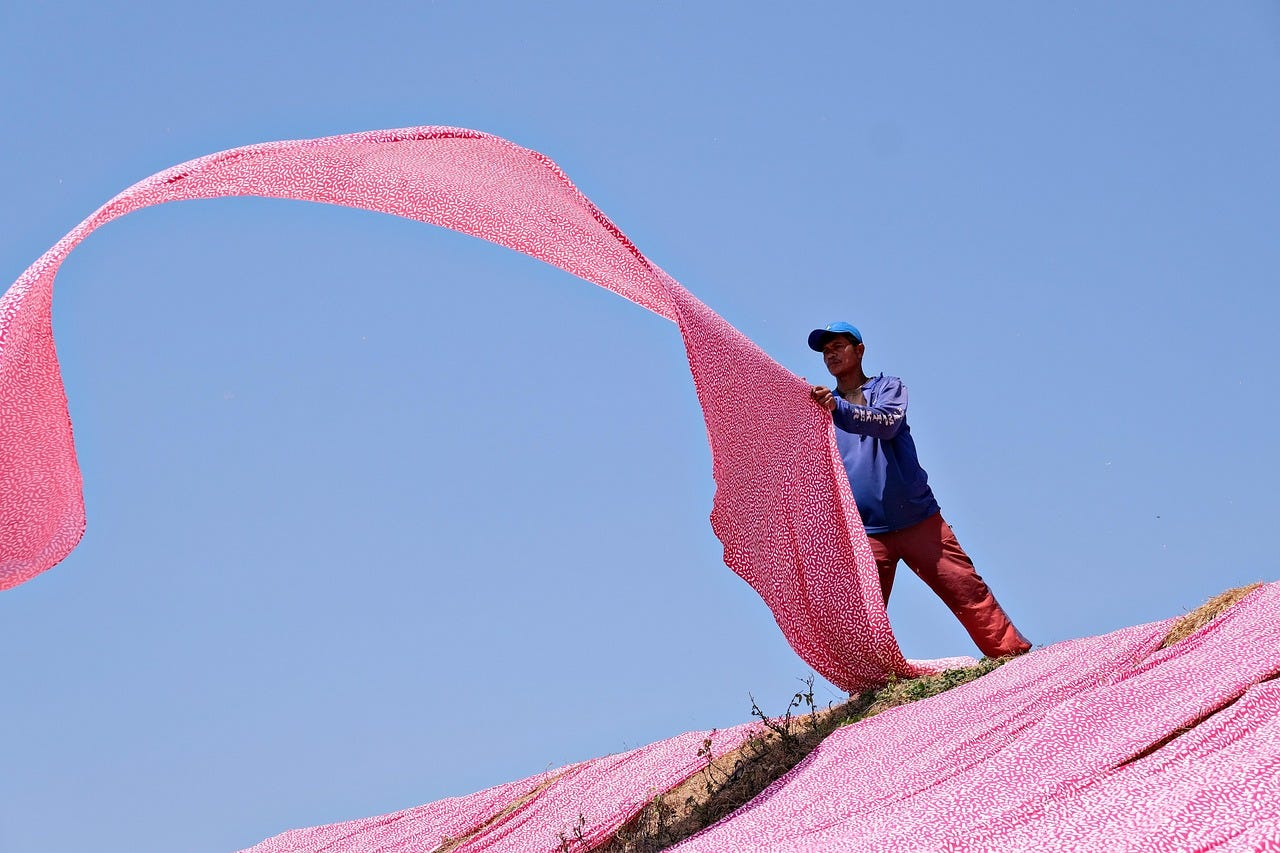
Indonesia’s government initially launched a spirited defence of Sri Rejeki Isman (Sritex), but official efforts to save the bankrupt textile company seem to have lost momentum.
Sritex – which has become the poster boy of Indonesia’s textile crisis – was filed into bankruptcy by one of its suppliers last year. In normal circumstances, the court-appointed administrators would have started liquidating the borrower’s assets to distribute the proceeds to creditors, but Sritex has been kept alive artificially because the government is concerned about the fate of its workers.
I’ve summarized the key points from a podcast by investigative publication Tempo that detailed the extent of the government intervention:
Sritex – controlled by the Lukminto family – requested help from the government, particularly to pressure the administrators to ensure its business continuity, according to Tempo.
The Lukminto family has a long-standing relationship with former President Joko Widodo, supporting his elections and most recently the ascendancy of his eldest son, Gibran Rakabuming Raka, to Vice President, Tempo reported, citing a source in the campaign team. Both families count Central Java as their power base.
After Sritex was declared bankrupt by a local court in October 2024, Brigadier-General Helfi Assegaf from a police unit handling economic and special crime met the administrators and asked them to keep the company as a going concern, according to Tempo. The police also reportedly called some banks to assist an investigation into Sritex’s financing activities, including loan applications and tapping these facilities.
President Prabowo Subianto left the Sritex matters to the vice president, who appointed Deputy Manpower Minister Immanuel Ebenezer Gerungan as the “person in charge”. However, the government “started becoming half-hearted” when it realized how complicated rescuing Sritex would be, according to Tempo.
Initially, there were plans to ask a coal mining tycoon in Kalimantan to take over Sritex, but he declined this overture, Tempo reported, citing a banker and a cabinet member. The talks then switched to potentially assigning the task to a state-owned enterprise (SOE), but this would be challenging as SOEs lack the textile expertise.
During the pandemic, a foreign investor actually expressed interest to acquire Sritex, but the Lukminto family was unwilling to give up equity at that time, Tempo reported, citing a banker. Now that Sritex has fallen to its current state, there are unlikely to be any willing buyers.
Now these are my thoughts:
The involvement of the Indonesian police in the restructurings of textile companies is not new. In 2019, the police called the lenders of Sritex’s peer Duniatex to a meeting and asked them to support the company, citing the size of its workforce. Sritex’s lenders were similarly asked to approve its earlier in-court restructuring (PKPU) in 2021.
Echoing what Tempo reported, two friends who were briefed on the matter previously told me there were takeover talks that may reduce Sritex’s controlling shareholders to a minority. While the founding family fiercely resisted any potential dilution, they are running out of firepower, one of my friends said.
The political intervention in a commercial case that had gone through Indonesia’s court system is a worrying trend that could further undermine investor confidence. Trust in the rule of law is crucial for long-term investments in the country.
💼 Brief Take: End of the Road for Sritex
27 February 2025
Sritex’s demise is not a surprise as there’s no way it could have continued as a going concern.
Sritex’s fate reinforced that an Indonesian borrower is unlikely to get another shot if it defaults on its local in-court restructuring (PKPU) deal.
Indonesian textile company Sri Rejeki Isman (Sritex) will shut down on 1 March 2025 after terminating around 8,400 workers, CNN Indonesia reported on 27 February, citing a local government official.
Eveline’s Take:
👚 Sritex’s demise is not a surprise as there’s no way it could have continued as a going concern. The company has been selling goods below its costs while its debt far exceeds equity.
👚 I wrote on 24 February that the government’s efforts to save Sritex were hitting a wall as a state bailout was out of the question. State-owned enterprises (SOEs) lack the expertise to run a textile operation while private investors wouldn’t want to touch Sritex with a ten-foot pole.
👚 Sritex’s fate reinforced that an Indonesian borrower is unlikely to get another shot if it defaults on its local in-court restructuring (PKPU) deal. Indonesian shipping company Arpeni Pratama Ocean Line attempted a post-PKPU restructuring in 2019, but it also ended up bankrupt after Bank CIMB Niaga successfully challenged it at Indonesia’s Supreme Court.
👚 I warned on 7 February that Indonesia is facing a wave of layoffs in its textile and startup sectors, posing a risk to its economy that’s already growing at the slowest pace in three years.
Background:

📒 Quick Take: Sritex Shutdown
1 March 2025
Sritex closed its factories today, ending its legacy as a household textile manufacturer.
The last leg in Sritex’s journey was defined by a failure of accountability.
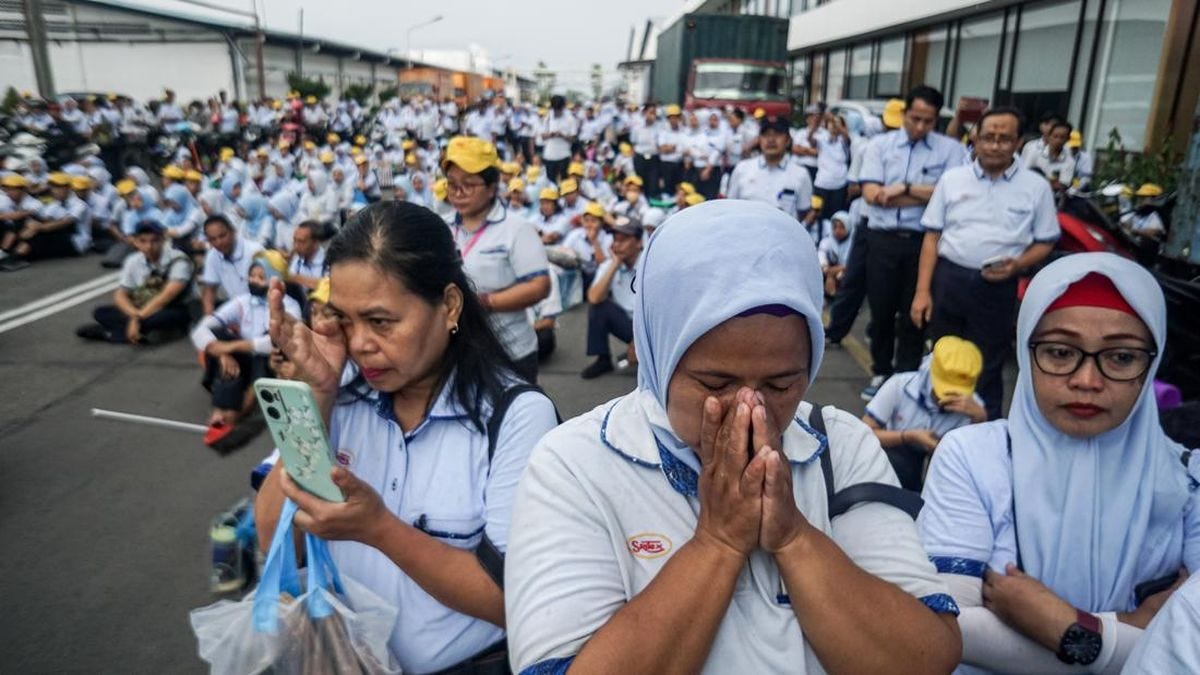
Indonesia’s Sri Rejeki Isman (Sritex) closed its factories today (1 March 2025), ending its legacy as a household textile manufacturer.
Sritex and its three units went bankrupt and terminated nearly 11,000 workers in total, according to local media. As I previously wrote, the size of Sritex’s workforce was unlikely to be as huge as the 50,000 figure brandished by its management and government officials. Still, the laid-off workers are real people who represent the human cost of the Sritex debacle.
Sritex was founded in 1966 by the late Haji Muhammad Lukminto, who grew it from a small trading business in Solo into a textile powerhouse with a global footprint. But over the last few years, Sritex’s chapter under crown prince Iwan Setiawan Lukminto was marked by debt-fuelled expansion, followed by an unravelling triggered by the default of its peer Duniatex.
Sritex’s working capital lines were pulled and its syndicated loan extension fell apart after some banks retreated from the textile sector. But the point of no return was when Sritex issued a strongly worded press release blaming the bookrunners, precipitating a bond crash and shutting the company out of the capital markets.
Sritex passed a local in-court restructuring (PKPU) agreement in 2022, with creditors accusing it of pulling every trick in the book to engineer the deal. But around two years later, Sritex was filed into bankruptcy by one of its suppliers for defaulting on that PKPU deal and the company’s appeal was rejected by Indonesia’s Supreme Court.
The management blamed everything under the sun, ranging from Chinese imports and a slump in demand to trade wars and geopolitical tension. Local and international media perpetuated Sritex’s narrative, even when the company started portraying the court-appointed administrators as the bogeyman.
Indonesian officials also heaped pressure on the administrators to ensure Sritex’s business continuity, despite all evidence that it was insolvent. In a video that went viral, Deputy Manpower Minister Immanuel Ebenezer Gerungan promised Sritex’s workers in late 2024 that there would be no layoffs, prompting some of them to burst into tears out of relief.
However, the government started losing its motivation after realizing that saving Sritex was practically impossible without a state bailout.
As the pressure eased, some creditors seized the momentum and gave a 21-day deadline for the administrators and the borrower to discuss the next step. On 28 February 2025, Sritex’s creditors decided against keeping it as a going concern, signifying the nail in the coffin.
What lies ahead?
Sritex’s mass layoffs will contribute to the rising jobless rate in Indonesia, which is facing weaknesses in its manufacturing and startup sectors. As it is, government officials have started passing around the hot potato. When asked about Sritex, Coordinating Minister for Economic Affairs Airlangga Hartarto told reporters that Manpower Minister Yassierli would make checks with the administrators.
The administrators will start liquidating Sritex’s assets, but any proceeds are unlikely to be enough to repay its roughly USD 2 billion debt.
I wrote back in December 2024 that an option for Sritex’s private lenders is to investigate whether their money was used for its intended purpose or channelled elsewhere, but it’s uncertain whether creditors would want to fork out additional cash.
Furthermore, third-party litigation funding is at a nascent stage in Asian jurisdictions and the players in this space may not want to take up the case due to the limited recovery.
Sritex’s long history and contribution to the local economy cannot be denied, but the last leg in its journey was defined by a failure of accountability.
BAHASA INDONESIA VERSION
Quick Take: Sritex Tutup
Sri Rejeki Isman (Sritex) menutup pabriknya hari ini (1 Maret 2025), mengakhiri sejarahnya sebagai perusahaan tekstil ternama.
Media lokal memberitakan bahwa Sritex dan tiga anak usahanya yang pailit mem-PHK hampir 11,000 pekerja secara total. Seperti yang saya tulis sebelumnya, jumlah pekerja Sritex tidak sebanyak angka 50,000 yang digaungkan manajemen dan pejabat pemerintah. Namun, pekerja yang di-PHK tersebut adalah orang-orang riil yang memikul dampak dari kegagalan Sritex.
Sritex didirikan di tahun 1966 oleh almarhum Haji Muhammad Lukminto, yang membesarkannya dari bisnis dagang kecil menjadi sebuah raksasa tekstil dengan jaringan yang mendunia. Tapi di beberapa tahun terakhir, babak Sritex di bawah kepemimpinan putra mahkota Iwan Setiawan Lukminto diwarnai pertumbuhan yang didanai oleh utang, disusul keambrukan yang dipicu oleh kegagalan Duniatex.
Modal kerja Sritex ditarik dan perpanjangan utang sindikasinya juga batal setelah beberapa bank mundur dari sektor tekstil. Namun, Sritex mencapai titik di mana tidak ada jalan kembali saat perusahaan tersebut mengeluarkan rilis yang bernada tajam dan menyalahkan para bookrunners, sehingga obligasinya jatuh dan aksesnya ke pasar modal tertutup.
Sritex melewati proses penundaan kewajiban pembayaran utang (PKPU) di tahun 2022, walaupun kreditur menuduh perusahaan telah menggunakan berbagai macam siasat untuk mendapatkan persetujuan. Tapi sekitar dua tahun kemudian, salah satu pemasok menjebloskan Sritex dalam kepailitan karena perusahaan gagal bayar sesuai dengan perjanjian PKPU. Kasasi Sritex juga ditolak oleh Mahkamah Agung.
Manajemen Sritex menyalahkan semua hal, dari impor Cina dan lemahnya permintaan, sampai perang dagang dan ketegangan geopolitik. Media lokal maupun internasional juga menyuarakan narasi tersebut, bahkan saat Sritex menggambarkan kurator – yang telah ditunjuk oleh pengadilan – sebagai momok.
Berbagai pejabat juga menekan kurator agar melangsungkan usaha Sritex, walaupun semua bukti menunjukkan bahwa perusahaan tidak sanggup bayar utang. Dalam video yang tersebar, Wakil Menteri Ketenagakerjaan Immanuel Ebenezer Gerungan berjanji pada pekerja Sritex di akhir tahun lalu bahwa tidak akan ada PHK, membuat beberapa pekerja menangis terharu.
Namun, niat pemerintah mulai gembos setelah sadar bahwa penyelamatan Sritex hampir tidak mungkin kalau tidak ada bailout dari negara.
Dengan mengendurnya tekanan, sejumlah kreditur mengambil kesempatan dan memberi batas waktu 21 hari untuk kurator dan debitur merundingkan langkah ke depan. Tanggal 28 Februari 2025, para kreditur memutuskan tidak melangsungkan usaha Sritex, sehingga perusahaan sampailah di jalan buntu.
Apa yang akan terjadi sekarang?
PHK massal Sritex akan menambah angka pengangguran yang sedang naik di Indonesia, di mana industri pengolahan dan startup semakin melemah. Sekarangpun pejabat pemerintah sudah mulai melempar bola panas. Ketika ditanya tentang Sritex, Menteri Koordinator Bidang Perekonomian Airlangga Hartarto mengutarakan pada wartawan bahwa Menteri Ketenagakerjaan Yassierli yang akan mengecek ke tim kurator.
Kurator akan mulai membereskan harta Sritex, tapi hasil likuidasi tidak akan cukup untuk membayar utang Sritex yang bernilai sekitar USD 2 miliar.
Saya menulis di bulan Desember 2024 bahwa salah satu opsi untuk kreditur swasta Sritex adalah menelusuri apakah uang mereka dipakai untuk tujuan yang sudah disepakati atau untuk hal yang lain, tapi belum tentu kreditur mau untuk mengeluarkan lebih banyak biaya.
Litigation funding oleh pihak ketiga juga masih berkembang di yurisdiksi Asia dan pemain di sektor ini mungkin enggan mengambil kasus ini karena imbal hasilnya terbatas.
Sejarah panjang Sritex dan kontribusinya ke ekonomi lokal tidak bisa dipungkiri, namun bagian terakhir perjalanannya ditandai dengan kegagalan bertanggung jawab.
💼 Brief Take: Sritex Ringfence
6 March 2025
Potential lessees of Sritex’s assets want to be ringfenced from the bankrupt Indonesian textile company’s liabilities.
Depending on the outcome of the talks, the lease agreement may reprice Sritex’s assets across the board.
Sri Rejeki Isman (Sritex)’s administrators have received three letters of intent to lease the bankrupt Indonesian textile company’s assets, CNN Indonesia reported on 6 March 2025. The potential investors are private companies with the initials CBS, SLA and LITI, one of the administrators, Denny Ardiansyah, told local media.
Eveline’s Take:
👗 The leasing mechanism is likely aimed at ringfencing potential investors from Sritex’s liabilities. As I wrote in October 2024, nobody would want to put in new money without being shielded from its mountain of debt.
👗 It boils down to the pricing. One of the options is to use the “units of production” method, whereby lease payments are calculated based on the number of units produced by the leased assets, according to a friend familiar with the matter. Basically it’s like a sliding scale (the lessee will pay more if the asset produces more, and vice versa), which should give the lessee more flexibility than a fixed arrangement.
👗 Depending on the outcome of the talks, the lease agreement may reprice Sritex’s assets across the board because the real value is how much someone is willing to pay. This may at least provide Sritex’s creditors with more concrete numbers to consider.
👗 In any case, the private investors have the upper hand as they can simply walk away if they’re unhappy with the lease terms. Unless the government exerts pressure on these investors, which would mark a new level of state over-reach into private commercial matters.
📒 Quick Take: Indonesia’s Restructuring Fault Lines
13 May 2025
The potential options are to restructure the debt one by one, protect the key units, or start a new company.
All three options are unpalatable for flag airline Garuda Indonesia, so officials might be tempted to throw just enough cash at the problem.

The fault lines in Indonesia’s restructuring framework have been laid bare as more companies are at risk of re-defaulting on their earlier debt deals.
On the macro front, I flagged that President Prabowo Subianto’s “Golden Indonesia” vision is increasingly diverging from reality, as the accelerating layoffs are forcing Indonesians to tighten their belts. Private investments are also hamstrung by a lack of security, as some businesses were held hostage by thugs masquerading as civic organizations.
A growing number of companies must restructure their debt again even after undergoing a court-supervised restructuring (PKPU). I wrote that Pan Brothers may have to restructure for the third time due to a collapse in textile demand, while Garuda Indonesia could be headed for a fourth one as the flag airline grapples with maintenance costs and an airfare cap imposed by the government.
The first fault line is that PKPU is like a last chance saloon where borrowers have one shot at an in-court restructuring and could be filed into bankruptcy if they re-default, as shown by the demise of Pan Brothers’ peer Sri Rejeki Isman (Sritex) and shipping company Arpeni Pratama Ocean Line).
The second fault line is that a PKPU deal only binds the entities that went through the process, meaning that the subsidiaries that were left out are still exposed to creditor action. Garuda completed PKPU in 2022, but a trade creditor could still file a PKPU petition against its travel system unit, Aero Systems Indonesia, which was granted by a local court last month.
The third fault line is that even if the company pursues another restructuring in a foreign jurisdiction, such as Singapore, the deal may not be recognized in Indonesia. In short, a borrower and its advisers may go through the whole dance with creditors overseas only to find out that a local supplier can turn off the light back home.
Given these fault lines, there are three potential options:
Restructure the debt one by one
Protect the key units
Start a new company
The first option is a huge undertaking for a borrower and its advisers, as they will have to leave no stone unturned and negotiate bilateral deals with each of the creditors.
The second option is worth considering if there are certain subsidiaries that are important enough and vulnerable to creditor action. Out of 15 grounded planes, Garuda’s unlisted budget unit Citilink accounts for 14 while the remainder is under the flag carrier. In short, Citilink is in an even deeper quagmire than its parent and could be the top candidate for a moratorium.
Lion Air’s founders used the third option and set up Super Air Jet, but I wrote that it’ll be harder for Garuda – as a publicly listed state-owned enterprise – to follow this playbook. As for Pan Brothers, even if its management were to start a new entity (Pan Sisters?), some creditors may put up a fight and it’s uncertain how long the new company can last without working capital.
All three options are unpalatable for Garuda, so officials might be tempted to throw just enough cash at the problem and pray that it’ll resurface later rather than sooner. I wrote on 24 April that a direct capital injection from the government would be a tough sell in this economic climate, so rescuing Garuda via new sovereign fund Danantara could be a workaround.
Given that raising fresh funds from investors will likely invite questions, Danantara may pool the dividends it receives from SOEs and transfer the money to Garuda through a shareholder loan. However, if the underlying tumour is not fixed, Garuda should be back in hospital a few years down the road.