

📚 Acrostics Anatomy: SriLankan Airlines’ Bond Truce
How Sri Lanka’s flag carrier landed on a détente with its offshore bondholders.

📒📽️ Quick Take: SriLankan Airlines’ Restructuring Throttle (7 June 2025)
📒🎞️ Quick Take: Flight Turbulence in Asia Pacific (12 June 2025)
📒 Quick Take: SriLankan Airlines’ Bond Gambit (4 July 2025)
📒 Quick Take: Donut or Haircut for SriLankan Airlines’ Bondholders (4 August 2025)
📒 Quick Take: SriLankan Airlines’ Diehard Bondholders (20 September 2025)
📸 Snapshot: SriLankan Airlines FY24/25 Results (25 October 2025)
📒 Quick Take: Asian Flag Airlines’ Cash Plight (11 November 2025)
💼 Brief Take: SriLankan Airlines’ Bond Truce (20 November 2025)
📒📽️ Quick Take: SriLankan Airlines’ Restructuring Throttle
7 June 2025
Sri Lanka is pushing the throttle to restructure the legacy debt of its flag airline after dropping a privatization plan.
SriLankan Airlines told bondholders that it had appointed Lazard and Norton Rose Fulbright as its financial and legal advisers, respectively, for a potential restructuring.
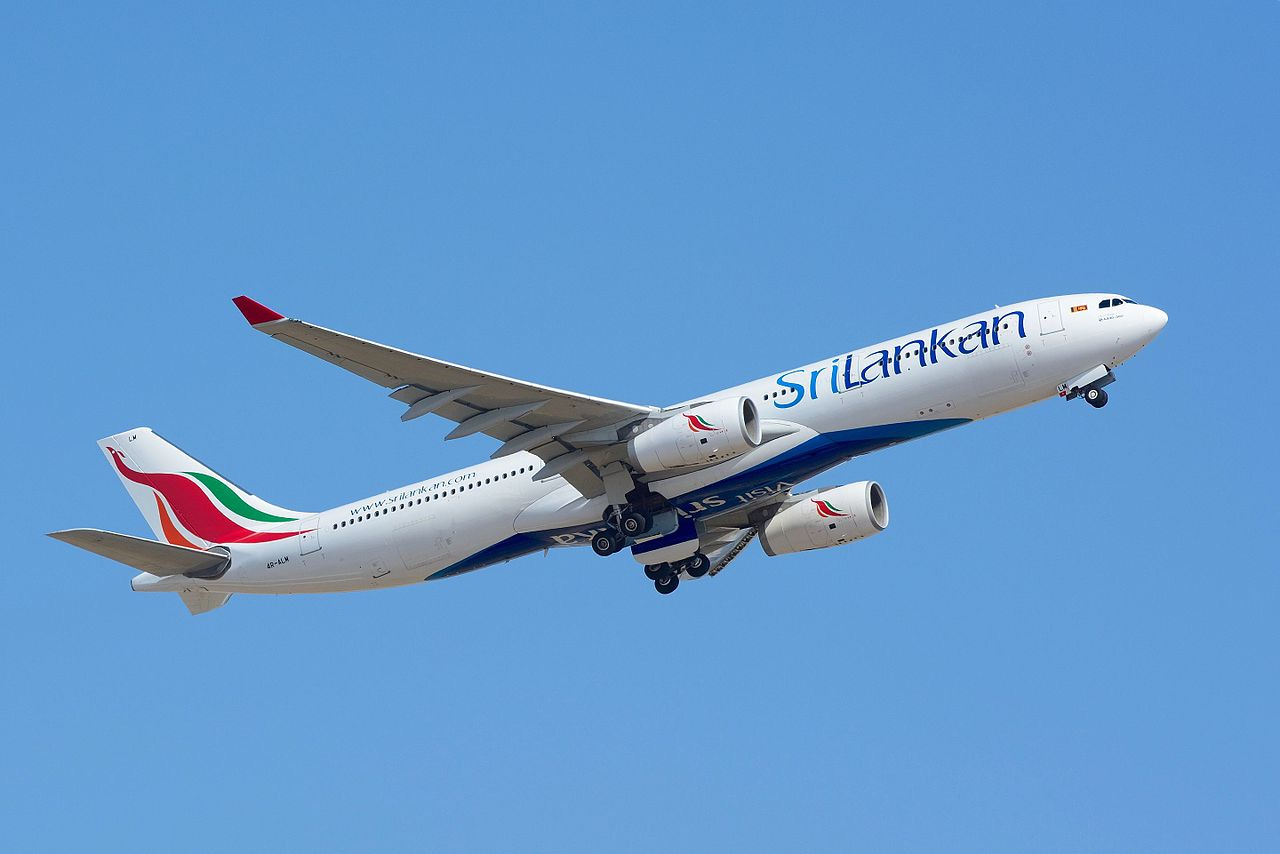
Sri Lanka is pushing the throttle to restructure the legacy debt of its flag airline after dropping a privatization plan.
The previous government reportedly invited bids for SriLankan Airlines, but only received interest from six individuals who were deemed unsuitable to run the carrier.
The current president who took office in September 2024, Anura Kumara Dissanayake, wants the airline to remain in Sri Lankan hands and favors a restructuring over an outright sale. In this year’s budget, Dissanayake allocated LKR 20 billion (USD 66.9 million) to pay some of its loans.
SriLankan Airlines Chairman Sarath Ganegoda said in an interview with ChannelNewsAsia this week that efforts to resolve its financial difficulties have been shifted from the ministry overseeing aviation to the Finance Ministry, which is led by the president himself. Dissanayake is “personally taking a lot of interest on this entity”, which has made the airline’s task easier, according to Ganegoda.
The added impetus to act likely came from the International Monetary Fund (IMF), which agreed in March 2023 to bail the South Asian nation out of bankruptcy with a USD 2.9 billion package. In a press conference earlier this year, the IMF mission chief for Sri Lanka, Evan Papageorgiou, emphasized the need to accelerate the restructuring of SriLankan Airlines to reduce the burden on the state.
Since December 2022, SriLankan Airlines has not made any coupon or principal payments on its USD 175 million 7% bond due 2024, which carries a guarantee from the government. In a notice dated 29 May 2025, the airline told bondholders that it had appointed Lazard Frères SAS as its international financial adviser and Norton Rose Fulbright LLP as its international legal adviser for a potential restructuring.
An ad-hoc committee of holders representing more than 50% of SriLankan Airlines’ defaulted bond is receiving legal advice from Akin Gump Strauss Hauer & Feld, according to media reports.
SriLankan Airlines reported total interest-bearing liabilities of LKR 357.6 billion (USD 1.2 billion) as of 31 March 2024, according to its latest annual report. The airline’s debt stack consisted of bank loans and overdrafts, bonds, lease liabilities, and deferred settlement plans with lessors.
Revenue for the year ended 31 March 2024 fell 8.1% to LKR 339.6 billion mainly due to a decline in scheduled services, including for passengers and cargos. However, the airline swung to a net profit of LKR 7.9 billion, from a loss of LKR 71.3 billion a year earlier, on the back of a sharp drop in finance costs.
SriLankan Airlines is hoping that it would benefit from growing tourist arrivals in Sri Lanka as well as connecting flights to the southern Indian cities, but “currently there’s a serious dearth of aircraft” that hampers its expansion plan, according to Ganegoda.
While SriLankan Airlines has increased its fleet to 23 aircraft with the addition of a new Airbus widebody plane, this is still far below the strength of other airlines in the region. Singapore Airlines, for example, operated 163 aircraft as of February 2025, consisting of 151 passenger planes and 12 freighters.
Ganegoda said in the ChannelNewsAsia interview:
“We have realized and accepted the fact that we can’t compete with other airlines with our hardware. With our current situation, we can’t afford to go for brand new, state-of-the-art aircraft…so only way we could compete with the rest of the players in the industry is our service.”
SriLankan Airlines is not the only flag airline that’s struggling to ramp up its fleet, as Garuda Indonesia also has 15 planes that are currently grounded. However, Ganegoda has displayed a level of self-awareness that should help the Sri Lankan carrier to get back on track towards a recovery.
📒🎞️ Quick Take: Flight Turbulence in Asia Pacific
12 June 2025
Jetstar Asia, Rex Airlines and Bonza Aviation ran aground, while SriLankan Airlines and Garuda Indonesia must undergo a restructuring.
VietJet pleaded financial constraints as a legal defence against its lessor, yet it has been announcing plane orders, route expansions and financing deals.

A handful of airlines are flying into a storm in Asia Pacific as they struggle to scale up to compete with larger rivals.
Jetstar Asia, the Singapore budget arm of Australia’s Qantas Airways, shocked travellers and staff when it announced its impending closure, but aviation analysts say the writing was on the wall as it was only profitable for six out of 20 years in operation. Rising costs and tough competition had “fundamentally challenged” the airline’s ability to offer low fares, Jetstar Group CEO Stephanie Tully reportedly said.
While Singapore Airlines’ budget unit Scoot ramped up flights and destinations, Jetstar Asia’s latest fleet only stood at 13 planes, down from 18 before the pandemic, and it had little presence in the major aviation markets of India and China, according to an expert interviewed by the Straits Times.

Down under, Australian carriers Rex Airlines and Bonza Aviation both ran aground last year, leaving passengers stranded and various legal issues to be resolved, according to an article written by law firm DLA Piper.
Rex entered a voluntary administration in July 2024 after its foray into capital cities – where it competed directly with Qantas and Virgin Australia – resulted in heavy losses, the Australian Financial Review (AFR) reported. Binding bids for Rex were due last week and private equity firm Anchorage Capital Partners was among the parties that submitted a proposal to buy it, according to AFR.
In South Asia, Sri Lanka is accelerating the restructuring of its flag airline after being prodded by the International Monetary Fund (IMF), which bailed the nation out of bankruptcy. In a notice dated 29 May 2025, SriLankan Airlines told holders of its USD 175 million bond due 2024 that it had appointed Lazard and Norton Rose Fulbright as its financial and legal advisers, respectively, for a potential restructuring.
SriLankan Airlines took in a new Airbus plane to increase its fleet to 23, with plans to add two more by the end of this year. However, I wrote last week that even with the upsized fleet, it would still be much smaller than the battalion commanded by Singapore Airlines, which operated 163 aircraft as of February 2025.
The Singapore flag airline seems to be an outlier in the region, as it recently awarded staff with 7.45 months of bonus on the back of a record annual profit. This turnaround came after it received a pandemic support package of up to SGD 19 billion (USD 13 billion) from state-linked entities in 2020.
In contrast to Singapore’s bold bazooka, Indonesia has so far given a drip feed of state funds to its perpetually ailing airline Garuda Indonesia. I flagged in April 2025 that Garuda was likely headed towards a fourth restructuring as it grappled with aircraft maintenance costs and a cap on domestic fares.
I also wrote that Garuda may receive some funds from sovereign fund Danantara to reactivate its grounded planes, but it could still be weighed down by expensive legacy leases. Last week, Garuda announced that it will seek shareholder approval on 30 June 2025 for a proposed restructuring and changes in management.
Elsewhere in Southeast Asia, Vietnamese budget carrier VietJet had a legal setback in its long-running battle against one of its lessors. VietJet – which is controlled by Vietnamese billionaire Nguyen Thi Phuong Thao – was ordered by an English court to pay around USD 180 million to a unit of London-based buyout fund FitzWalter Capital.
Despite VietJet’s allegedly “significant financial constraints”, it has been announcing a string of aircraft orders, route expansions and financing deals. In fact, the airline is reported to be in talks to order around 100 more Airbus planes. My takeaway is either VietJet has the money but pleaded poverty to avoid paying its nemesis, or it doesn’t have the money but is putting up a selective show of strength.
The relationship between airlines and their lessors seems to be a complicated one. As a friend said: “Leases are just the operating cost. It’s actually very difficult to get rid of them because lessors can always take the planes away. And once you are a bad lessee it’s harder to get planes. The airline business is hard.”

📒 Quick Take: SriLankan Airlines’ Bond Gambit
4 July 2025
The trustees of SriLankan Airlines’ defaulted USD 175 million bond demanded full repayment of the notes plus USD 34 million of interest.
A local court blocked the bondholders from initiating any winding up procedures while the flag airline warned of a criminal case.
Sri Lankan flag carrier SriLankan Airlines’ bondholders are growing impatient and rattling their sabre, but their gambit risks backfiring.
Law Debenture Trust (Asia) Limited, which was hired by the trustees of SriLankan Airlines’ defaulted USD 175 million bond, sent a letter demanding full repayment of the notes plus USD 34 million of interest within 21 days, EconomyNext reported. It warned of further action, including a winding-up, if SriLankan Airlines doesn’t pay up.
In response, a local court blocked the trustees or agents of the bondholders from initiating any winding up procedures. SriLankan Airlines alleged that the letter of demand was “written mala fide and amounts to a blackmailing tactic”, adding that it reserves the right to take legal action, including through the “criminal justice process”.
Since December 2022, SriLankan Airlines has not made any coupon or principal payments on the USD 175 million 7% bond due 2024, which carries a guarantee from the government. In a notice dated 29 May 2025, the airline told bondholders that it had appointed Lazard and Norton Rose Fulbright as its financial and legal advisers, respectively, for a restructuring.
The country’s president who doubles up as the finance minister, Anura Kumara Dissanayake, allocated LKR 20 billion (USD 66.9 million) for SriLankan Airlines this year, but it would go towards repaying some loans from Bank of Ceylon and People’s Bank, which are both state-owned. In short, the state funds are being used to reduce the exposure of the state-owned banks.
The offshore bondholders are understandably antsy after being unpaid for 2.5 years, but any winding-up petition against the flag airline has to be locally enforced and now Sri Lanka is fighting back with the threat of a criminal prosecution.
Loss-Making
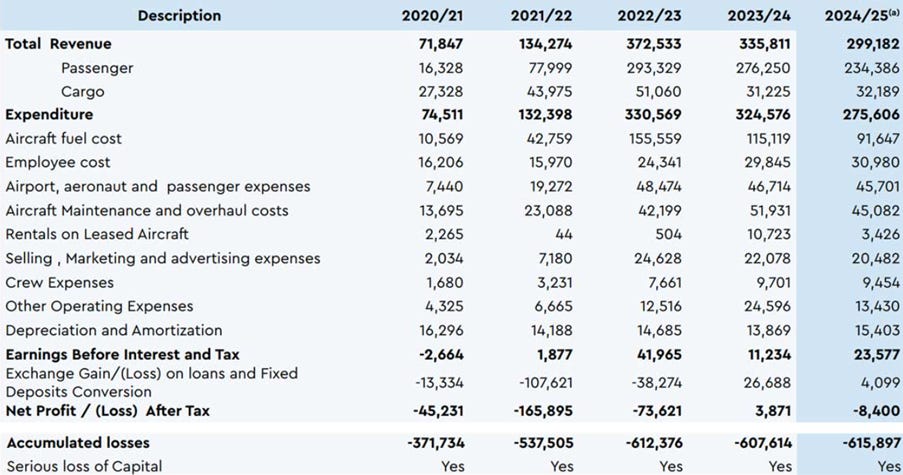
SriLankan Airlines’ latest results were not great. Overall revenue for the year ended March 2025 fell 10.9% to LKR 299.2 billion (USD 996.1 million) as passenger sales declined, EconomyNext reported, citing official data.
The airline swung to a net loss of LKR 8.4 billion (USD 28 million), from a net profit of LKR 3.9 billion a year earlier, partly due to a smaller exchange gain. If not for a LKR 26.7 billion exchange bump for the year ended March 2024, SriLankan Airlines would have racked up at least five straight years of losses, according to the available data.
Legacy Debt
Like Indonesian flag airline Garuda Indonesia, SriLankan Airlines is paying for the sins of past managements.
Former SriLankan Airlines Chairman Nishantha Wickramasinghe was reportedly arrested by the Commission to Investigate Allegations of Bribery or Corruption (CIABOC) on 27 June and was further remanded until 15 July, in connection with an investigation into aircraft procurement during his tenure.
The current chairman, Sarath Ganegoda, has started dispute settlement talks with plane manufacturer Airbus over a purchase deal by the airline’s former CEO back in 2013.
Ganegoda reportedly asked Airbus for the return of USD 23.3 million in pre-delivery payments, USD 200 million in cash compensation, as well as four new A330-900 planes free of charge. It’s unclear whether Airbus would accede to Ganegoda’s demands.
The silver lining on the macro front is that Sri Lanka is gradually climbing out of its 2022 bankruptcy. The International Monetary Fund (IMF) has completed its fourth review of Sri Lanka’s USD 2.9 billion bailout program, allowing the country to draw a USD 350 million tranche. Earlier this year, the IMF mission chief for Sri Lanka, Evan Papageorgiou, also emphasized the need to accelerate the restructuring of SriLankan Airlines.
To continue the trajectory towards recovery, Sri Lanka and its state-owned enterprises will have to restore the confidence of private creditors. A protracted dispute between SriLankan Airlines and its international bondholders will serve neither party’s interest.
📒 Quick Take: Donut or Haircut for SriLankan Airlines’ Bondholders
4 August 2025
SriLankan Airlines and its bondholders terminated the first round of restructuring talks as their proposals were too far apart.
If the bondholders overplay their hand, they could be portrayed as a holdout group that demands special treatment over Sri Lanka’s creditors.

SriLankan Airlines’ bondholders are playing a high-stakes poker game that could leave them with a big fat zero instead of a haircut if they overplay their hand.
Between 28 July and 1 August 2025, the South Asian nation’s flag airline held restricted discussions with six members of an ad-hoc group representing more than half of its USD 175 million 7% notes due June 2024. The defaulted bond is guaranteed by the Sri Lankan government.
SriLankan Airlines presented an initial restructuring proposal, which was a mix of cash and bond exchange, to the group of bondholders who shared its own counterproposal. The company was advised by Lazard and Norton Rose Fulbright, while the bondholders were joined by their legal advisor, Akin Gump Strauss Hauer & Feld, at the meetings.
However, SriLankan Airlines announced on 4 August 2025 that both sides had agreed to terminate the first round of talks because their proposals were too far apart.
“After careful review, the Company and its advisors, in coordination with the Government, concluded that the gap between the Proposal and the Counterproposal was too wide, and that the terms of the Counterproposal are far from what is expected from the Company’s bondholders in the context of Sri Lanka’s public sector debt restructuring.”
The details of the proposals can be found here, but these are the key terms.
SriLankan Airlines proposed allocating up to USD 60 million in cash for a partial tender of the notes, with a ceiling price equivalent to 80% of the total claim amount (principal, accrued interest and past due interest). The remaining notes would be swapped with Sri Lanka’s USD 1.2 billion 4% bond due 2028 at these rates:
USD 0.80 per USD 1 if voluntarily exchanged
USD 0.70 per USD 1 upon reaching the required level to trigger the collective action clauses
However, the bondholders requested:
1-for-1 exchange for the sovereign bond
Cash payment for all accrued and unpaid interest (including default interest) on the notes
3% early bird consent fee
Thin Patience
The bondholders likely ran out of patience after being unpaid since December 2022 and finding out that LKR 20 billion (USD 66.9 million) in state funds that were allocated for SriLankan Airlines this year went towards repaying the banks.
However, I wrote last month that a local court simply blocked the bondholders’ trustees when they threatened to file a winding-up petition against the carrier. While it’s a common negotiating tactic to make a relatively aggressive ask in the hope that the counterparty would try to meet this demand halfway, the reality is SriLankan Airlines has no cash.
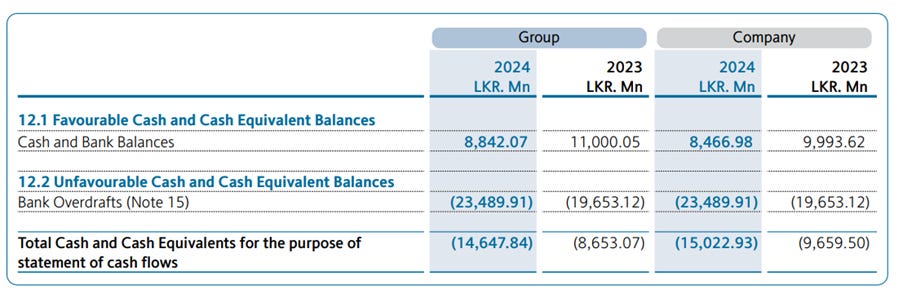
SriLankan Airlines has not released an updated annual report, but the company’s results for the year ended 31 March 2024 showed that it was heavily reliant on bank overdrafts to stay afloat and it had a negative cash position of LKR 15 billion (USD 49.9 million).
If the noteholders were trying to exert pressure on the Sri Lankan government to pay up, they may have limited sway as the bond is included in the “restructuring perimeter” for the sovereign debt, which means that it’s subject to the same constraints as Sri Lanka’s other public external debt.
In short, the bondholders could be portrayed as an obstructionist group that demands special treatment over the rest of the creditors. This was alluded to in the joint statement from SriLankan Airlines and the Sri Lankan government:
“To date, The Government has already successfully completed debt restructuring negotiations covering more than 98% of the total amount of debt included in the restructuring perimeter of which close to 92% has been fully implemented. The Government remains committed to completing this crucial exercise as expeditiously as possible without, however, jeopardizing all efforts deployed for more than three years by granting better treatment to a particular category of participating creditors.”
Delicate Balance
Sri Lankan President Anura Dissanayake – who doubles up as the Finance Minister – is already performing a delicate balancing act between his government, the opposition camp, and the International Monetary Fund (IMF) which bailed the country out of bankruptcy.
A continued threat from the bondholders to wind up the flag airline could fan nationalist sentiment in Sri Lanka and force Dissanayake to put on his boxing gloves to assure hardliners that he’s no pushover.
While the IMF may recognize the importance of international creditors, it’s unlikely to fight for bondholders requesting par recovery — especially in the context of a sovereign workout involving more than a dozen nations.
If the bondholders are banking on nuisance value, they should be ready for a long, costly slog that may yield far less than what’s on the table now.
📒 Quick Take: SriLankan Airlines’ Diehard Bondholders
20 September 2025
S&P upgraded Sri Lanka’s ratings as a holdout group of its flag carrier’s bondholders would unlikely be able to derail the sovereign debt workout.
The wish of SriLankan Airlines’ bondholders to be made whole seems out of sync with the restructuring reality.
Sri Lanka’s strive to climb out of bankruptcy has been rewarded with a rating upgrade, as its sovereign debt workout is unlikely to be derailed by a holdout group of its flag carrier’s bondholders.
On 19 September 2025, S&P Global Ratings upgraded Sri Lanka’s long-term and short-term sovereign credit ratings to CCC+/C from selective defaults, with a stable outlook. The rating agency cited the South Asian nation’s recent efforts to complete the restructuring of its remaining commercial debt, including SriLankan Airlines (SLA)’s USD 175 million bond due June 2024 that was guaranteed by the government.
SLA announced last month that the airline and an ad-hoc group representing more than half of the defaulted bond could not reach a restructuring agreement because their proposals were too far apart.
I wrote on 4 August that if the SLA bondholders overplay their hand, they could be portrayed as a holdout group that demands special treatment over Sri Lanka’s other creditors and end up with a “donut” instead of a haircut.
Let’s unpack the key lines from S&P’s latest report.
Comparability of Treatment
S&P: “Negotiations on restructuring the SLA debt began earlier this year, with the airline and government making an offer based on comparability of treatment with other external creditors.”
Eveline’s take: “Comparability of treatment” means that all creditors should be treated similarly and no creditor should benefit from a more favorable treatment than others, according to a report by Lazard.
In its 4 August joint statement with SLA, the Sri Lankan government said that it had completed negotiations covering more than 98% of the total amount of debt included in the “restructuring perimeter”, out of which close to 92% was fully implemented.
The Sri Lankan government remains committed to finding a common ground with the SLA bondholders, “without, however, jeopardizing all efforts deployed for more than three years by granting better treatment to a particular category of participating creditors,” it said.
In short, Sri Lanka is urging the SLA bondholders to get in line with other creditors participating in the sovereign restructuring.
Most Favored Creditor
S&P: “We see a possibility that some lenders could become holdout creditors, making a further resolution in the negotiations unlikely, based on the passage of time. We believe this situation is also unlikely to disrupt or unwind the debt restructuring process, given the principles of comparability of treatment and the most-favored creditor clauses in Sri Lanka’s restructured bonds.”
Eveline’s take: S&P acknowledged the risk of a holdout group, but the rating agency believes that the SLA bondholders are unlikely to be able to torpedo Sri Lanka’s sovereign restructuring.
The most-favored creditor (MFC) clauses essentially serve as a legal shield for Sri Lanka, as the government cannot give the SLA bondholders a better treatment without unravelling the entire sovereign debt deal. In short, the MFC clauses could be Sri Lanka’s trump card against the SLA bondholders.
Above Par
The talks between SLA and the ad-hoc group of bondholders had ended in a stalemate due to the wide gap in their demands. “They (the noteholders) wanted 98 cents on the dollar; we offered 85 cents,” Sri Lankan news agency The Morning reported, citing a source with knowledge of the restructuring process.
The asking price for the SLA bond jumped to around 105.8 US cents last week from 71 US cents in December 2024, according to The Morning. It’s unclear if this was supported by actual bids, but if the reported asking price was correct, then it would reflect the sellers’ expectation of a recovery that even exceeds par.
The sellers’ wish seems out of sync with the restructuring reality, unless the SLA bondholders and their lawyers possess a leverage that could significantly alter the playing field. Given that the SLA bondholders were blocked by a Sri Lankan court from winding up the flag carrier, they may perhaps aim to take their fight overseas.
However, foreign courts are likely to take into account the fact that SLA’s bond is included in Sri Lanka’s sovereign restructuring. Greylag Goose Leasing took Garuda Indonesia to court in multiple jurisdictions, but the Indonesian flag airline managed to get its local in-court restructuring (PKPU) deal recognized in Singapore and secure foreign state immunity in Australia.
In the case of Sri Lanka, its sovereign debt was restructured under the oversight of the International Monetary Fund (IMF) and involved more than a dozen nations, which may not want three years of negotiations to go down the drain because a group of SLA bondholders refused to take a haircut.
I wrote on 4 August that if the SLA bondholders are banking on nuisance value, they should be ready for a long, costly slog that may yield far less than what’s on the table now. Since then, the bondholders seem to be digging their heels in for a potential war of attrition.
📸 Snapshot: SriLankan Airlines FY24/25 Results
25 October 2025
Sri Lanka’s flag carrier SriLankan Airlines (SLA) has released the results for its financial year from 1 April 2024 to 31 March 2025.
These are some of the highlights:
🛩️ 𝗖𝗼𝘀𝘁 𝗰𝘂𝘁𝘀 𝗮𝗺𝗶𝗱 𝗿𝗲𝘃𝗲𝗻𝘂𝗲 𝗱𝗿𝗼𝗽: SLA reported a nearly 11% fall in revenue to LKR 303.1 billion (USD 998.1 million) from a year earlier. The airline swung to a LKR 2.7 billion loss from a LKR 7.9 billion profit in the previous year, due to a smaller exchange gain on its interest-bearing liabilities. However, SLA managed to cut its total expenses by 7.7% to LKR 307.5 billion, led by a decline in fuel costs. The short-term lease rental costs for aircraft and spare engines also fell 67%, according to the airline.
🛩️ 𝗡𝗲𝗴𝗮𝘁𝗶𝘃𝗲 𝗰𝗮𝘀𝗵 𝗽𝗼𝘀𝗶𝘁𝗶𝗼𝗻: On the balance sheet, total liabilities stood at LKR 568.8 billion as of end-March, out of which LKR 228.2 billion were short-term interest-bearing liabilities. These comprised LKR 62.7 billion of bonds, LKR 44.1 billion of lease liabilities, LKR 7.3 billion of deferred settlement plans with aircraft lessors, LKR 91.3 billion of short-term loans, and LKR 22.8 billion of bank overdrafts. Cash and equivalents were negative LKR 17.6 billion.
🛩️ 𝗦𝗢𝗘 𝗹𝗲𝗴𝗮𝗰𝘆 𝗱𝗲𝗯𝘁: Earlier this month, Sri Lanka and the International Monetary Fund (IMF) reached a staff-level agreement that should unlock a further USD 347 million in financing. The IMF noted the “commendable outcomes” of Sri Lanka’s reform agenda, including its economic growth, inflation level, and nearly completed sovereign debt restructuring. However, the IMF also urged Sri Lanka to strengthen the governance of state-owned enterprises and resolve their legacy debt to minimize fiscal risks.
📒 Quick Take: Asian Flag Airlines’ Cash Plight
11 November 2025
Garuda Indonesia’s private placement to sovereign fund Danantara was downsized to USD 1.4 billion.
Sri Lanka aims to restructure its national airline’s defaulted offshore bond by year-end.
Pakistan plans to complete the privatization of its flag carrier before the end of this year.
From Jakarta to Colombo, Asian flag carriers are fighting a common battle for cash.
Barely a month since Garuda Indonesia announced a USD 1.85 billion private placement to sovereign fund Danantara, the Indonesian airline updated the local bourse that the amount has been reduced to USD 1.4 billion. Garuda also said that the use of proceeds will no longer include a planned fleet expansion.
In the latest breakdown, Garuda allocated IDR 3.73 trillion (USD 223.4 million at today’s exchange rate) to pay the fuel debt owed by its budget unit Citilink. Garuda didn’t detail the reason for these changes, but state-owned energy giant Pertamina likely pushed to get a bigger share of the cash as Citilink’s fuel debt had piled up over the years.
At a group level, Garuda owed USD 324.5 million of trade payables to Pertamina and its downstream subsidiary Pertamina Patra Niaga as of end-September. (Click here for my analysis of Garuda’s latest results and here for a compilation of my takes on the Indonesian airline).
As I noted last month, Indonesian state-owned enterprises (SOEs) have been performing their family duty and supporting each other, such as by rolling over trade debt. Most SOE bosses typically tell the public that they will follow instructions from the top, but they may also privately lobby their shareholder as they seek to preserve their own liquidity.
In Garuda’s case, the smaller capital injection won’t fully cover the airline’s negative equity, which widened to USD 1.54 billion as of end-September. The change of plan in favor of paying more debt to Pertamina also means that Garuda may not be able to ramp up its fleet as fast as previously expected.
SriLankan Airlines (SLA) is in a worse shape than Garuda as it reported a negative cash position of LKR 17.6 billion (USD 57.8 million) as of end-March.
Sri Lankan President Anura Kumara Dissanayake said that SLA’s government-guaranteed offshore notes – which had ballooned to around USD 210 million due to outstanding coupons – are expected to be restructured by year-end, according to local media.
As I noted two months ago, SLA’s bondholders have limited bargaining power because the most favored creditor (MFC) clause in Sri Lanka’s restructuring gave the nation a justification not to give special treatment to any group of creditors. Nevertheless, the bondholders were not taking it lying down as they hoped to extract some concessions from the government.
The bigger picture is that Sri Lanka is assessing what it should do with its flag carrier. In his budget speech, President Dissanayake noted that Sri Lanka’s earlier attempt to sell SLA did not generate enough interest from buyers. The government has given SLA’s management “some time” to implement their turnaround plan, but if this fails, “we will not hesitate to look at the airline in a different way,” Dissanayake reportedly said.
Elsewhere in South Asia, Pakistan plans to privatize 24 SOEs and merge 39 ministries as part of a major restructuring, local media reported last week. Finance Minister Muhammad Aurangzeb said his government aims to complete the privatization of Pakistan International Airlines (PIA) before the end of this year.
The sale of PIA is a key condition under Pakistan’s USD 7 billion bailout from the International Monetary Fund (IMF), CNA reported. Over the past decade, the state-run carrier racked up USD 2.5 billion of losses, with nearly a third of its 30 aircraft grounded due to age, according to CNA.
Some flag airlines have been kept airborne despite consistently losing money, but more countries are recalculating the costs of flying their national symbols.
💼 Brief Take: SriLankan Airlines’ Bond Truce
20 November 2025
SriLankan Airlines and a group of offshore bondholders have ended their stand-off by agreeing to a restructuring deal in principle.
This is likely the best outcome for the bondholders, as I wrote three months ago that they risked overplaying their hand if they continued their hardball tactics.

SriLankan Airlines (SLA) and the Sri Lankan government have reached an in-principle agreement with an ad-hoc group of bondholders to restructure the flag carrier’s USD 175 million 7% guaranteed notes due June 2024, according to a statement on 20 November 2025.
Eveline’s Take:
🧳 The airline and the bondholders have ended their stand-off by agreeing to a restructuring deal in principle. In a nutshell, these terms entail a 15% haircut, with the balance settled via a mix of cash and an exchange with sovereign bonds, according to the company.
🧳 The sweetened terms include a cash tender offer whereby SLA and the government will allocate USD 60 million to finance the voluntary tender of the notes at a fixed price equivalent to 85% of the total claim (principal, accrued interest and past due interest). Under an earlier proposal, the tender price was capped at 80% of the total claim via a reverse Dutch auction. In short, the latest terms are 5 points higher and offer bondholders a fixed price without having to take part in competitive bidding.
🧳 After the cash tender, outstanding SLA notes will be rolled into an exchange with Sri Lanka’s USD 1.2 billion 4% bonds due 2028. Those who voluntarily exchange their notes will receive USD 0.85 in government bonds for every USD 1 of their total claim, while any notes not voluntarily tendered or exchanged will be mandatorily swapped for USD 0.75 in bond principal. This compares with USD 0.80 and USD 0.70, respectively, under the previous terms.
🧳 This is likely the best outcome for the bondholders, as I wrote three months ago that they risked overplaying their hand if they continued their hardball tactics. I also noted in September that the “most favored creditor” clause in Sri Lanka’s restructuring gave the nation a justification not to give special treatment to any group of creditors.
🧳 On Sri Lanka’s side, the government has the incentive to tie up loose strings and conclude SLA’s bond restructuring after being nudged by the International Monetary Fund (IMF). Last month, the IMF – which bailed the South Asian nation out of bankruptcy – urged the government to resolve the legacy debt of state-owned enterprises.
🧳 The in-principle agreement with the bondholders would allow the airline to “now look at the future of our Company with greater optimism,” SLA Chairman Sarath Ganegoda said. “We thank them for their patience and for the pragmatic approach they adopted to avoid an unnecessary escalation of this situation, which would have been detrimental to everyone.”