

📚 Acrostics Anatomy: Singapore’s Stock Swing
The city-state is going all out to boost its languishing equity market.

💼 Brief Take: Singapore’s Stock Exits (28 March 2025)
💼 Brief Take: Japfa Jump (16 April 2025)
💼 Brief Take: S-Chip Deja Vu (19 May 2025)
☀️ Bright Spot #6 (5 October 2025)
💼 Brief Take: Singapore’s Stock Exits
28 March 2025
Sinarmas Land’s proposed delisting from the Singapore Exchange (SGX) could be followed by more privatizations.
The reported exits of large-cap companies may deal a further blow to liquidity due to the decline in ‘anchor’ stocks that could underpin trading activities.
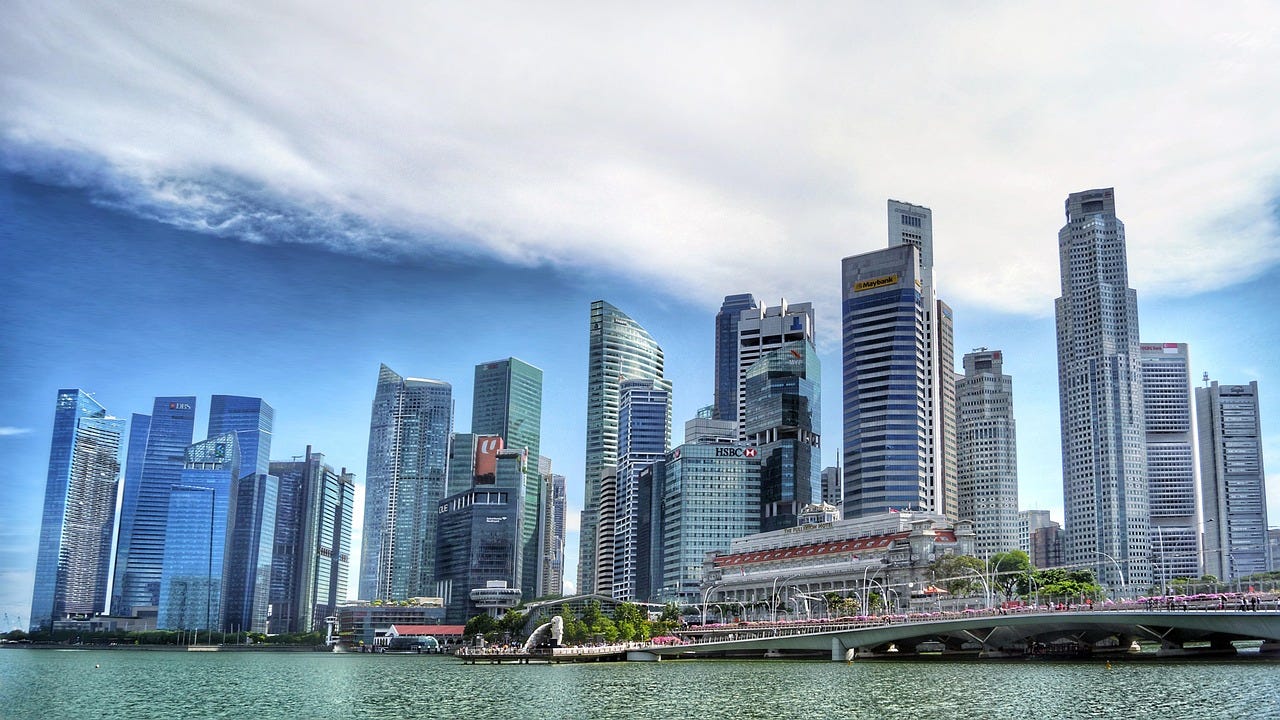
Indonesia’s Widjaja family has offered to delist Sinarmas Land from the Singapore Exchange (SGX), citing thin liquidity as well as the costs and regulatory requirements. More privatizations of Singapore-listed companies with a large market capitalization should be on the cards, the Business Times reported on Thursday (27 March 2025).
Eveline’s Take:
🔸 Some shareholders believe that they are better off privatizing their companies because they are not getting enough value from their Singapore listings. The trading volume on the Singapore bourse has failed to recover after a penny stock crash in 2013 that wiped an estimated SGD 8 billion (USD 6 billion) off the market.
🔸 SGX Market Strategist Geoff Howie wrote on LinkedIn that Singapore’s benchmark Straits Times Index (STI) broke through the 4,000-point threshold this week to an all-time high, led by ST Engineering and Sembcorp Industries. The industrial sector booked the most net institutional inflows this month, lifted by China’s efforts to strengthen regional supply chains, he noted.
🔸 However, Singapore-listed developers have been trading at an average price-to-book ratio of 0.3 - 0.4x, representing a steep discount to their book value, according to two analyst reports. Over the past five years, the sum of the market value of Sinarmas Land’s stakes in two Indonesia-listed units – Bumi Serpong Damai (BSDE) and Puradelta Lestari (DMAS) – was “consistently higher” than its entire market capitalization in Singapore, according to the privatization offer.
🔸 Lee Ooi Keong – a former director at Singapore state investor Temasek and a member of the Singapore Institute of Directors – wrote in an opinion piece last month that fundamental issues in listing quality, board governance, regulatory structure and trading costs must be addressed to improve the city-state’s equity market.
🔸 While SGX has a thriving derivatives business, the reported exits of large-cap companies may deal a further blow to liquidity due to the decline in ‘anchor’ stocks that could underpin trading activities. As a world-class financial hub, Singapore should have a world-class stock market that can help businesses raise capital from a deep pool of investors.
💼 Brief Take: Japfa Jump
16 April 2025
Japfa Ltd is one of the Indonesian-controlled companies that are exiting the Singapore Exchange (SGX) due to the costs and thin liquidity.
SGX needs more growth stocks that can entice investors without sacrificing quality.
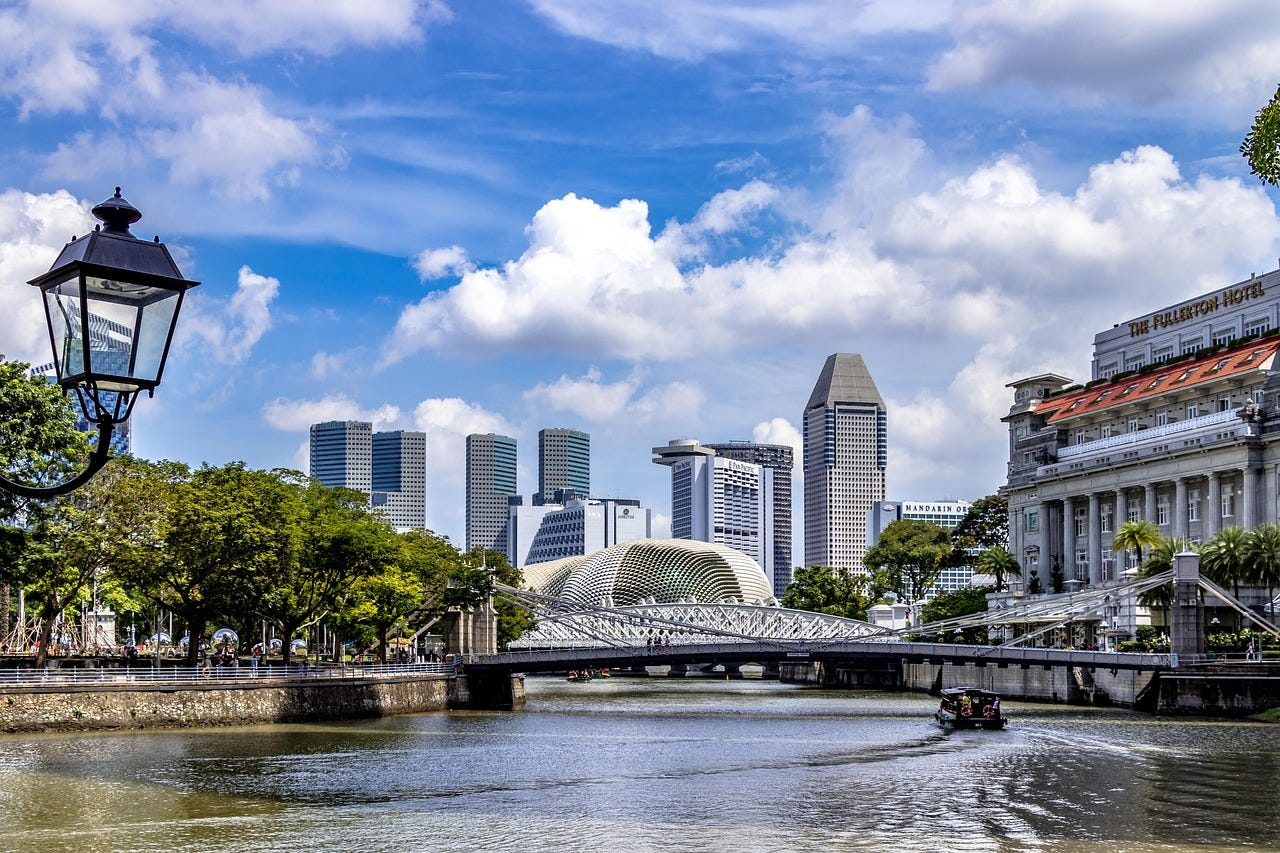
Japfa Ltd’s shareholders approved the scheme resolution proposed by family members of the agri-food company’s founder to take the business private, the Business Times reported on 15 April 2025. Its delisting from the Singapore Exchange (SGX) is expected to fall on or around 3 June, subject to regulatory approval.
Eveline’s Take:
🔸 Japfa Ltd is one of the Indonesian-controlled companies that are exiting the Singapore bourse due to the costs and thin liquidity. The offerors, the Santosa clan, said that a privatization would allow the company to “pursue longer-term business strategies which may otherwise contrast or conflict with the shorter-term expectations of the public market.”
🔸 The Widjaja family also offered last month to take property developer Sinarmas Land off the SGX. In short, these Indonesian families are no longer seeing the value of maintaining their Singapore listings, preferring to manage their businesses away from the public eye, at least at the holding level.
🔸 Both Japfa Ltd and Sinarmas Land have subsidiaries that are traded on the Indonesia Stock Exchange. Japfa Ltd owns 55.4% of Jakarta-listed Japfa Comfeed Indonesia, while Sinarmas Land controls Bumi Serpong Damai and Puradelta Lestari. Japfa Comfeed Indonesia – whose businesses include feed production and poultry breeding – also tapped the offshore bond market in 2021, issuing USD 350 million of notes due 2026.
🔸 In August 2024, Fitch affirmed Japfa Comfeed Indonesia’s rating at B+ with a stable outlook, saying that it expects EBITDA net leverage to remain below 3x in the medium term after “proportionately consolidating” some subsidiaries. The company benefited from lower raw material costs, while selling prices remained stable or fell only slightly amid strong demand, according to Fitch.
🔸 With Japfa’s departure, SGX has basically lost an equity proxy to the Indonesian consumer story. To be fair, SGX managed to attract car dealer Vin’s Holdings to its Catalist board (something like a “junior” board for companies that don’t meet the full earnings track record or compliance requirements to join the mainboard), representing the first Singapore listing this year.
🔸 SGX needs more growth stocks that can entice investors without sacrificing quality. It’s a tough balancing act, but a vibrant stock market is the missing piece in Singapore’s appeal as an international financial centre.

💼 Brief Take: S-Chip Deja Vu
19 May 2025
The Singapore Exchange is wooing Chinese companies more than a decade after accounting scandals damaged the trust of retail investors in these “S-chips”.
Rather than casting the net wide to catch minnows, it might be better to focus on a quality fish that can grow bigger and attract others to Singapore waters.
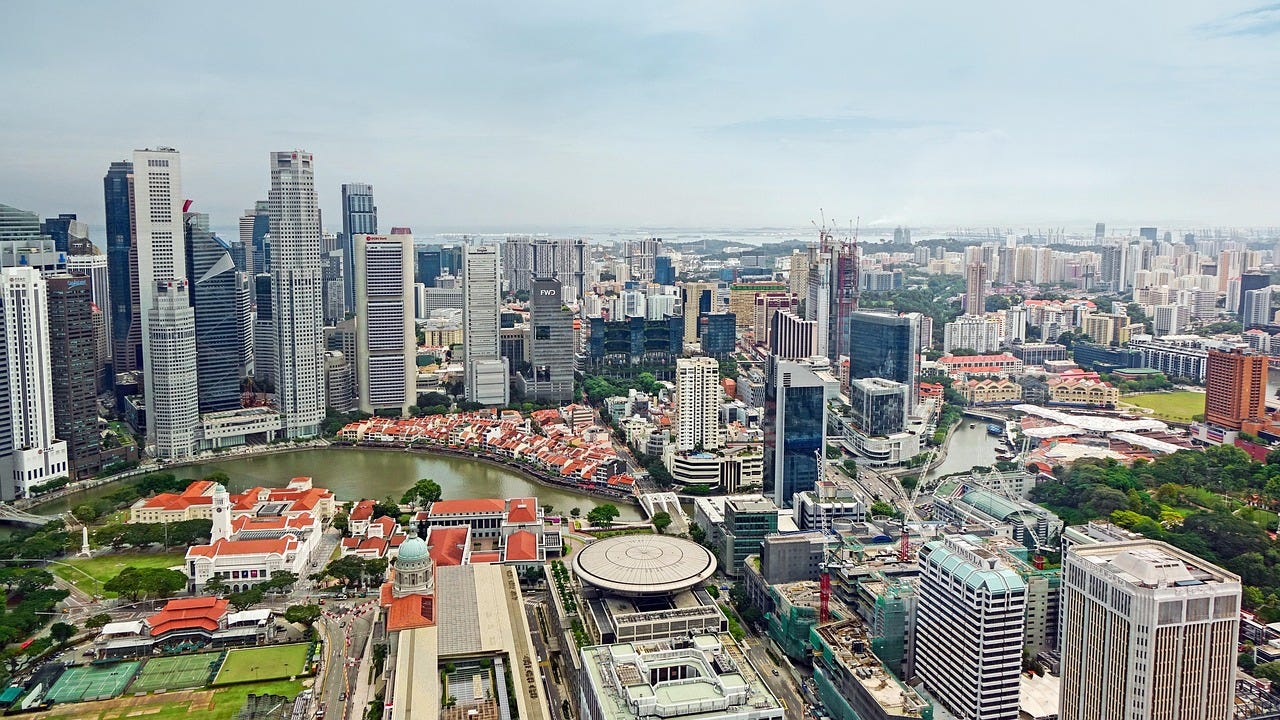
At least five companies from mainland China or Hong Kong are planning initial public offerings (IPOs), dual listings, or share placements in Singapore in the next 12 to 18 months, as Chinese firms look to expand in Southeast Asia amid global trade tensions, Reuters reported on 18 May 2025.
Eveline’s Take:
🔸 Has Singapore forgotten the S-chip scandal? More than a decade ago, the Singapore Exchange (SGX) wooed a string of Chinese companies to boost stock trading in the city-state. At their peak, there were more than 100 of these Singapore-listed Chinese companies (collectively known as S-chips), most of which had a small market capitalization, according to The Edge.
🔸 However, a spate of accounting irregularities, loan defaults and missing cash damaged the trust of retail investors in the S-chips. Some of the implicated companies trotted out incredible excuses, such as their books being burned down in factory or office fires. My favourite was a Chinese company that announced the supposed theft of a truck carrying its accounting records.
🔸 In 2013, retail investors were also hurt by a penny stock crash that unravelled what local media described as “the largest and most serious case of market manipulation in Singapore.” Since the pump-and-dump scheme – which was masterminded by Malaysian businessman John Soh – wiped out SGD 8 billion (USD 6.2 billion) of market value, trading volumes on the Singapore bourse never recovered.
🔸 To be fair, not all companies have poor corporate governance. The SGX is also under pressure to do something, as at least 16 companies are reportedly on track to delist while only car dealer Vin’s Holdings has launched an IPO this year. However, lowering the listing standard isn’t the solution. Ooi Keong Lee, Managing Director at Clover Point Consultants, wrote that 40% of all SGX-listed companies are currently loss-making and approximately 80% have free floats of less than one-third of their shares.
🔸 A plan by the Monetary Authority of Singapore to inject SGD 5 billion into the equity market will likely have a short-lived impact without the participation of retail investors. The key to reviving their interest is to have a genuine success story, where retail investors are rewarded by the growth of a good company, and then multiply that overtime.
🔸 Rather than casting the net wide to catch a bunch of minnows, it might be better to focus on a quality fish that can grow bigger and attract others to Singapore waters. Otherwise, history risks repeating itself.
☀️ Bright Spot #6
5 October 2025
Constructive criticism is under-rated. We can’t progress if we only hear the good stuff, but I think criticism should also come with acknowledgment when progress has been made.
Earlier this year, the Singapore stock exchange was reportedly in talks with at least five companies from mainland China or Hong Kong to replenish its pipeline after a spate of delistings. This reminded me of the “S-chip” accounting scandal more than a decade ago, when a string of Singapore-listed Chinese companies damaged the trust of retail investors.
“Rather than casting the net wide to catch a bunch of minnows, it might be better to focus on a quality fish that can grow bigger and attract others to Singapore waters. Otherwise, history risks repeating itself,” I wrote on 19 May 2025.
Now, the outlook for SGX Group has turned brighter after the city-state went all out to boost its equity market.
Singapore reportedly overtook London on the list of the world’s top 20 initial public offering (IPO) destinations. Four companies are also preparing to launch IPOs in Singapore, following the listings of NTT DC REIT, which is backed by Japan’s NTT Group, and US cybersecurity firm AvePoint.