

📚 Acrostics Anatomy: Singapore’s Restructuring Strides
The city-state took significant steps towards achieving its ambition of becoming a regional restructuring center.

📒 Quick Take: Singapore’s Restructuring Strides (2 April 2025)
📒 Quick Take: Singapore Cramdown (3 April 2025)
👣 Asia’s Restructuring Milestones: Southeast Asia’s Mixed Platter (18 November 2025)
📒 Quick Take: Singapore’s Restructuring Strides
2 April 2025
In a landmark ruling, the Singapore High Court granted recognition to an Indian company’s Corporate Insolvency Resolution Process.
Oil trader GP Global overcame a holdout creditor class in Singapore’s first cross-class cramdown.
Singapore launched a public consultation on the recommendations made by a committee to enhance the city-state’s corporate restructuring and insolvency regime.
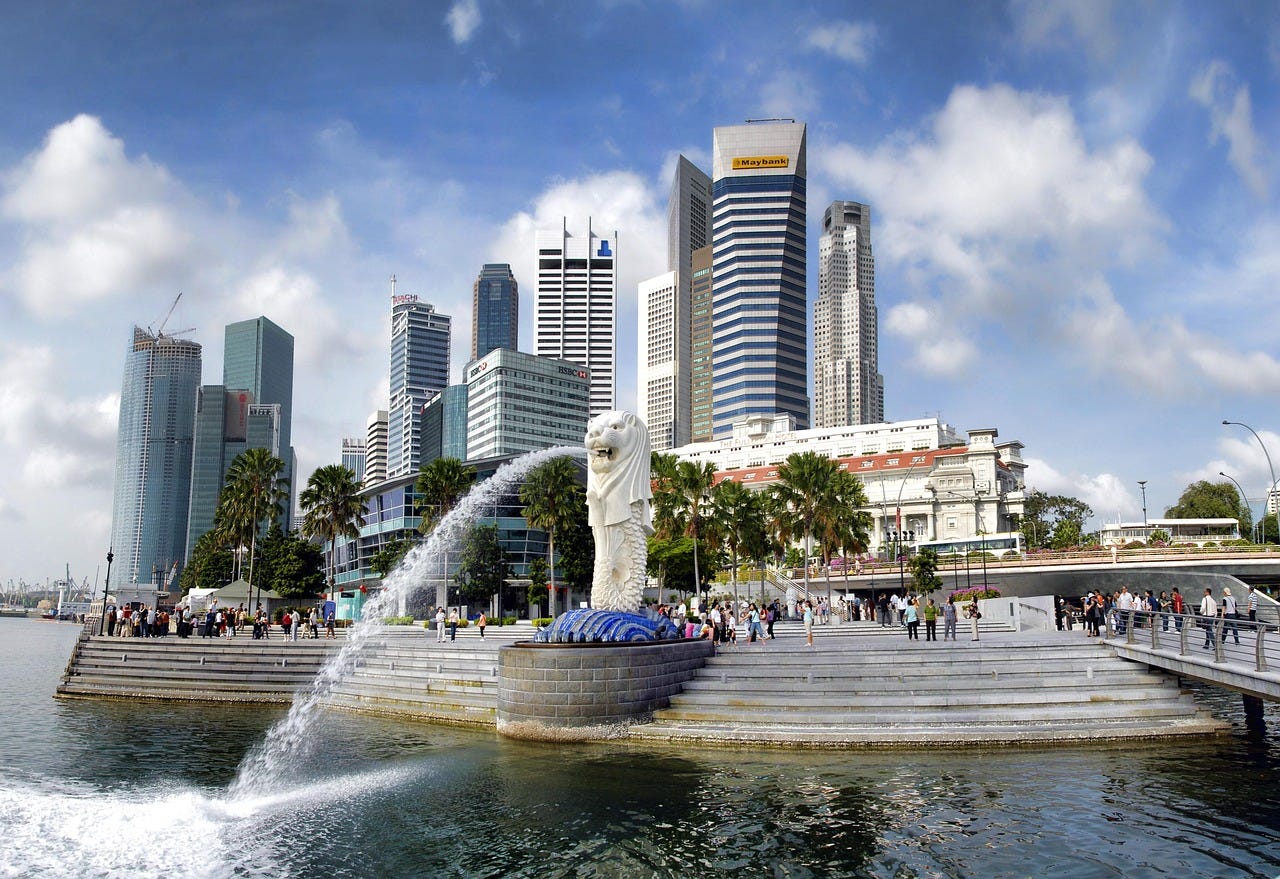
Around eight years after Singapore embarked on a mission to become an international restructuring hub, the city-state has taken notable steps on recognizing foreign proceedings and being a restructuring venue for borrowers.
For the first time, the Singapore High Court has recognized an Indian company’s Corporate Insolvency Resolution Process (CIRP) as a “foreign main proceeding”, Singapore law firm Oon & Bazul LLP – which represented the applicants – wrote in an article dated 1 April 2025.
An Indian creditor initiated the CIRP against IT distributor Compuage Infocom Limited after the company defaulted on a loan repayment. This was granted by the National Company Law Tribunal’s Mumbai Bench, which also passed an order appointing a resolution professional in India, according to the article.
In Singapore, recognition of the CIRP and the appointment of the resolution professional was sought under the UNCITRAL Model Law on Cross-Border Insolvency. This was in order to obtain the Singapore bank statements of Compuage’s branch office as well as to recover and return the company’s assets in Singapore back to India.
The Singapore court concluded that the CIRP qualifies as a foreign proceeding under the Model Law, setting “an important precedent” for Indian companies and insolvency practitioners navigating cross-border restructurings, according to Oon & Bazul.
In January 2024, the Singapore International Commercial Court (SICC) also granted recognition and enforcement of flag airline Garuda Indonesia’s local in-court restructuring (PKPU). The role of international judges in the SICC and the court’s approach towards international cases like Garuda were discussed at the INSOL Conference—a restructuring industry gathering—in Hong Kong last month, Baker McKenzie’s lawyers wrote in a blog.
Apart from the recognition of foreign proceedings, Singapore’s restructuring scene also achieved a milestone with its first cross-class cramdown. Oil trader GP Global—which was advised by Fortune Ark Restructuring Limited and Shook Lin & Bok Singapore—used the mechanism to overcome a holdout creditor class and got its scheme sanctioned by the Singapore court. This is considered a landmark case because the cross-class cramdown mechanism had hitherto not been tested since it was introduced in 2017, according to academic papers.
Singapore’s perceived status as a relatively neutral ground has also drawn distressed borrowers from the region, such as Indonesia’s Pan Brothers whose scheme was sanctioned by the Singapore High Court in January 2022. Even though the textile company eventually had to go through PKPU in Indonesia more than two years later, the Singapore restructuring essentially bought it some time.
More Indonesian borrowers may opt to launch their restructurings (or at least the first round) in jurisdictions like Singapore, as Sri Rejeki Isman (Sritex)’s bankruptcy shows that it’s likely game over if a debtor defaults on its PKPU deal. In short, some companies may only turn to PKPU as a last resort because of the high-stakes nature of the Indonesian court process.
📒 Quick Take: Singapore Cramdown
3 April 2025
GP Global’s success may provide a blueprint to deal with a creditor class that’s blocking a restructuring at the expense of the majority.
Some Indonesian borrowers could be emboldened to try the cross-class cramdown in Singapore, but enforcing the scheme against local creditors will likely be a challenge.
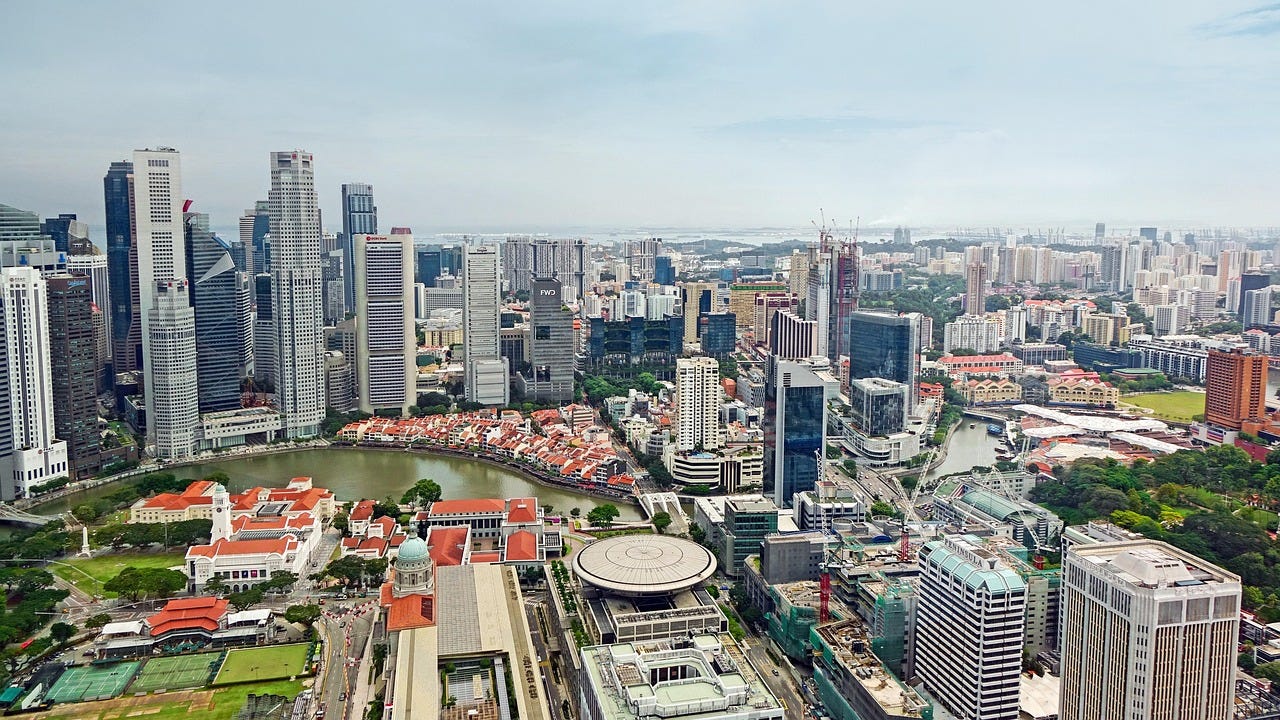
Singapore’s first “cross-class cramdown” has generated some buzz in the restructuring circle because of the potential application for future debt workouts.
While the term sounds like something out of a wrestling match, it basically refers to the practice of binding a creditor class that’s holding up a restructuring – provided that the conditions are met (check out Singapore’s requirements for a cross-class cramdown here).
Even though the mechanism was available since 2017, it had laid dormant for years until oil trader GP Global went ahead to deploy it. A restructuring adviser said this is “very good news” for the Singapore scene, while a second friend commented that it was like the last frontier that was not tested until now. A third friend echoed the sentiment, but said that he’s waiting for the grounds of the Singapore court’s decision for a better understanding.
The reason why so many restructuring professionals are excited about this case is because it could essentially provide a blueprint to overcome a creditor class that’s blocking a restructuring at the expense of the majority. GP Global’s success may embolden others to give the cross-class cramdown a try, which should be positive for Singapore’s ambition to be a restructuring hub.
A natural question is whether more Indonesian borrowers would come to Singapore’s shores for their restructurings. Under a local in-court restructuring (PKPU) in Indonesia, a borrower’s restructuring plan must be approved by a simple majority in number with at least two-thirds in value held by both secured and unsecured creditors who are present at the meeting.
In short, a proposed restructuring in Indonesia may hit a wall if a creditor has a blocking vote in the secured or unsecured class. While the option of cramming down an entire creditor class seems to have opened up in Singapore, there are still hurdles to clear: 1) The applicant must convince the Singapore court to sanction the scheme, and 2) Even if the Singapore court greenlights the scheme, the applicant has to enforce it in Indonesia.
In 2021, Indonesian textile company Pan Brothers managed to get its Singapore moratorium recognized by a Jakarta court, shielding it from a PKPU petition filed by one of its creditors, Bank Maybank Indonesia. One of the factors is because many international lenders have a presence in Singapore and must comply with the order of a Singapore court (read more about the moratorium here).
However, two Singapore-based lawyers with extensive cross-border restructuring experience said it’s uncertain whether the Singapore scheme itself would be recognized by Indonesian courts, which are not bound by previous decisions. A Jakarta-based lawyer also questioned whether a Singapore court would allow “forum shopping” by a borrower that seeks to bypass obstacles in its home jurisdiction.
Executing the cross-class cramdown is no walk in the park, but the fact that someone pulled it off in Singapore still represents a milestone that can help to push boundaries in the restructuring world.

👣 Asia’s Restructuring Milestones: Southeast Asia’s Mixed Platter
18 November 2025
Malaysia passed a bill that incorporated the UNCITRAL Model Law on Cross-Border Insolvency this year.
The Philippines also had a breakthrough when its flag carrier’s Chapter 11 restructuring was recognized by a local court in 2021.
Singapore made strides by building the ecosystem for crypto restructurings and refining its legal toolkit.
Flag airline Garuda Indonesia’s PKPU deal was recognized internationally, but Indonesia still has barriers for cross-border restructurings.
Vietnam’s bankruptcy law is considered largely untested and ad-hoc negotiations with individual creditors remain a common restructuring tool.
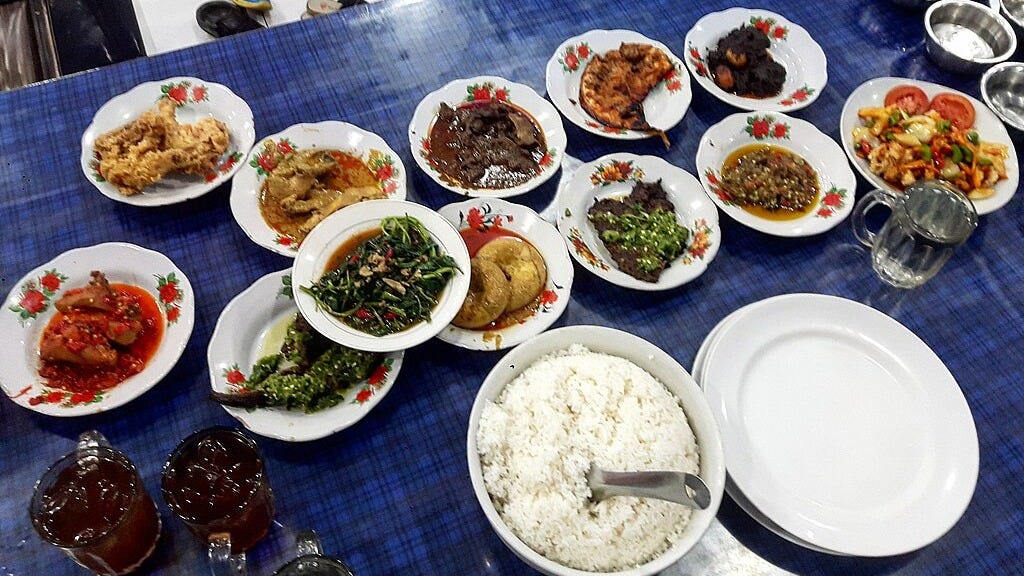
Malaysia stood out in Southeast Asia’s restructuring scene this year as it leapt forward to align its insolvency framework with international practices.
In September 2025, the Dewan Negara (Senate) passed a bill that incorporated the United Nations Commission on International Trade Law (UNCITRAL) Model Law on Cross-Border Insolvency. The move established “a robust legal mechanism for cooperation between Malaysian courts and courts in foreign jurisdictions in insolvency matters,” according to a Rajah & Tann article.
The country’s insolvency history shaped its path toward the Model Law, as the 1997–1998 Asian Financial Crisis exposed the risks of unrestricted moratoriums under schemes of arrangement, Malaysian lawyer Lee Shih wrote on LinkedIn.
“Moratoriums could be stretched almost indefinitely. The result: room for debtor misuse, creditor prejudice, and a scepticism of overly flexible restructuring tools,” he said, noting that these lessons drove Malaysia’s corporate rescue reforms, eventually leading to the Model Law legislation.
The Philippines also had a cross-border breakthrough around four years ago, when its flag carrier Philippine Airlines (PAL)’s Chapter 11 restructuring was recognized by a local court. This was “the first time on record a Philippines court had recognized a Chapter 11 proceeding under the country’s Financial Rehabilitation and Insolvency Act,” Norton Rose Fulbright – which represented PAL – said in a statement.
Meanwhile, Singapore’s restructuring community has made strides on several fronts. Apart from recognizing an Indian company’s Corporate Insolvency Resolution Process (CIRP) as a foreign main proceeding for the first time, the city-state has also been building the ecosystem for crypto restructurings and refining its legal toolkit.
Defi Payments was the first cryptocurrency company to successfully restructure its debt through a Singapore scheme of arrangement in 2023. Singapore also raised the bar for crypto firms operating in the country by ordering those that only serve overseas markets to shut by end-June unless they received a license.
Marking another notable step, Singapore had its first “cross-class cramdown” this year when oil trader GP Global deployed the mechanism to overcome a holdout creditor class. I wrote in April that it may provide a blueprint to cram down a creditor class that’s blocking a restructuring at the expense of the majority.
Ad-Hoc Deals
Garuda Indonesia entered the history books when the Indonesian flag carrier’s local in-court restructuring (PKPU) was recognized in Singapore and New York. The airline also successfully asserted foreign state immunity in Australia, thwarting one of the challenges mounted by its lessor Greylag Goose Leasing.
However, Indonesian law does not recognize foreign court judgments and applicants seeking enforcement typically must “re-litigate”, potentially adding to their legal costs. Indonesian courts are also not bound by past rulings, which means that lawyers may have to build each case as if it’s new, according to a lawyer friend.
Another barrier is the lack of a framework to manage post-PKPU defaults, as a creditor can file a debtor into bankruptcy if it breaches the agreement. As I previously wrote, some borrowers inserted a clause that would enable an out-of-court restructuring, but the bankruptcy of Arpeni Pratama Ocean Line in 2019 showed that a single holdout creditor can torpedo this deal.
Turning to Vietnam, the country’s 2014 Bankruptcy Law is considered largely untested. From 2015 until March 2020, Vietnamese courts accepted fewer than 600 bankruptcy requests, of which the courts only granted over 100 bankruptcy orders, according to a note by Hogan Lovells. Since March 2020, no further data has been published by the government.
“Due to the challenges in the enforcement of the bankruptcy regime, the most common restructuring tool in Vietnam remains for the debtor company to negotiate terms on an ad hoc basis with individual creditors on the restructuring of each debt outside of any formal court proceedings,” the law firm wrote.
The Right Fit
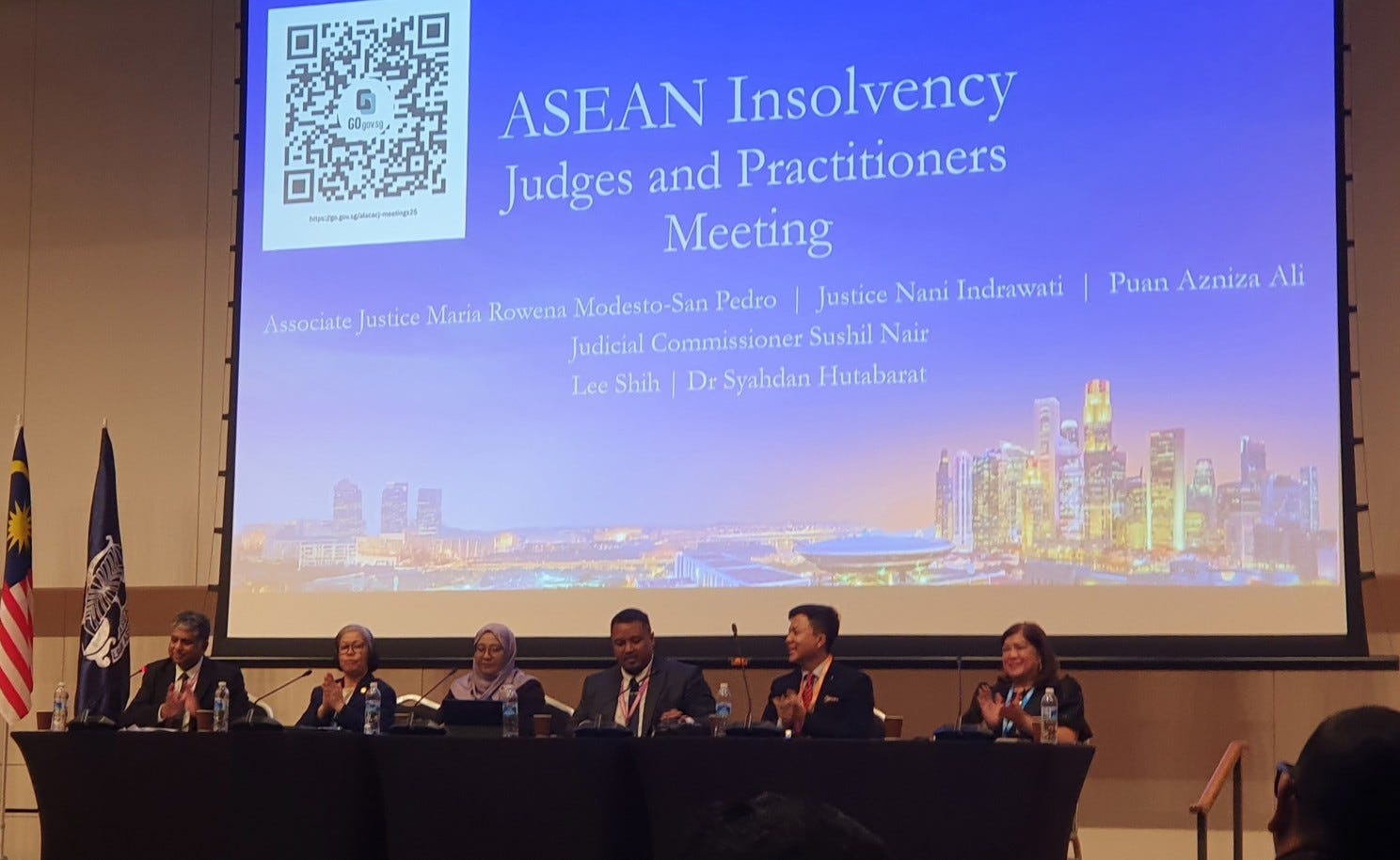
Different countries move at a different pace, but getting stakeholders in the same room to start a dialogue can accelerate progress.
Last week, Singapore hosted the ASEAN Insolvency Judges and Practitioners Meeting, which brought together justices and professionals from the region to exchange their thoughts. “There is no such thing as ‘one size fits all’ when it comes to ASEAN – a region of rich and diverse cultures and people,” according to the organizers.
“However, there is a lowest common denominator amongst all of us – which is the desire to work together and find the right fit for the problems that we are faced with.”