

📚 Acrostics Anatomy: Modernland’s Bond Combo
The Indonesian developer launched a tender, exchange offer and consent solicitation to avert a default.

📒 Quick Take: It’s A Smaller Bond World in Indonesia (28 November 2024)
📒 Quick Take: Indonesia Credit 2024 Wrap (6 December 2024)
📒 Quick Take: Christmas Modernland (16 December 2024)
📒 Quick Take: It’s A Smaller Bond World in Indonesia
28 November 2024
Tire manufacturer Gajah Tunggal obtained a loan to refinance its offshore bond and partly fund its factory expansion.
Property developer Modernland Realty is doing a combo of exchange, distressed tender and consent solicitation.
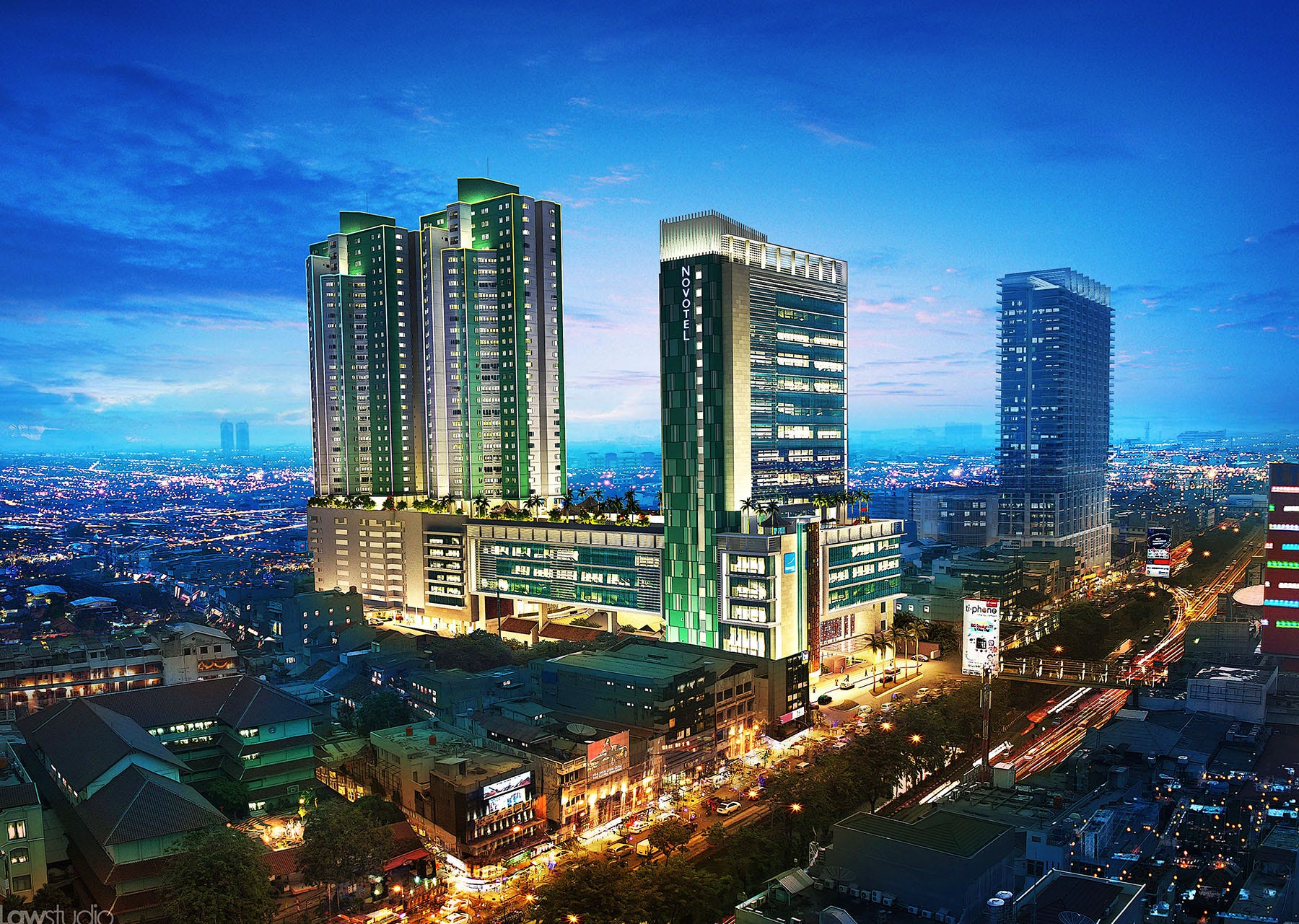
To paraphrase the Disneyland song, it’s a smaller bond world in Indonesia as its high-yield universe is contracting further.
Indonesian tire manufacturer Gajah Tunggal announced on 15 November 2024 that it had obtained a IDR 4.4 trillion (USD 277.3 million) syndicated loan led by Bank Central Asia (BCA), with two tranches maturing in eight and nine years, respectively. The company will tap the loan to refinance its outstanding USD 175 million bond due June 2026 and partly fund the expansion of its production facility.
Gajah Tunggal – which is controlled by Indonesian tycoon Sjamsul Nursalim and his family – was not only able to get a long-term onshore loan to refinance its offshore bond 1.5 years ahead of maturity, it also managed to make the banks pre-fund a portion of its capital expenditure. This underscores the preference of local banks for borrowers that are perceived to have strong sponsors.
Gajah Tunggal’s ability to refinance its bond didn’t come as a surprise. Some bondholders had concerns about the company’s tightening loan covenant headroom around two years ago, but nobody actually expected it to default. After Gajah Tunggal announced the loan deal, Moody’s upgraded its ratings to B2 from B3 and maintained a stable outlook.
Compared with Gajah Tunggal, Indonesian property developer Modernland Realty’s refinancing attempt is less straightforward. Around three years after its offshore bond restructuring, Modernland is doing a combo of exchange, distressed tender and consent solicitation to avoid another default.
As of 30 June 2024, Modernland’s outstanding due-2025 notes and the payment-in-kind (PIK) for the original due-2021 notes stood at USD 130.73 million and USD 10.31 million, respectively, according to the company’s disclosure. Meanwhile, its outstanding due-2027 notes and PIK for the original due-2024 notes stood at USD 213.94 million and USD 15.64 million, respectively, as of 30 April 2024.
Modernland proposed the latest transaction as it is unable to meet the required asset sales under the indentures of its restructured bonds. The developer must sell USD 200 million of assets by 31 December 2024, but it had only sold USD 70 million worth by September 2024, according to its filing to the Indonesia Stock Exchange (IDX).
Modernland allocated USD 49 million of new borrowings to fund the cash portion in its proposal, according to its filing to the Singapore Exchange.
While the exact terms for the due-2025 bond are still being finalized, they are likely to consist of a cash settlement and an exchange into new notes “approximately in line” with the average market price of 43.55 cents for the 60 days ended 31 October 2024. It is also seeking consent from holders of its due-2027 notes to remove the asset sale requirement by year-end and to facilitate the new borrowings.
Some people questioned why Modernland earmarked only USD 49 million for the bond deal despite obtaining a USD 60 million loan. The loan details disclosed in its IDX filing may shed some light:
Modernland signed the loan agreement on 31 October 2024 with Bank JTrust Indonesia and Eight Rubies Limited.
The loan will be due on 31 January 2027, with 11% interest and a redemption premium rate of 6%. Modernland must pay 10% of the loan 12 months after the drawdown, 15% in 24 months, and the remaining 75% on 31 January 2027 or at the latest 24 months after 31 January 2027 if it is extended.
It is secured by Modernland’s assets with a total estimated value of USD 110 million. These include land and buildings as well as a pledge of shares in Mitra Sindo Sukses (MSS), Mitra Sindo Makmur (MSM), and Bumi Perkasa Permai (BPP).
The loan is conditional on Modernland reaching a deal with its bondholders.
In short, the roughly two-year facility is like a bridge loan and it comes with various security for the lenders.
While the 11% interest might be considered not bad given that some private credit rates can be as high as 15-20% in emerging markets, the loan still doesn’t come cheap for Modernland. The developer reported cash and equivalents of IDR 111.4 billion (USD 7 million) as of 30 September 2024, according to its latest results.
Modernland is probably hoping that most bondholders would take the offer because of the cash component and the lack of alternatives in the secondary market. Whether or not the company can pull off its latest deal, bondholders must contend with a shrinking high-yield universe in Indonesia.
A buyside friend lamented that bondholders are faced with the unappealing choice of either having to pick among a dwindling supply of issuances or not putting their money to work.
Nevertheless, everything has its cycle and more companies will likely return to the bond market when the banking liquidity recedes – it’s a matter of when, not if.
📒 Quick Take: Indonesia Credit 2024 Wrap
6 December 2024

The long-awaited Spotify 2024 Wrapped landed this week, offering insightful statistics on how I spent 96,546 minutes listening to 3,734 songs this year.
In the spirit of wrapping stuff, I will also be reviewing the key events in Indonesia’s credit market as 2024 draws to a close.
Textile Companies Face a Reckoning
Sri Rejeki Isman (Sritex) and Pan Brothers completed their restructurings a couple of years ago, but those deals simply bought them time that eventually ran out along with their cash.
Sritex was declared bankrupt by a local court at the request of a supplier, while Pan Brothers is back in restructuring and has reportedly delayed a vote on its PKPU proposal to 13 December.
I’ve written extensively on Indonesia’s textile crisis so I won’t repeat the details, but these cases kind of raised a philosophical question: What’s the point of a restructuring if it doesn’t address the underlying cause?
It’s like wrapping a patient who has a tumour with bandage and hoping the person can go back to a normal life. There’s a higher chance for the person to return to the operating table than to actually recover.
Perhaps I’m ignoring the practical realities of restructurings, but some of my investor and analyst friends are growing tired of Indonesian situations that are like “Restructuring Unlimited” because there’s no change in the management or controlling shareholders, while the business is not turning around and no new money is coming in.
There’s been a lot of criticism of Indonesia’s legal system, but it’s worth noting that Pan Brothers did a Singapore scheme of arrangement before it took the PKPU route. So the choice of jurisdiction cannot save a borrower if the premise of the restructuring deal is too optimistic.
Indonesia’s textile turmoil has also sparked a trend of the government intervening in private corporate matters.
Even before the Supreme Court makes a decision on Sritex’s appeal, the President had instructed no fewer than four ministers to rescue its workers. Meanwhile, Pan Brothers’ court hearing was briefly postponed last week because the management was summoned by the Coordinating Minister for Economic Affairs.
Textile workers are real people with families and few will argue that they are not worth saving. However, this will require tough choices that someone will have to make.
Indonesia’s High-Yield Universe Shrinks
Several Indonesian borrowers tapped onshore loans to refinance their offshore bonds in 2024, extending the ride on flush banking liquidity over the last two or three years.
Local banks seem to have these preferences:
Commodity or resource companies that were a proxy to the market rally, though some of the prices have dipped.
Borrowers that are perceived to have strong sponsors or shareholders.
Property developers with land and buildings to pledge – bonus point if they are also backed by influential families.
My former colleague Kevin Lim once told me to always give credit when credit’s due (he meant acknowledgment, not the loan type). In that spirit, I think there’s been a lot of negative press on Indonesian borrowers that defaulted on their debt, but not enough acknowledgment for those that tried to do the right thing.
Fitch upgraded Lippo Karawaci to B- from CCC+ in October, after the property developer used most of the proceeds from selling part of its stake in Siloam International Hospitals to reduce its debt.
Fitch said the move addressed Lippo Karawaci’s refinancing risk, which was previously seen as high due to its leverage and insufficient internal cashflow.
Last month, tire manufacturer Gajah Tunggal announced that it obtained a IDR 4.4 trillion (USD 277.3 million) syndicated loan led by Bank Central Asia (BCA), with two tranches maturing in eight and nine years, respectively, to refinance its offshore bond and partly fund its factory expansion.
BCA has a good relationship with the Nursalim family who controls Gajah Tunggal, a banker friend said, noting that domestic banks with a relatively low loan-to-deposit ratio (LDR) like BCA want to secure their long-dated yields in a “higher for longer” interest rate environment exported by US President Donald Trump.
BCA, Indonesia’s biggest private bank, reported an LDR of 72.7% as of end-June, below the market average of 85%, local media reported.
Meanwhile, Modernland Realty is offering a package of bond exchange, distressed tender and consent solicitation as it couldn’t meet the asset sale requirement set in its previous round of restructuring.
The property developer – which must seal a deal by year-end to avoid a default – extended the deadline for bondholders until 16 December.
While Indonesia’s bond world may have contracted, it will likely expand again in time.
SOEs Brace for a Shake-Up
This year, state-owned builders Wijaya Karya and Waskita Karya pulled off their debt restructurings, clearing the path for them to be consolidated into an SOE holding company focusing on construction.
While the restructurings were notable achievements for those involved in the process, if I were to call a spade a spade the deals were essentially kicking the can down the road and the future resolution is even more uncertain with the formation of a new investment body called Danantara.
This is because the key SOEs including Bank Mandiri, Bank Rakyat Indonesia (BRI) and Bank Negara Indonesia (BNI) are supposed to be merged with Danantara and these three state-owned banks have been key players supporting the restructurings of their peers. In short, there might have been no restructuring deal without the state-owned banks.
Extracting the best-performing SOEs and putting them in a new shop might seem great on paper, but executing it is probably not that simple because the SOEs are interconnected. Furthermore, 1+1 doesn’t necessarily add up to 2 if there’s a culture clash or if investors end up getting cold feet.
I wrote in a previous piece that “the market is waiting for Danantara’s shape and form to become clearer in the new year” and a friend quipped that would be like “Waiting for Godot”. Given that the titular character in Samuel Beckett’s play never actually arrives, one hopes that’s not the case with Danantara.
📒 Quick Take: Christmas Modernland
16 December 2024
The key players in Modernland’s restructuring and their likely considerations.
Why the Indonesian developer had to revise some terms to address bondholders’ concerns.

A restructuring process might seem complicated and full of technical terms, but the underlying drivers are a bit like Hungry Hippos.
It’s perfectly rational for each hippo to want to gobble up as many marbles as possible, even though there are only so many marbles to go around. The catch is in a restructuring, nobody wins if only one hippo gets most of the marbles.
The hippos can only collectively proceed if enough of them feel that they have enough marbles to live with, at least until they can exit the game or they are forced to sit for another round.
So the real objective is to figure out the minimum marbles that the hippos can accept – and when there aren’t enough marbles, the only way out is to sell the hope that more marbles will materialize in future.
In the case of Modernland Realty, the Indonesian property developer extended two offshore bonds around three years ago, but could not sell USD 200 million of assets by 31 December 2024 as required by the restructuring terms.
Therefore, it’s making an exchange offer for its due-2025 bond as well as seeking consent from holders of its due-2027 notes to remove the asset sale requirement and to facilitate new borrowings.
These are the four key players and their likely considerations:
New Lenders
Bank JTrust Indonesia and Eight Rubies Limited agreed to give a USD 60 million loan to Modernland, which is conditional on a deal with bondholders.
The new lenders are probably willing to step in because the loan carries favourable terms for them and is set to mature on 31 January 2027.
In short, they are betting that they could get paid ahead of the bondholders while being sufficiently protected in case the loan goes bad.
Holders of the 2025s
Modernland allocated USD 43.7 million – the lion’s share of its new borrowings – to incentivize the 2025 noteholders to accept the exchange offer. In total, it’s offering 55 cents on the dollar, comprising 31 cents in cash and 24 cents in new notes due 30 April 2027.
Modernland probably had to give the most sweetener to the 2025 bondholders so they would agree to fall behind the new lenders. However, these bondholders would also have to recognize a haircut if they were to accept this offer.
Holders of the 2027s
Modernland is giving the 2027 noteholders a total of USD 5.6 million, or a 3-cent consent fee, as this bond is not exchanged with new notes.
However, some of the bondholders might be unhappy about being lumped with everyone else as Modernland will have a big maturity wall in 2027.
While the security coverage will increase from 60% to 100% for the 2027s, this also applies to the swapped 2025s.
Modernland
Modernland’s financials are clearly not in a great shape.
Total revenue fell 9% to IDR 712.2 billion (USD 44.4 million) for 9M24 while overall cost of revenue rose 12.8% to IDR 411.4 billion, according to its latest results. Net operating cash outflow narrowed to IDR 4.6 billion as it cut payments to contractors, suppliers and land owners.
However, net cash outflow from investing activities widened to IDR 48.6 billion mainly due to an increase in restricted funds. It also swung to a net financing cash outflow of IDR 19.7 billion as it made more payments to the banks and received less loans.
What’s Next?
On 27 November, Modernland launched a tender and exchange offer under a prepackaged Singapore scheme of arrangement as well as a consent solicitation.
Following discussions with bondholders on 10 December, the company revised some terms to address their concerns on 1) collateral arrangements between noteholders and the new lenders, 2) payment subordination of noteholders to the new lenders, and 3) asset sales.
Given that Modernland is unlikely to generate enough cash on its own, the realistic solution to repay creditors is through asset sales and this is where the push-and-pull lies.
The bondholders basically want to ringfence their collateral from the new lenders and they are pushing for more control over the sale process. In short, they are demanding a more concrete exit path.
Modernland is racing against the clock to strike a deal with the bondholders and avert a default. Based on the latest schedule, votes will be recorded on 20 December and the results will be announced on 24 December, while the restructuring effective date is targeted before 31 January.
We will know on Christmas Eve whether Modernland has survived its latest round of restructuring.