

📚 Acrostics Anatomy: Indonesia’s Economic Cracks
Acrostics Asia connected the dots on the ground to infer that Indonesia’s economy was weaker than what the official data showed.

📒 Quick Take: Indonesia’s Wave of Layoffs (7 February 2025)
💼 Brief Take: Darker Indonesia (3 March 2025)
📒 Quick Take: Indonesia’s Missing Financial Guardian (11 March 2025)
💼 Brief Take: Indonesia’s Deficit Balloon (16 March 2025)
💼 Brief Take: Indonesia’s Market Meltdown (18 March 2025)
📒 Quick Take: Rainy Days in Indonesia (20 March 2025)
💼 Brief Take: Indonesia’s Rupiah Retreat (25 March 2025)
💼 Brief Take: Indonesia’s Mining Squeeze (27 March 2025)
💼 Brief Take: Prudence over Profligacy (31 March 2025)
📒 Quick Take: Indonesian Outflows (19 April 2025)
📒 Quick Take: Indonesia’s Wave of Layoffs
7 February 2025
Indonesia is facing a wave of layoffs in its textile and startup sectors.
Startups are experiencing a funding crunch due to the ripple effect from eFishery’s scandal.
Indonesia is facing a wave of layoffs in its textile and startup sectors, posing a risk to its economy that’s already growing at the slowest pace in three years.
An analyst at the Parliamentary Analysis Center of the House of Representatives (DPR), Hartini Retnaningsih, projected that at least 280,000 workers could be laid off by 60 textile companies this year, state news agency Antara reported. This would be more than triple the 77,965 layoffs recorded by the Ministry of Manpower in 2024.
The drivers for the potential layoffs include a value-added tax hike, reduced government subsidies, and higher premiums for the national health insurance program, according to Antara.
The health insurance scheme – which covers 219 million active policy holders – was estimated to run a IDR 20 trillion (USD 1.2 billion) deficit last year, piling pressure on its manager, BPJS Kesehatan, to increase premiums.
The rising costs couldn’t have come at a worse time for workers who are losing their jobs in the beleaguered textile industry. The poster boy of Indonesia’s textile crisis, Sri Rejeki Isman (Sritex), was declared bankrupt and the court-appointed administrators have accepted IDR 29.8 trillion (USD 1.8 billion) of claims from creditors.
Sritex’s management said it will prepare a proposal for its business continuity, but the administrators requested an independent audit to determine the feasibility. One of the administrators, Denny Ardiansyah, told reporters that Sritex’s independent director was of the view that the company would incur more losses and limited working capital if it were kept running.
In the startup sector, embattled aquaculture company eFishery has terminated more employees, after laying off around 100 workers in January, Kompas reported on Thursday (6 February). In a few weeks, eFishery’s shareholders are set to vote whether to wind down, restructure, or sell the company entirely or partially, according to Bloomberg.
As I wrote last week, the potential scenarios ahead for eFishery are a restructuring, liquidation, and enforcement against the perpetrators of the alleged fraud. A sale will likely be difficult because of eFishery’s limited assets and tarnished reputation, unless the potential buyers are bulletproofed from any further stinker.
I was expecting more layoffs after the Muslim holidays due to the PR risks, but eFishery’s management probably had to act sooner rather than later to stem the losses. The appointment of FTI Consulting—which investigated the alleged fraud—to temporarily run eFishery also sent a signal that shareholders are roping in an independent third party to choose the best path objectively.
The fact remains, however, that eFishery’s shareholders are staring at a dwindling pool of recovery, as the startup may have to pay severance and Hari Raya Allowance (Tunjangan Hari Raya) to the affected workers. It’s also uncertain whether they can claw back money from eFishery’s founder Gibran Huzaifah and his accomplices.
For now, the damage has been done. The eFishery scandal has delivered another blow to investor sentiment in Southeast Asia, where the startup ecosystem has been braving a multi-year funding drought, CNBC reported.
The founders of another Indonesian startup, Ula, are winding it down and offering to return around 30% of its total capital to investors, DealStreetAsia reported. The “warung-tech” company’s backers were given the option to either redeem their investments or roll them into founder Nipun Mehra’s upcoming venture, according to the publication.
If layoffs in the startup and textile sectors were to accelerate, the affected workers and their families would likely tighten their belts. The aggregate numbers are unclear at this point, but weakening consumption may undermine the Central Bank’s efforts to stimulate growth by cutting interest rates.
At the end of the day, bread-and-butter issues can make or break an economy.
💼 Brief Take: Darker Indonesia
3 March 2025
President Prabowo Subianto has been selling his vision of “Golden Indonesia”, but the country is hurtling towards a darker chapter with mass layoffs, a stagnant middle class, and a multi-billion-dollar corruption scandal.
Indonesia is facing significant challenges that should be acknowledged by its leaders sooner rather than later.
🔸 President Prabowo Subianto has been selling his vision of “Golden Indonesia”, a mighty nation that can finally harness its vast resources and be a master of its own destiny. Yet, Indonesia is hurtling towards a darker chapter with mass layoffs, a stagnant middle class, and a multi-billion-dollar corruption scandal.
🔸 Textile manufacturer Sri Rejeki Isman (Sritex) shut its factories on 1 March 2025 after terminating nearly 11,000 workers. Apart from Sritex, other companies that carried out layoffs include electronics manufacturer Sanken Indonesia, music equipment maker Yamaha Musik Indonesia, and fast food chain KFC, local media reported.
🔸 The proportion of Indonesia’s middle-income class has also retreated to a level seen around a decade ago. This percentage rose from 17.6% in 2014 to a peak of 22.5% in 2018, and then dipped to 17.7% in 2023, according to a report from Katadata Insight Center.
🔸 Last week, Indonesia’s attorney-general arrested executives from units of state-owned energy company Pertamina over IDR 193.7 trillion (USD 11.9 billion) in alleged corruption. This came at a bad time for new sovereign fund Danantara, which has been trying to assure potential investors of good governance.
🔸 Worsening the optics, hundreds of students staged a “Dark Indonesia” rally against Prabowo’s budget cuts and other perceived blunders of the government. In response, Indonesian officials downplayed the movement and even accused the protesters of being the one in the dark.
🔸 Indonesia has tremendous potential to be unlocked and one of its biggest resources is the resilience of its people. But the country is facing significant challenges that should be acknowledged by its leaders sooner rather than later.

📒 Quick Take: Indonesia’s Missing Financial Guardian
11 March 2025
Local bankers and brokers question if Finance Minister Sri Mulyani Indrawati had a role in the government’s policies.
The former World Bank managing director has not disappeared, but the room for her to move seems to be more limited now.
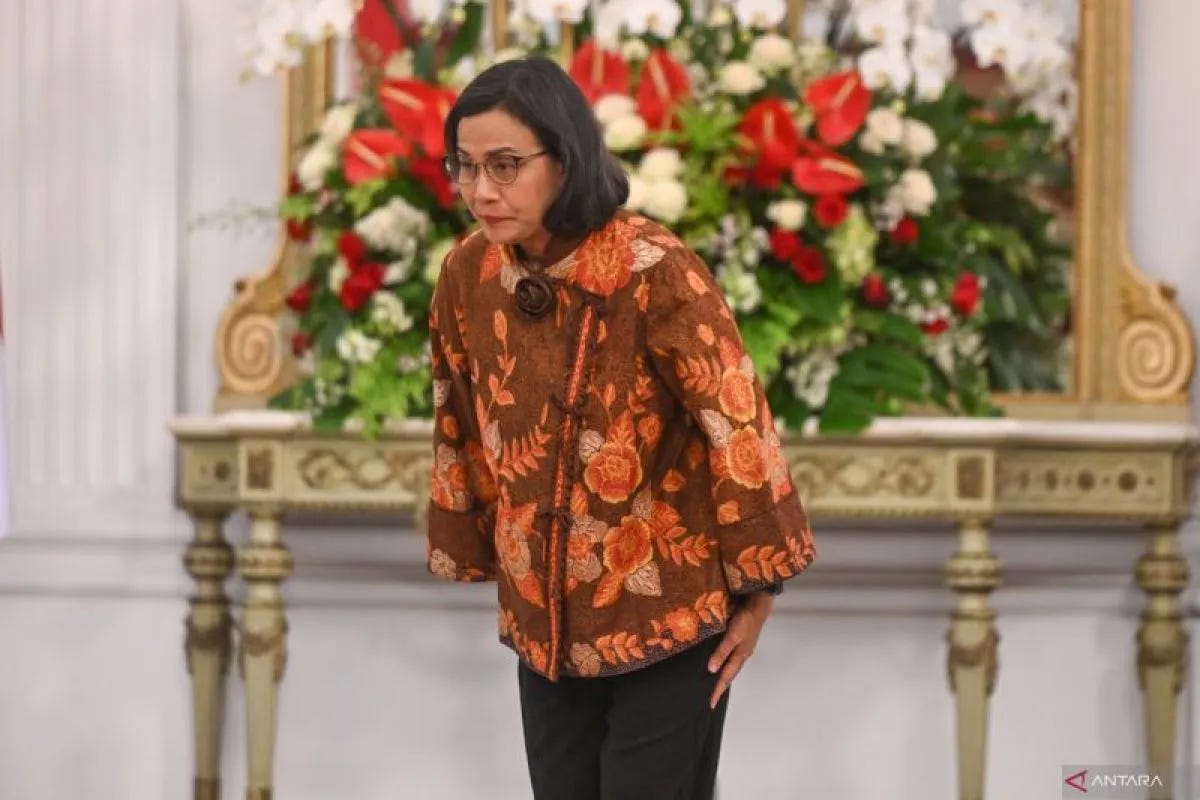
“Where’s Sri Mulyani?” a local banker friend asked out loud this week.
His question reflects the growing exasperation in the onshore financial circle over the direction of Indonesia’s economic policies. In private, these bankers and brokers are wondering whether Finance Minister Sri Mulyani Indrawati—the strict but trusted guardian of Indonesia’s purse strings—had a role in the government’s slew of initiatives.
President Prabowo Subianto’s list of projects is growing by the day, ranging from free school lunches and food estates to building three million homes and even developing the local version of DeepSeek. Meanwhile, rising discontent over his budget cuts has spurred the “Indonesia Gelap” (Dark Indonesia) protests on the streets and a movement to escape abroad.
Investors are also getting more concerned about the concentration of state assets in the hands of new sovereign fund Danantara, contributing to a sell-off in the rupiah and the shares of state-owned banks. I’ve flagged since November 2024 that if unchecked, Danantara risks becoming a debt machine that can circumvent the fiscal limits that have largely been abided by finance ministers including Sri Mulyani over the years.
Sri Mulyani has not disappeared, but the room for the former World Bank managing director to move seems to be more limited now. Local media reported on 22 October 2024, two days after Prabowo’s inauguration, that the new president had ordered the Finance Ministry to report directly to him, instead of the Coordinating Ministry for Economic Affairs.
Prabowo’s nephew, Thomas Djiwandono, was appointed as Deputy Finance Minister in July 2024, followed around three months later by Anggito Abimanyu, a former research assistant of the president’s late father, Professor Soemitro Djojohadikusumo.
Local investigative magazine Tempo reported last month that the revision of an SOE law to set up Danantara was fast-tracked through the Parliament, with the Finance Ministry losing the most authority in the process. Dividends from state-owned enterprises (SOEs) will now be managed by Danantara instead of flowing to the state budget, putting pressure on the Finance Ministry to find other sources of revenue.
A new Coretax system that was supposed to improve Indonesia’s tax reporting has become an albatross around the Finance Ministry’s neck following widespread glitches. The system reportedly incurred IDR 5.4 trillion (USD 328.9 million) in costs, more than quadruple the initial estimate of IDR 1.3 trillion.
Apart from the SOE dividends, the sweeping budget cuts affecting the civil service and education sectors will also go towards bankrolling Danantara, according to reports. I wrote last month that while the decoupling of SOE and state losses under the revised law could encourage state-owned banks to unclog their bad loans, it also raised questions of who’ll be accountable if investments turn sour.
No one doubts that the new president has bold ambitions to bring Indonesia to greater heights. But there seems to be a desire both on the ground and in the international community for more checks and balances on the consolidation of power.
💼 Brief Take: Indonesia’s Deficit Balloon
16 March 2025
Indonesia’s tax shortfall could be exacerbated by the wave of layoffs in the labour-intensive manufacturing sector.
If the state revenue is not keeping up with the pace of spending, there’s only so much balloon that officials can squeeze.
Indonesia posted a rare budget deficit as of February due to a double-digit drop in state revenue, adding to concerns about the health of government finances this year, Bloomberg reported on 13 March 2025.
Eveline’s Take:
🔸 Deputy Finance Minister Anggito Abimanyu told reporters that tax revenue usually dips following a year-end bump on the back of holiday spending. “This pattern is normal,” he reportedly said. Yet, data compiled by Bloomberg showed that the last time Indonesia posted a budget deficit so early into the year was in 2021, when the government was shoring up the economy amid the pandemic.
🔸 President Prabowo Subianto diluted a value-added tax increase just before it was supposed to be rolled out in January 2025, while the new “Coretax” system that was meant to improve tax reporting has been beset with glitches.
🔸 The tax shortfall could be exacerbated by the wave of layoffs in the labour-intensive manufacturing sector. More than 60,000 workers were laid off by 50 companies between January and February 2025, CNBC Indonesia reported, citing the Indonesian Trade Union Confederation (KSPI). “This layoff storm is very serious,” KSPI President Said Iqbal said.
🔸 Goldman Sachs raised its budget deficit forecast for Indonesia to 2.9% of GDP in 2025, slightly below the 3% cap, citing fiscal risks that come from the president’s slew of initiatives. The US bank also cut its recommendations for the country’s stocks and 10- to 20-year quasi sovereign bonds.
🔸 I wrote on 3 March that Indonesia is facing significant challenges that should be acknowledged by its leaders sooner rather than later. Fiscal discipline is not a handcuff that shackles Indonesia from achieving greatness – it’s in fact one of the pillars that have kept the country stable despite its vulnerability to capital outflows.
🔸 If the state revenue is not keeping up with the pace of spending, there’s only so much balloon that officials can squeeze. It’ll be even harder when the balloon is losing air on its own.
💼 Brief Take: Indonesia’s Market Meltdown
18 March 2025
A spokesman for Indonesian President Prabowo Subianto called the rumoured resignation of Finance Minister Sri Mulyani Indrawati a “hoax”.
Investors trust the former World Bank managing director and any negative news surrounding her position could trigger market swings.
Indonesian stocks fell the most in over a decade, triggering a trading halt for the first time since the pandemic, as concerns about a weakening economy and softer consumer spending hit investor sentiment, Bloomberg reported on Tuesday (18 March 2025).
Eveline’s Take:
🔸 Indonesia’s market sell-off could be fuelled by any number of reasons: the tax shortfall, mass layoffs, weakening consumption, downgrades by international banks, and the global tariff wars.
🔸 The elephant in the room is the rumoured resignation of Finance Minister Sri Mulyani Indrawati, which has been rife over the past week. A political analyst published a note saying that the respected minister may exit as part of an upcoming cabinet reshuffle, according to a Jakarta-based friend.
🔸 On Tuesday, a spokesman in Indonesian President Prabowo Subianto’s communications office called the speculation a “hoax”. Sri Mulyani is still carrying out her tasks as the finance minister and Indonesians should not be provoked by information that's “clearly not verified”, the spokesman said.
🔸 The latest episode has invoked a déjà vu: Sri Mulyani was reported in January 2024 to be weighing a resignation, sparking a sell-off in the rupiah. Nine months later, the former World Bank managing director told reporters that she would continue serving as Indonesia’s finance minister, reassuring the international community.
🔸 I flagged on 11 March that the government’s ambitious projects have stirred some concerns in the financial circle, with bankers and brokers privately wondering whether Sri Mulyani had a role in these policies. The reality is that investors trust the finance minister and any negative news surrounding her position could trigger market swings.
📒 Quick Take: Rainy Days in Indonesia
20 March 2025
Indonesians are saving less as they grapple with the costs of living and mass layoffs.
Corporate borrowers rode the onshore banking liquidity to refinance their offshore debt over the past few years, but this wave is showing signs of receding.

Indonesians are saving less as they grapple with the costs of living and mass layoffs in the manufacturing sector.
In total, the savings proportion fell to 14.7% in February 2025 from 15.3% in January 2025 and 15.5% in December 2024, according to Bank Indonesia’s latest consumer survey.
The savings rate in February 2025 was the lowest since December 2021, when Indonesia was going through the pandemic, CNBC Indonesia reported. Indonesians are focusing on meeting their basic needs, as supermarket spending rose to 15.9% in February 2025 from 15% in the previous month, the news agency reported, citing data from the Mandiri Institute.
An onshore banker friend said he is watching the level of purchasing power after the Muslim holidays, as savings are being eroded and some Indonesians are on the hook with online lenders. Around 137 million Indonesians owed a combined IDR 66 trillion (USD 4 billion) in outstanding debt at digital lending platforms as of end-September 2024, Nikkei reported, citing data from the Financial Services Authority (OJK).
If Indonesians are dipping into their savings or spending more on basic needs, this may have a knock-on effect on the current account and savings account (CASA) ratio, which indicates the availability of low-cost funds for banks. The loan-to-deposits (LDR) ratio for commercial banks rose to 88.57% in December 2024 from 87.34% in the preceding month, according to the latest OJK data.
Indonesia’s biggest private bank, Bank Central Asia (BCA), warned in January 2025 that credit growth this year is “likely to stagnate, with a risk of deceleration.” Deposits may follow a similar trend, though an upside could arise from government-to-private sector transfers, according to BCA’s Indonesian Banking Outlook 2025 report.
A string of corporate borrowers rode the onshore banking liquidity to refinance their offshore debt over the past two or three years, but this wave is showing signs of receding. A couple of issuers attempted a return to the dollar bond market, but it’s not a smooth ride either.
Indonesian state-owned lender Bank Tabungan Negara (BTN) shelved the sale of five-year Tier 2 notes, citing market volatility, Bloomberg reported on 19 March 2025. This came after the dollar bond spreads for Indonesian companies hit their widest level in six months, precipitated by a sell-off in the stock market.
Indonesians are facing rainy days ahead and it’s uncertain how long this weather will last.
💼 Brief Take: Indonesia’s Rupiah Retreat
25 March 2025
A broker friend said the rupiah decline today came on the heels of several “savage days” in the equity market.
President Prabowo Subianto’s government might have to work extra hard to convince risk-off investors that their money would be safe in Indonesian assets.
The Indonesian rupiah fell to its weakest level since the Asian Financial Crisis as fears mounted over the nation’s fiscal trajectory, prompting the central bank to act to defend its currency, Bloomberg reported on 25 March 2025.
Eveline’s Take:
🔸 A broker friend said the rupiah decline today came on the heels of several “savage days” in the equity market, with a huge selling pressure from both active and passive foreign funds. Some investors bought US dollars when the “T+2” settlement date for the transactions arrived, he noted.
🔸 Indonesia’s benchmark stock index plummeted 7% last week on a confluence of factors, including the rumoured resignation of respected Finance Minister Sri Mulyani Indrawati – which was denied by the former World Bank managing director herself and the head of President Prabowo Subianto’s communications office.
🔸 New sovereign fund Danantara Indonesia has also been trying to assure investors that it won’t mix politics with business. Chief Executive Officer Rosan Roeslani, Chief Investment Officer Pandu Sjahrir and Chief Operating Officer Dony Oskaria will spearhead the execution, while former Indonesian Presidents Joko Widodo and Susilo Bambang Yudhoyono are set to be in the “steering committee”. The fund will also reportedly be advised by US billionaire Ray Dalio, economist Jeffrey Sachs and former Thai premier Thaksin Shinawatra.
🔸 Time will tell whether Danantara’s charm offensive is effective, though there are lingering questions in the market about how the team will work together with so many high-profile figures in the picture. While having an ‘All-Star’ cast could help with the sales pitch, what really matters is their dynamics and ability to make independent investment decisions.
🔸 Given that the eventual plan is to consolidate all state-owned enterprises under Danantara, the debt accumulated to fund Indonesia’s infrastructure push has become a thorny topic. Seven state-owned builders had combined liabilities of around IDR 258 trillion rupiah (USD 15.7 billion), Nikkei reported, citing the figures presented at a hearing with lawmakers earlier this month.
🔸 Some investors are in risk-off mode due to the global uncertainties, such as tariff wars and the stance of the Federal Reserve. Prabowo’s government might have to work extra hard to convince these investors that their money would be safe in Indonesian assets.
💼 Brief Take: Indonesia’s Mining Squeeze
27 March 2025
Four of five rated Indonesian miners are expected to have weaker earnings and operating cashflow if the proposed changes to royalty rates are implemented, Moody’s wrote.
In their quest for more income, Indonesian officials have to be careful not to choke the dollar-laying goose to death.

Four of five rated Indonesian miners are expected to have weaker earnings and operating cashflow if the proposed changes to royalty rates are implemented, Moody’s wrote on 26 March 2025.
The potential impact should be negative on Bayan Resources, Freeport Indonesia, MIND ID and Nickel Industries Limited, but Indika Energy stands to benefit the most, according to the rating agency.
Eveline’s Take:
🔸 Indonesian miners are facing escalating costs from a spate of regulations announced by the government over the last few months. Mining executives complained that they are being squeezed to compensate for weaknesses in other sectors, even though commodity prices have been softening.
🔸 Indonesia is grappling with a lower-than-expected tax collection, mass layoffs in the manufacturing industry, and the risk of capital outflows. This week, the Central Bank had to step in to stabilize the rupiah, which fell to the lowest since the Asian Financial Crisis.
🔸 Apart from the potential royalty hike, rules that were recently rolled out by the government include a requirement for natural resource firms to retain all export proceeds onshore for a year, as well as an order for coal miners to use the official benchmark price (HBA) for their transactions. The Parliament also fast-tracked a law that allows religious organizations to hold mining concessions.
🔸 President Prabowo Subianto told the G20 Summit in November 2024 that Indonesia would retire all of its coal power plants within 15 years. Yet, the climate and energy envoy who’s also the president’s younger brother, Hashim Djojohadikusumo, said last month that phasing out coal by 2040 would be an “economic suicide”. It’s puzzling why the president would make such a bold statement to the world, only for it to be walked back by his brother within months.
🔸 Climate change is real and all nations should do their part to arrest the pace of global warming, but the mining industry also needs consistency in policymaking. In their quest for more income, Indonesian officials have to be careful not to choke the dollar-laying goose to death.
💼 Brief Take: Prudence over Profligacy
31 March 2025
An unnamed analyst quoted by the Straits Times criticized Indonesian Finance Minister Sri Mulyani Indrawati’s prudent fiscal approach.
Her prudence is precisely one of the pillars that are holding Indonesia up amid the global volatility.
The Straits Times published an article on 31 March 2025, saying that Indonesian Finance Minister Sri Mulyani Indrawati’s prudent fiscal approach has put her at odds with President Prabowo Subianto.
An unnamed research head quoted in the article criticized Sri Mulyani’s “overly cautious stance”, “weak fiscal policy”, and “lack of push in driving spending by provincial and municipal governments across Indonesia.”
“She is not pro-growth, and this is obviously not in line with President Prabowo’s ambitious economic growth target,” the analyst – who declined to be named – told the Straits Times.
There are two major issues with this article:
1️⃣ Sri Mulyani’s prudence is precisely one of the pillars that are holding Indonesia up amid the global volatility. The fact that Indonesia’s stocks and currency tumbled on rumours that she was resigning (which she had denied) shows how much investors trust her. Being cautious doesn’t mean resisting growth – it means recognizing that Indonesia has always been vulnerable to capital outflows and taking the wrong step could be irreversible.
2️⃣ The Finance Minister is not perfect. The rollout of the Coretax system was indeed a disaster, but Indonesia’s fiscal woes cannot be pinned on her alone. While Sri Mulyani is an important crew member, the direction of the ship ultimately depends on the captain. Why would the anonymous analyst suggest that the Finance Minister is responsible for driving local government spending? Sri Mulyani is only one person and she shouldn’t be expected to bear the weight of the entire team.
📒 Quick Take: Indonesian Outflows
19 April 2025
The underlying drivers behind the shift of Indonesian funds out of the country.
A comparison between the former and current presidents in the eyes of some Indonesians.
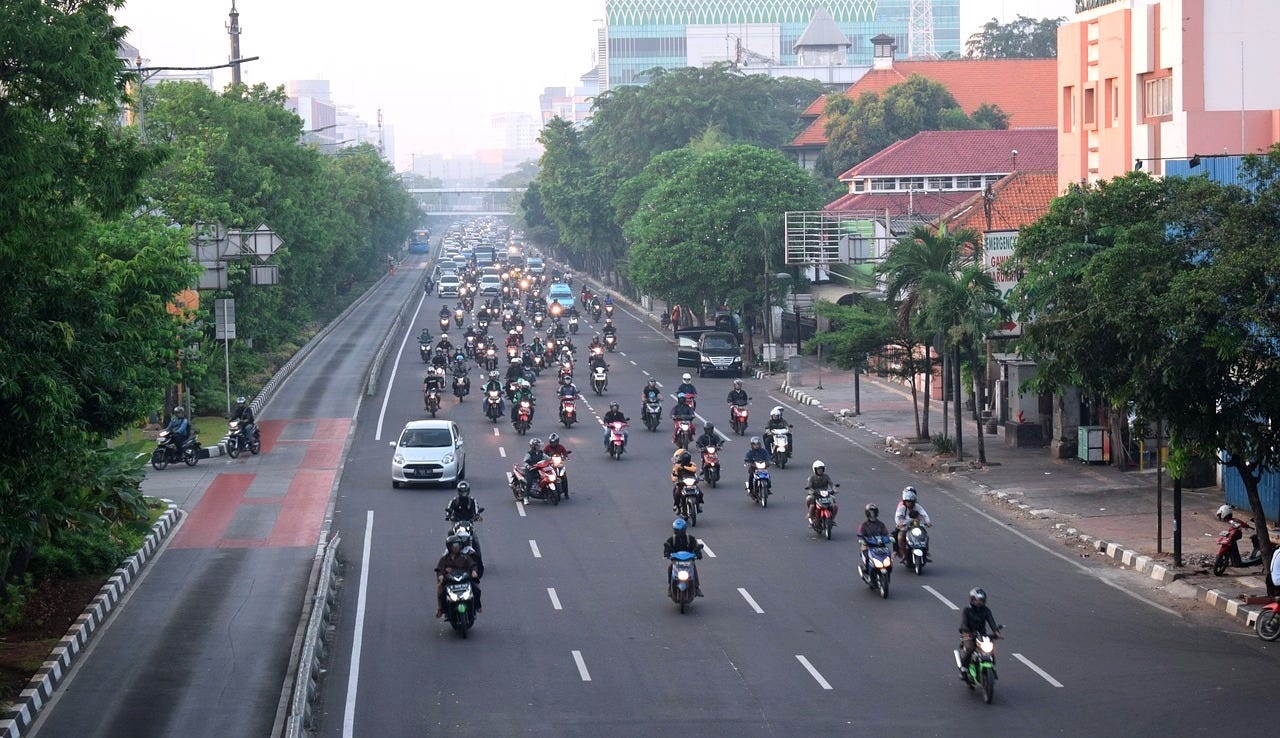
President Prabowo Subianto denounced the “Dark Indonesia” rallies earlier this month, telling investors and company executives in Jakarta: “When I wake up in the morning, what I see is a bright Indonesia.”
The president’s sentiment doesn’t seem to be shared by some Indonesians on the ground.
Rich Indonesians have been transferring hundreds of millions of dollars offshore amid concerns over fiscal discipline and economic stability, Bloomberg reported. The shift began when Prabowo took office in October 2024 and accelerated after the rupiah plunged in March 2025, according to the news agency.
A friend in the financial circle said that capital started flowing out of the country partly due to fears of being caught on the wrong side of the power consolidation around the president’s camp. Some were surprised by the speed and scale of the operation, this friend said, noting that questions over whether there’s a grand design or not had added to the uncertainty.
In response to the Bloomberg report, several domestic media criticized the wealthy Indonesians for diverting funds when the rupiah was particularly volatile.
“If their wealth originates from Indonesian resources, Indonesian labour and the ease of doing business in Indonesia, then the moral responsibility to safeguard the national economic stability should have been a priority,” local economist Achmad Nur Hidayat was quoted as saying.
This nationalist sentiment runs deep in the government. Defence Minister Sjafrie Sjamsoeddin, a trusted ally of the president, is leading a task force that has reportedly confiscated one million hectares of illegal palm plantations.
Some of the areas were handed to a new state-owned enterprise, Agrinas Palma Nusantara, which could potentially become Indonesia’s biggest plantation company if it takes over all the seized assets, Reuters reported.
A friend who works for a private mining company said that it’s challenging to grasp Prabowo’s economic strategy because of his focus on the big picture and bloated coalition.
In comparison, the more detail-oriented former president, Joko Widodo (Jokowi), preferred domestic site visits to overseas trips and cut considerable red tape for businesses, according to the second friend.
A third friend said that some Indonesian owners of small and medium businesses are considering opening factories in Vietnam due to cheaper costs and a more favourable climate for investors.
This friend also drew a comparison between the signature programs of both presidents: Prabowo’s free school lunches and Jokowi’s infrastructure expansion are both costly, but roads and rails are seen as a more concrete product of these state investments.
Nevertheless, the third friend acknowledged that Jokowi’s infrastructure push resulted in a huge debt burden, which is now shouldered by his successor’s administration (check out my takes here and here).
It’s worth noting that Jokowi’s eldest son, Gibran Rakabuming Raka, also serves as the Vice President alongside Prabowo. In short, the Jokowi clan still retains some influence and has a role in policymaking, so a direct comparison between the past and current presidents may neglect their political compromise.
To be fair, it’s not all doom and gloom in Indonesia. Homegrown startup Fore Coffee pulled off a successful initial public offering, while the Pantai Indah Kapuk (PIK) 2 mega project in north Jakarta – which is backed by local conglomerates Agung Sedayu and Salim Group – is generating some buzz.
However, both the economic indicators and anecdotes are pointing to growing anxiety over the rising costs of living and dimming job prospects, which could be worsened by the US tariff hikes. Consumer confidence in Indonesia hit a five-month low in March, the Jakarta Post reported, citing a Central Bank survey.
In anticipation of the rainy days ahead, those with the means are diversifying or moving some money out as a hedge.