

📚 Acrostics Anatomy: Indonesian Mall Fight
The battle between two private credit lenders and Indonesian businessman David Salim over a key retail asset in Jakarta.

🚨 Newsflash: Indonesian Court Grants Petition to Replace Supermal Karawaci’s Board (17 October 2025)
💼 Brief Take: Indonesian Mall Takeover (18 October 2025)
📒 Quick Take: Indonesian Private Credit’s Mall Milestone (20 October 2025)
📒 Quick Take: Asia Private Credit’s Reality Check (29 November 2025)
🚨 Newsflash: Indonesian Court Grants Petition to Replace Supermal Karawaci’s Board
17 October 2025
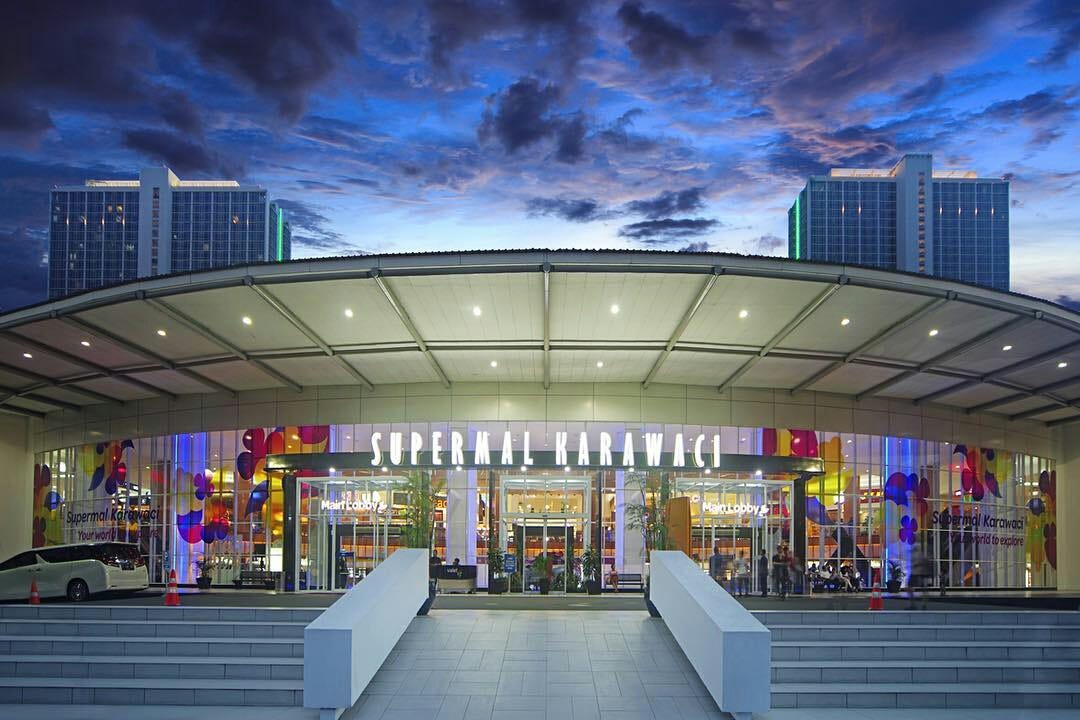
Acrostics Asia broke the news that an Indonesian court has granted a petition to hold a shareholders’ meeting to replace the directors and commissioners of shopping mall operator Supermal Karawaci.
The petitioner was Rodamco Indonesia B.V. and the respondents were Alex Milevski, Eddy Yawner Halim, David Salim, and Saluki Wirakusumah, according to court filings. The petitioner was represented by the Indonesian law firm affiliates of Eliot & Luther.
On 17 October 2025, the Tangerang Court made the following ruling:
1️⃣ Grants the Petitioner’s application in its entirety.
2️⃣ Declares that the Petitioner is a party who has the right and legal standing to file a request for an Extraordinary General Meeting of Shareholders (EGMS) of the Company against the Respondents.
3️⃣ Grants permission to the Petitioner to convene and hold the Company’s EGMS at the Company’s domicile as determined by the Petitioner.
4️⃣ Orders that the EGMS must be held within a maximum of 21 days from the date of this determination, with a notice period of at least 14 days prior to the EGMS, excluding the date of the summons and the meeting itself.
5️⃣ Grants permission to the Petitioner to conduct the EGMS with the following agenda:
a) Termination of all current members of the Board of Directors and Board of Commissioners of the Company;
b) Approval to release and discharge (acquit et de charge) each member of the Board of Directors and Board of Commissioners of the Company from liability for their management and supervision during their respective terms of office;
c) Appointment of new members of the Board of Directors and Board of Commissioners;
d) Authorization to the Company to prepare and submit all required data, documents, and information related to the EGMS, including but not limited to the Annual Reports of the Company for the fiscal years 2021, 2022, and 2023; and
e) Other relevant matters.
6️⃣ Orders that the EGMS is validly held if attended by shareholders representing at least 3/4 of the total shares issued with voting rights.
7️⃣ Declares that resolutions of the EGMS shall be valid if approved by at least 3/4 of the total votes cast by shareholders present or represented at the meeting.
8️⃣ Orders that the meeting be chaired by the Petitioner or an appointed representative of the Petitioner, who shall have the right to vote and make binding decisions for the Company.
9️⃣ Orders that the minutes of the EGMS be drawn up by a notary in Indonesian language and executed in notarial deed form, signed by the meeting chair and the notary concerned.
🔟 Orders the Notary who recorded the minutes of the EGMS to submit a copy of the deed to the Director General of Legal Administration, Ministry of Law and Human Rights of the Republic of Indonesia, after the meeting is held.
💼 Brief Take: Indonesian Mall Takeover
18 October 2025
An Indonesian court granted a petition to replace shopping mall operator Supermal Karawaci’s board.
Two private credit lenders seek to take control of the key retail asset in Jakarta.
An Indonesian court has granted a petition to hold a shareholders’ meeting to replace the directors and commissioners of shopping mall operator Supermal Karawaci, Acrostics Asia reported on 17 October 2025.
Eveline’s Take:
🛍️ Two private credit lenders secured a rare legal victory that should pave the way for them to enforce their loan in Indonesia. On 17 October 2025, the Tangerang Court granted Rodamco Indonesia’s petition to hold an extraordinary general meeting of shareholders to replace the directors and commissioners of shopping mall operator Supermal Karawaci.
🛍️ The petitioner, Rodamco, was represented by Roni Heilig Marpaung and the defendants were Alex Milevski, Eddy Yawner Halim, David Salim, and Saluki Wirakusumah. Rodamco is controlled by the funds managed by SSG Capital Management (now Ares) and Tor Investment Management, which gave a USD 200 million loan to Supermal Karawaci and another company called Dewata Wibawa in 2020, according to Singapore court documents and a media report.
🛍️ The lenders won a Singapore arbitration ruling in 2023, but David Salim – who sponsored the borrowing companies – repeatedly filed lawsuits in Indonesia as part of his attempts to stall repayment, Bloomberg previously reported. Last year, the High Court of Singapore found him guilty of contempt, according to the court documents.
🛍️ Cross-border enforcement has always been challenging in Indonesia, which is why the private credit lenders’ latest victory at the Tangerang Court is noteworthy. The court decision sets the stage for the lenders to take control of Supermal Karawaci, which runs the largest shopping mall on the west side of Jakarta with more than 132,408 square meters of retail space, according to its website.
🛍️ Barring any surprise, the lenders are expected to meet the minimum three-fourths voting threshold to replace Supermal Karawaci’s directors and commissioners with their own representatives. However, a long-time friend of mine always says that anything can happen in Indonesia, so it ain’t over until it’s over.

📒 Quick Take: Indonesian Private Credit’s Mall Milestone
20 October 2025
Legal uncertainty is a key factor that has been holding back the growth of private credit in Southeast Asia.
An Indonesian court ruling represents a breakthrough in the years-long legal battle between two private credit lenders and local businessman David Salim.
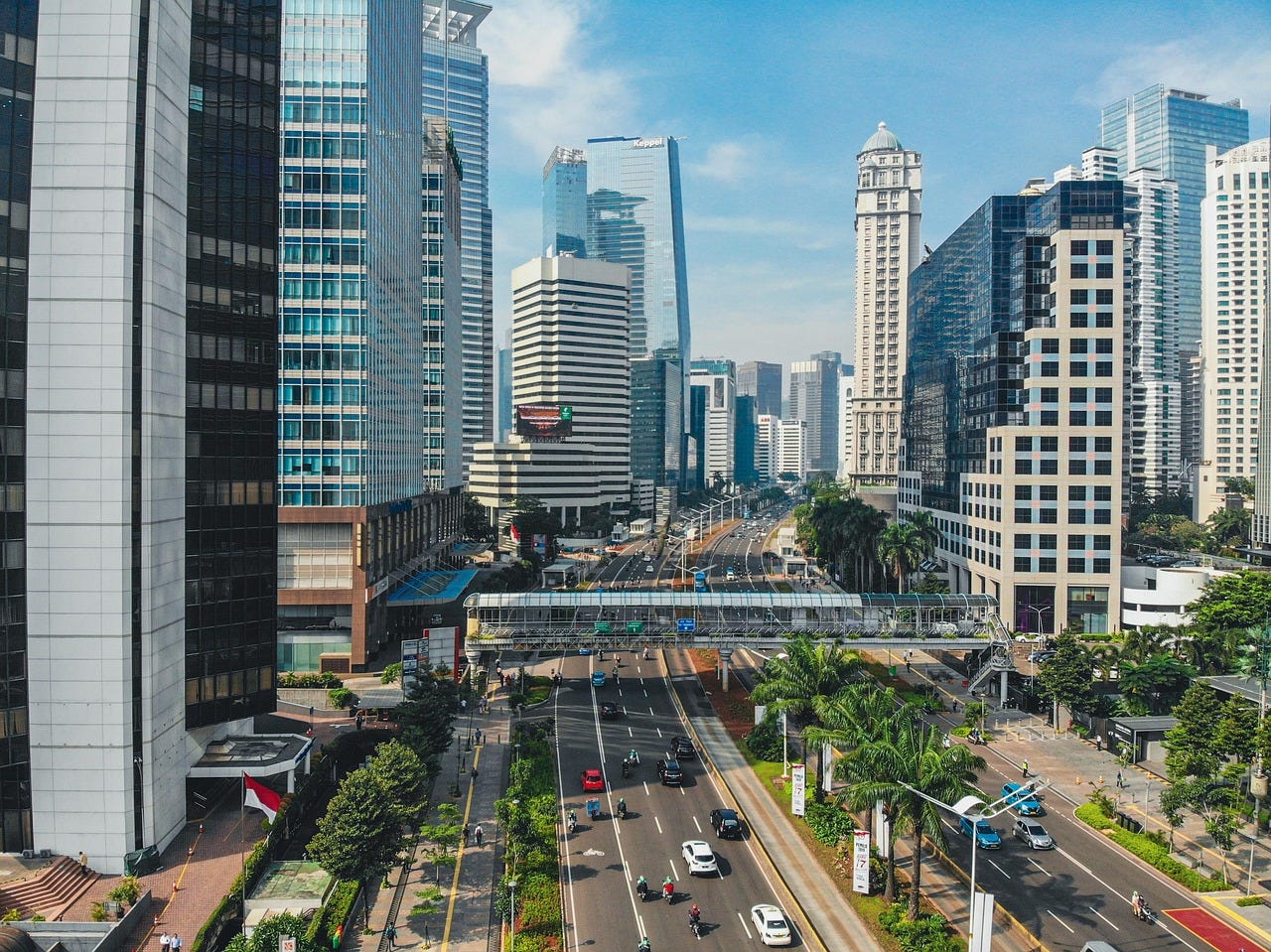
A rare victory for two private credit lenders on Indonesian courts has been reverberating in the restructuring circle over the weekend.
Acrostics Asia broke the news on 17 October 2025 that the Tangerang Court had granted Rodamco Indonesia’s petition to hold a shareholders’ meeting to replace the directors and commissioners of shopping mall operator Supermal Karawaci. Rodamco is controlled by the funds managed by Ares Management and Tor Investment Management.
While caution is warranted, the court ruling represents a breakthrough in the years-long legal battle between the private credit lenders and Indonesian businessman David Salim over a defaulted USD 200 million loan. SSG Capital Management (now Ares) and Tor gave that loan to Supermal Karawaci and another company called Dewata Wibawa, while Salim was one of the guarantors, according to Singapore court documents.
The private credit lenders won a Singapore arbitration ruling in 2023, but Salim filed lawsuits in Indonesia to stall the loan repayment. Last year, a Singapore judge found Salim guilty of contempt of court, calling his conduct “egregious” as he had “continued to deliberately ignore the ASI (Anti-Suit Injunction) Order.”
Tying up creditors in red tape is a common tactic in Indonesia, as borrowers hope to eventually wear them down by attrition. However, the two private credit lenders have shown a certain degree of resilience – perhaps because they want to send a signal that they’re not to be messed with.
Legal uncertainty is a key factor that has been holding back the growth of private credit in Southeast Asia.
Annual private credit allocations to the region reached USD 65.4 billion in June 2022, according to an industry report. This was dwarfed by the size of Australia’s private debt market, which had an estimated AUD 205 billion (USD 133.4 billion) in assets under management as of end-2024.
“Institutional capital is gravitating towards markets where the rule of law is strong, credit frameworks are transparent, and lender protections are well-established,” CapitaLand Investment wrote in a report dated 28 August 2025. Australia, South Korea and Singapore stand out in Asia Pacific for their varying degrees of market maturity and accessibility, it noted.
Risky Business
In Indonesia, lending carries some risks as the loan pricing and structure may not offset the potential investment loss if creditors cannot collect on their principal. Lenders do build some protections into the loan structure, such as requiring the borrowers to deposit cash into an offshore account held by a third party.
Creditors also typically pick Singapore as the venue for dispute resolution because most Indonesian borrowers have personal or business ties to the city-state and it’s seen as a neutral ground. However, lenders often hit the same wall if the assets of the borrowers are concentrated in Indonesia.
There are also enforcement limits in Singapore, as the Salim case has shown.
Following the Singapore arbitration award against Salim, receivers and managers (R&Ms) were appointed to seek enforcement over his assets. The R&Ms sought specific information and documents from Gabriel Law Corporation, Salim’s former lawyers in the arbitration, according to court documents and a legal note on the case.
These included details of bank accounts used to pay the legal fees, contact information of individuals involved in such payments, and documents related to Salim’s source of funds. However, the Singapore High Court found that some of the sought information was potentially privileged, and that the receivership order did not authorize the R&Ms to obtain Salim’s privileged information.
The judgment “clarifies the operational boundaries of a court-appointed receiver’s powers, particularly in the context of asset tracing and recovery,” Providence Law Asia wrote in a commentary dated 8 July 2025. “While receivership orders are typically drafted in broad terms, this case illustrates that such powers are not without their limits.”
Given this setback in Singapore, the latest progress in Indonesia will likely cheer the private credit lenders. As I noted last week, the Tangerang Court’s decision should pave the way for the lenders to take control of a key retail asset in Jakarta.
The spotlight has now shifted from the courts to the boardroom, as Supermal Karawaci must hold an extraordinary general meeting of shareholders within 21 days from 17 October 2025. This will be the next stage for the mall takeover.
📒 Quick Take: Asia Private Credit’s Reality Check
29 November 2025
The emergence of private credit as an asset class in Asia doesn’t remove its structural shortcomings.
While Asia’s private credit market has shown some fissures, it’s unlikely to run out of players who bet that they can exit in time and make money.

Asia’s private credit boom has turned into a reality check for some of the funds operating in the region.
Six months ago, I wrote that private credit funds were mushrooming in Asia, lured by opportunities ranging from scooping up distressed commercial property in Hong Kong to getting juicy returns from Indian borrowers. However, I noted that the ability to recover a loan when it goes bad is the key differentiator in this increasingly crowded landscape.
Bloomberg reported several cracks that have started to appear:
BlackRock Stumbles in Asia Private Credit Push, Forcing Rethink (26 November 2025)
Private Equity Firm Gaw Secures Last-Minute Loan Extension (25 November 2025)
Deutsche Bank’s DWS Cuts Asia Private Credit Team in Shift (21 November 2025)
Global Investment Firm Arena Investors to Shut Singapore Office (3 October 2025)
Private credit funds – which typically have a higher risk appetite and flexibility to structure their facilities – can provide an additional financing option for borrowers. However, the emergence of private credit as an asset class in Asia doesn’t remove its structural shortcomings.
First, some borrowers who turn to private credit are those that cannot get cheaper financing elsewhere, for reasons such as weak cashflow, high capital requirements, or a challenging business environment. In short, the demand for private credit usually comes from companies mired in a cash crunch.
Second, the effectiveness of the protections negotiated by the private credit lenders would hinge on their ability to enforce these loans, especially in jurisdictions that are seen to favour the borrowers.
The private credit lenders of Visi Media Asia – the media arm of Indonesian conglomerate Bakrie Group – slogged to get their voting rights affirmed in a local in-court restructuring (PKPU) last year after the administrators allegedly sought to disenfranchise them. Visi’s restructuring scheme that was eventually passed might have been slightly better than the initial proposal, but it was hardly a happy ending for the lenders.
Ares Management and Tor Investment Management also had to fight to enforce a USD 200 million loan to Indonesian shopping mall operator Supermal Karawaci and another company controlled by local businessman David Salim. Acrostics Asia broke the news last month that these lenders secured a rare court victory that should pave the way for them to replace Supermal Karawaci’s directors and commissioners.
I cautioned back then that “anything can happen in Indonesia, so it ain’t over until it’s over.” True enough, the incumbents have put up a resistance to the court ruling, potentially prolonging the tussle, according to two friends familiar with the matter.
Party Time
Despite the apparent risks, the private credit party is still raging in India.
The value of private credit investments jumped 53% to USD 9 billion in the first half of 2025 from a year earlier, according to an EY report. This was led by the USD 3.1 billion raised by Shapoorji Pallonji Group’s Porteast Investments for refinancing, which was the largest-ever onshore private credit transaction in India.
Underscoring the exuberance, Shapoorji Pallonji is reportedly back for another borrowing of up to INR 230 billion (USD 2.6 billion). The three-year borrowing for the Indian group’s property arm, Goswami Infratech, comes amid increased speculation over how the conglomerate will monetize its 18.37% stake in Tata Sons, IFR reported.
Potential lenders are probably hoping to strike a lucrative deal like the USD 1.25 billion facility bagged by Vedanta Resources in late 2023. Not only did it offer an overall return of around 20%, the 2.5-year loan also gave the lenders access to Vedanta’s cashflows, mainly in the form of dividends and “brand fees” from its subsidiaries.
I previously wrote that Vedanta got the timing right as it was able to ride the tide and rebuild the confidence of bond investors. “Asia’s high-yield market is essentially a game of musical chairs where lenders pass a credit to each other and hope that the music doesn’t stop prematurely,” I noted.
Banks and bondholders usually swapped seats with each other, but the game has benefitted from the entry of private credit firms as a third player. Apart from participating in this capital recycling exercise, private credit funds can also bridge the gap in areas where banks retreated, such as for environmental, social and governance (ESG) considerations.
Last week, Indonesia’s Chandra Asri Group announced that it had secured a USD 750 million facility from KKR to finance its planned acquisition of ExxonMobil’s Esso-branded petrol stations in Singapore.
Asia’s private credit market has shown some fissures in recent months, but it’s unlikely to run out of players who bet that they can exit in time and make money.